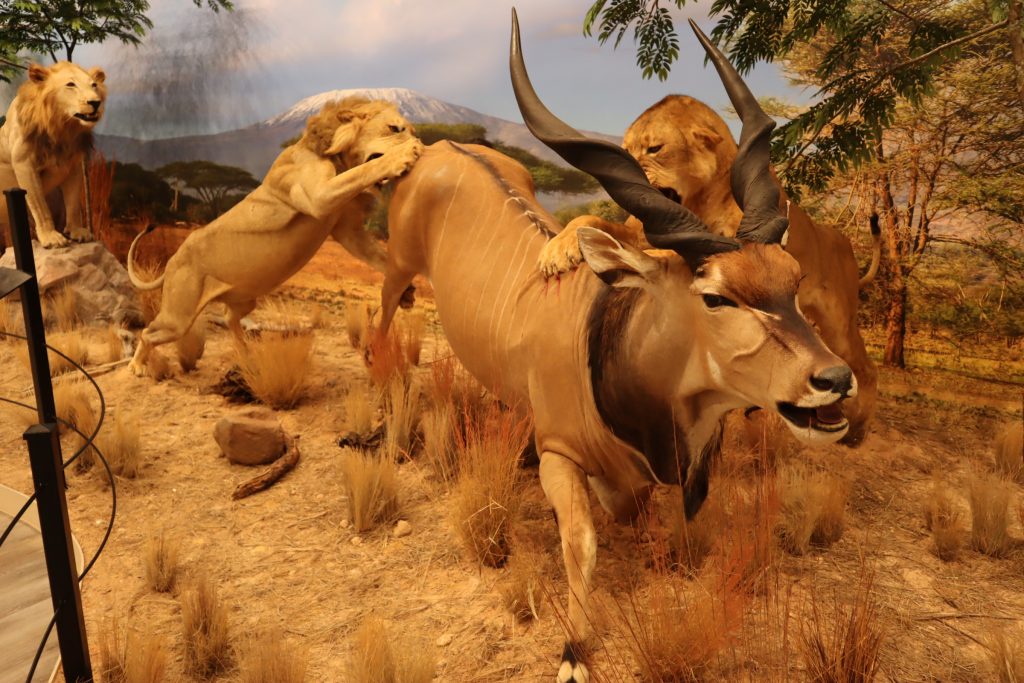
Giant Eland
Tragelaphus derbianus
Additional Information
The Giant Eland, also known as the Lord Derby eland, is the largest species of antelope, found in the savannas and woodlands of Central and West Africa, particularly in countries such as Cameroon, the Central African Republic, and South Sudan. They have incredible agility and stamina, leaping obstacles over 6 feet tall and maintaining high speeds over long distances.
- Diet– Herbivorous diet consisting of grasses, leaves, fruits, and branches.
- Habitat– Open plains, forest edges, and dense woodlands.
- Behavior– Social animals that form herds consisting of females and their young, while mature males tend to be more solitary or form bachelor groups.
- Lifespan– The average lifespan is 15 to 20 years in the wild.
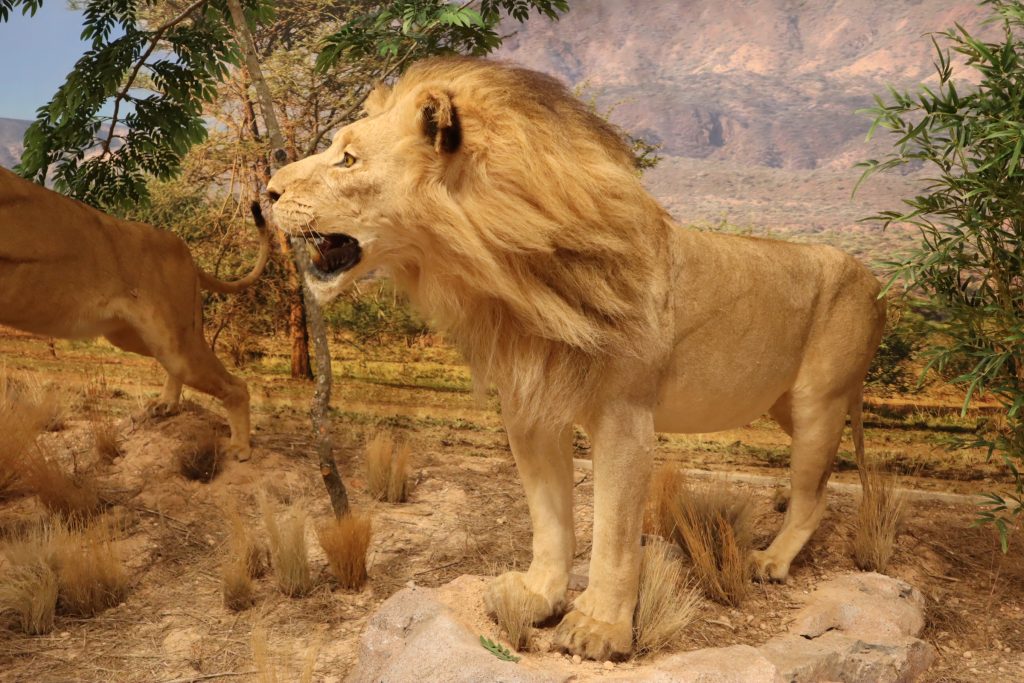
Lion
Panthera leo
Additional Information
The Lion is one of the most iconic and majestic big cats, primarily found in the savannas, grasslands, and open woodlands of sub-Saharan Africa, with a small population in the Gir Forest of India. Lions are primarily nocturnal hunters, taking advantage of the cover of darkness to ambush their prey. Their social structure is unique among big cats and plays a crucial role in their hunting strategies and territorial defense. They are known for their powerful roars, which can be heard up to five miles away.
- Diet– Carnivorous apex predator with a diet of large herbivores such as wildebeest, zebras, and antelopes.
- Habitat– Savannas, grasslands, open woodlands.
- Behavior– Social groups called prides, consisting of several related females, their cubs, and a coalition of males.
- Lifespan– The average lifespan is 10 to 15 years in the wild.
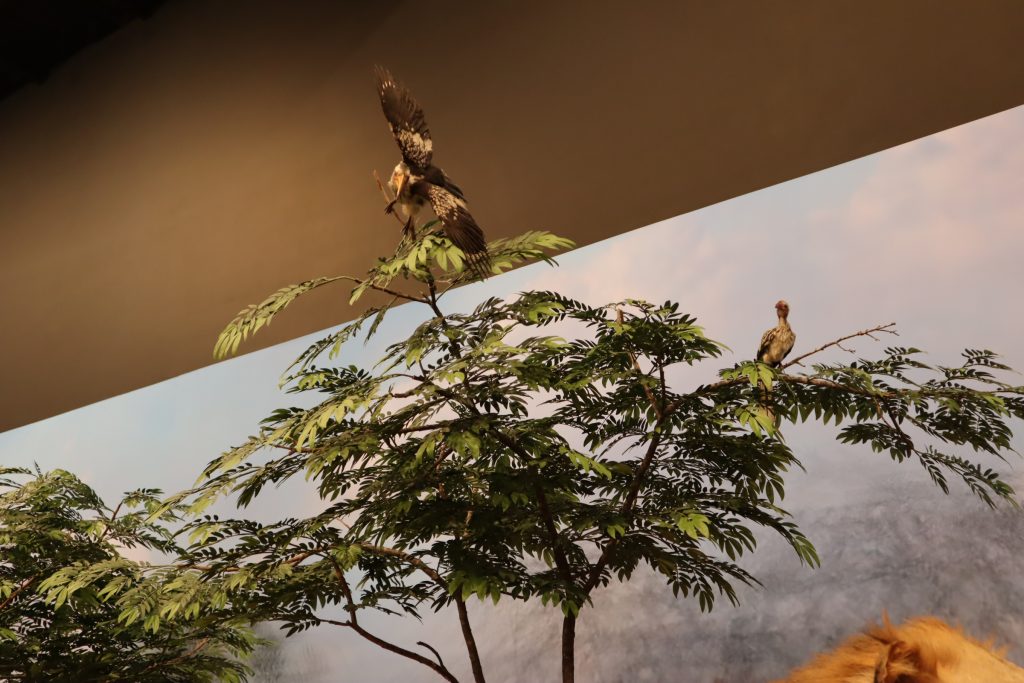
Red-billed Hornbill
Tockus erythrorhynchus
Additional Information
The Red-billed Hornbill, a striking bird native to sub-Saharan Africa, is easily recognized by its long, curved red beak. They have a rather unique nesting habit. During breeding season, the female seals herself inside a tree cavity using mud, droppings, and food remains, leaving only a small slit for the male to pass food through. She stays there until the chicks are ready to fledge. It’s like turning the nest into a fortress, complete with room service!
- Diet– Omnivorous diet consisting of insects, small reptiles, fruits, and seeds.
- Habitat– Savannas, woodlands, and scrublands.
- Behavior– Social animals in pairs or small groups exhibiting cooperative behavior.
- Lifespan– The average lifespan is 10 to 15 years in the wild.
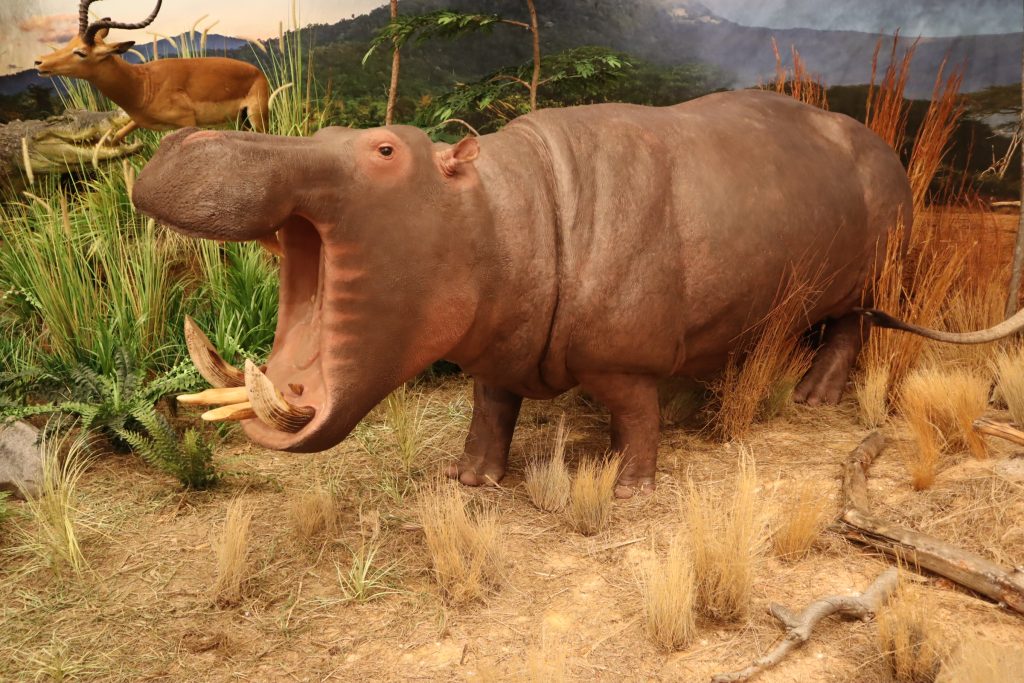
Hippopotamus
Hippopotamus amphibius
Additional Information
The Hippopotamus is a large, semi-aquatic mammal native to the rivers, lakes, and swamps of sub-Saharan Africa. They graze during the night and consume up to 88 pounds of vegetation in a single night. Despite their bulky appearance, they can move quickly on land, reaching speeds of up to 19 mph. A cool fact about the hippopotamus is that their skin secretes a natural sunscreen substance that helps protect their skin from the harsh sun rays and keeps wounds clean with antibacterial properties!
- Diet– Herbivorous diet of grasses.
- Habitat– Water and nearby grasslands.
- Behavior– Social animals that live in groups called pods or bloats, which consists of 10 to 30 individuals. They are very territorial, especially in water.
- Lifespan– The average lifespan is 40 to 50 years in the wild.
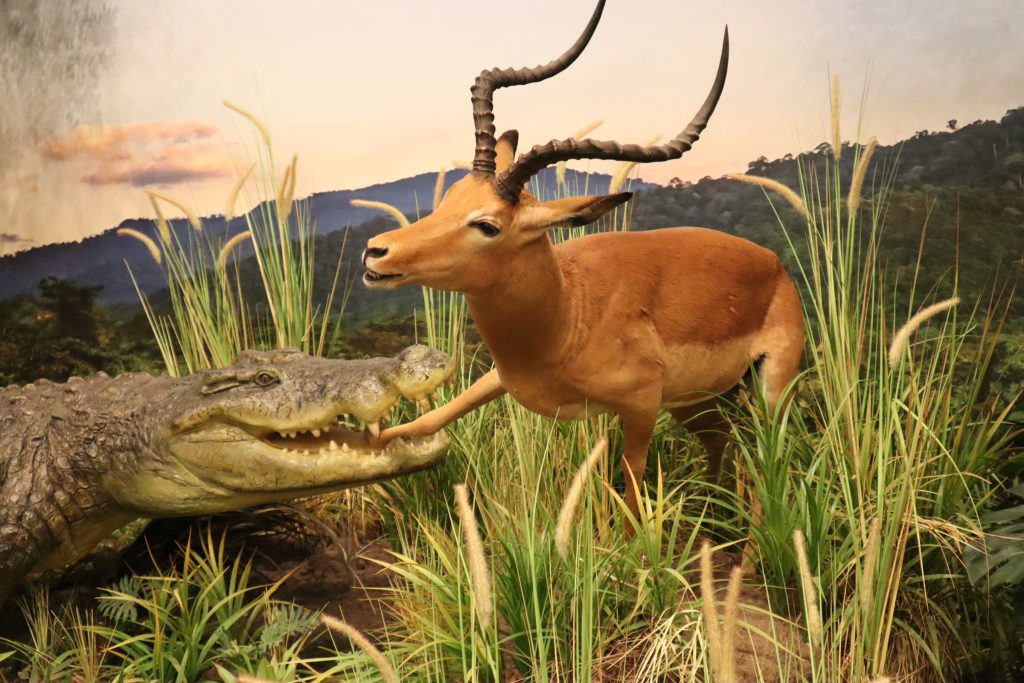
Impala
Aepyceros melampus
Additional Information
The Impala is a medium-sized antelope found in the savannas and light woodlands of eastern and southern Africa. They are known for their agility and incredible leaping ability, capable of making high jumps of up to 10 feet and covering distances of up to 33 feet in a single bound.
- Diet– Herbivorous diet consisting of grasses, leaves, fruits, and seeds.
- Habitat– Savannas, grasslands, and bushy woodlands.
- Behavior– Social animals that form large herds particularly during the dry season.
- Lifespan– The average lifespan is 12 to 15 years in the wild.
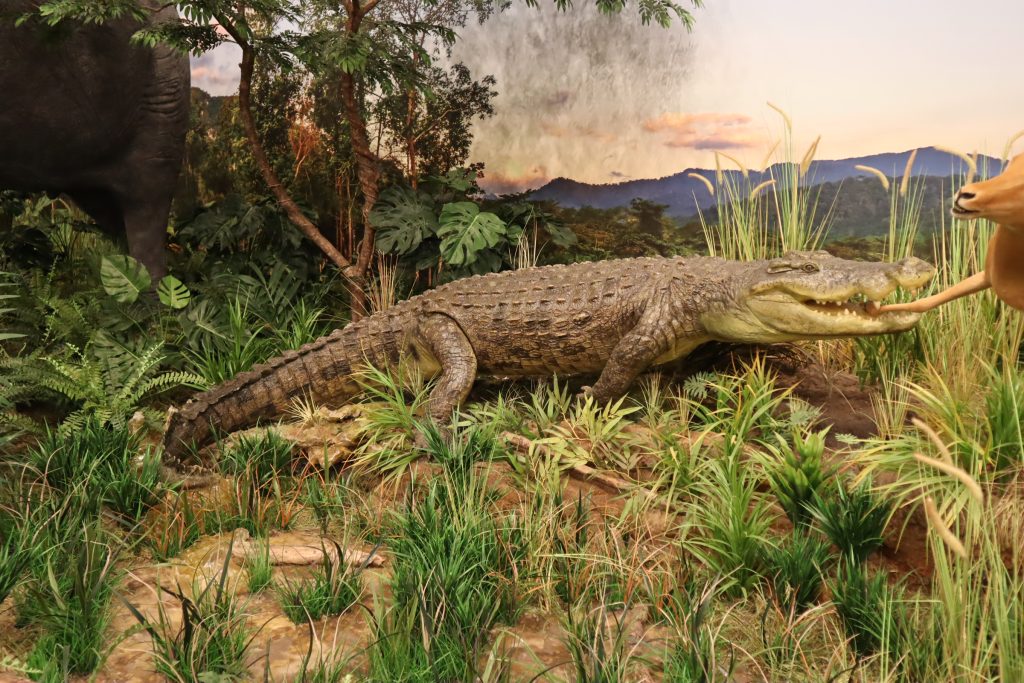
Nile Crocodile
Crocodylus niloticus
Additional Information
The Nile Crocodile is one of the largest and most formidable reptiles in the world, native to freshwater habitats across sub-Saharan Africa, including rivers, lakes, marshes, and swamps. They can take down large prey such as antelope, buffalo, and even young hippos and humans, lying in wait just below the water’s surface before striking with explosive speed. The nile crocodile has a unique ability to slow down its metabolism, allowing it to survive for months on a single large meal.
- Diet– Apex carnivores with an opportunistic diet consisting of fish, birds, mammals, and other reptiles.
- Habitat– Freshwater habitats across sub-Saharan Africa.
- Behavior– Social animals with a strong hierarchy. Mostly nocturnal and highly territorial.
- Lifespan– The average lifespan is 50 to 70 years in the wild.
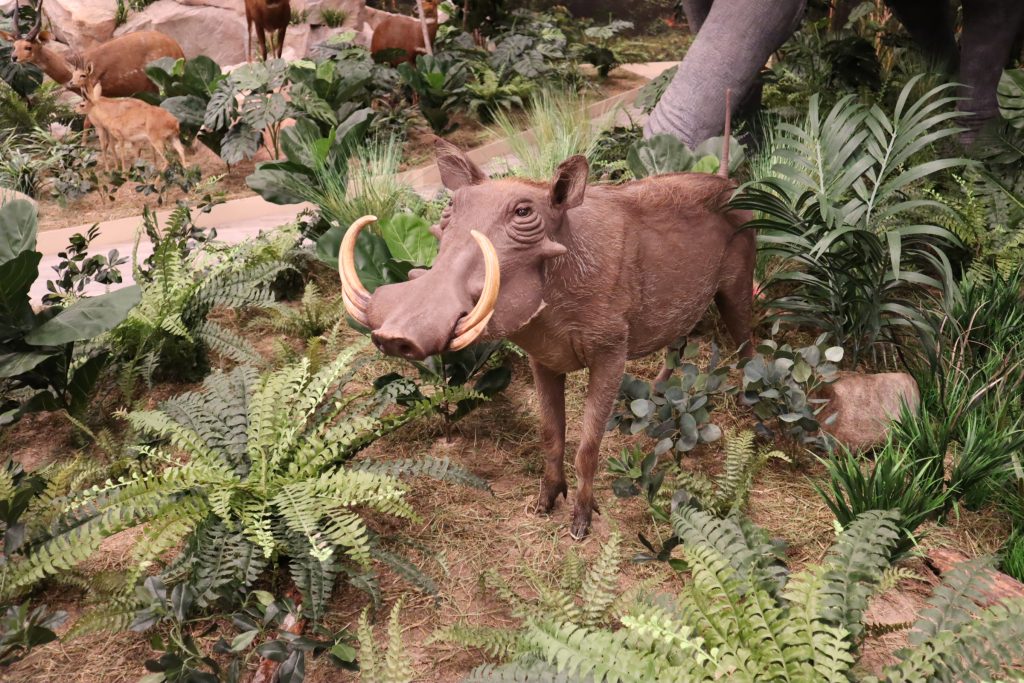
Common Warthog
Phacochoerus africanus
Additional Information
The Common Warthog is a rugged and resilient member of the wild pig family, native to the grasslands, savannas, and woodlands of sub-Saharan Africa. They are well adapted to grazing, using their specialized snouts to dig for food and their strong tusks to root out underground vegetation. Common warthogs are known for their distinctive ‘kneeling’ posture while feeding. They have adapted to dealing with the African heat by taking mud baths to cool down and protect their skin from insect bites.
- Diet– Omnivorous diet consisting of a variety of grasses, roots, tubers, fruits, and occasionally small animals and carrion.
- Habitat– Grasslands, savannas, and woodlands.
- Behavior– Active during the day, and live in small family groups called sounders, consisting of females and their young. Males tend to be more solitary.
- Lifespan– The average lifespan is 12 to 15 years in the wild.
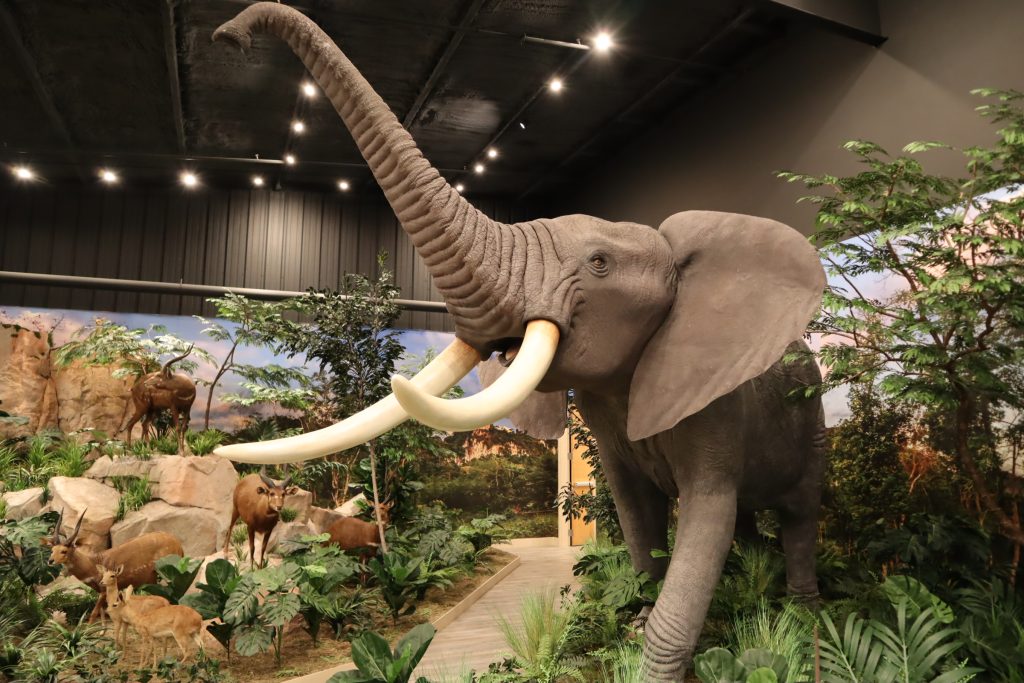
African Savanna Elephant
Loxodonta africana
Additional Information
The African Savannah Elephant, the largest land mammal on Earth, is a majestic and intelligent creature native to the sub-Saharan regions of Africa. They consume up to 330 pounds of food per day. The African savannah elephant can communicate through vocalizations, body language, and even seismic signals transmitted into the ground. They are capable of creating and using tools, such as branches to swat flies and digging holes to find water.
- Diet– Herbivorous diet consisting of grasses, leaves, bark, fruit, and roots.
- Habitat– Variety of ecosystems including savannahs, forests, and deserts.
- Behavior– Highly social herd animals with complex communication abilities.
- Lifespan– The average lifespan is 60 to 70 years in the wild.
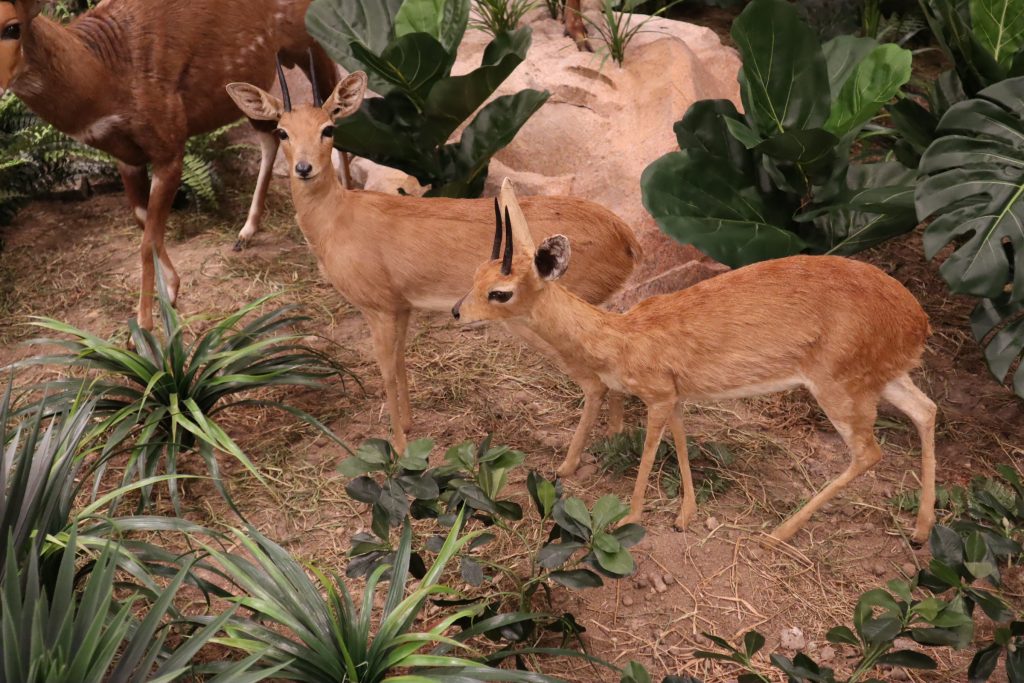
Oribi
Ourebia ourebi
Additional Information
The Oribi is a small, graceful antelope found across sub-Saharan Africa. They are known for their keen senses of sight, hearing, and smell, which they use to detect threats and communicate with each other through a variety of vocalizations and body postures. Despite their small size, Oribis can reach speeds of up to 31 mph to escape predators.
- Diet– Herbivorous diet primarily consists of grasses, but also leaves, fruits, and flowers.
- Habitat– Tall grasslands, savannas, and floodplains.
- Behavior– Solitary or found in small family groups.
- Lifespan– The average lifespan is 8 to 12 years in the wild.
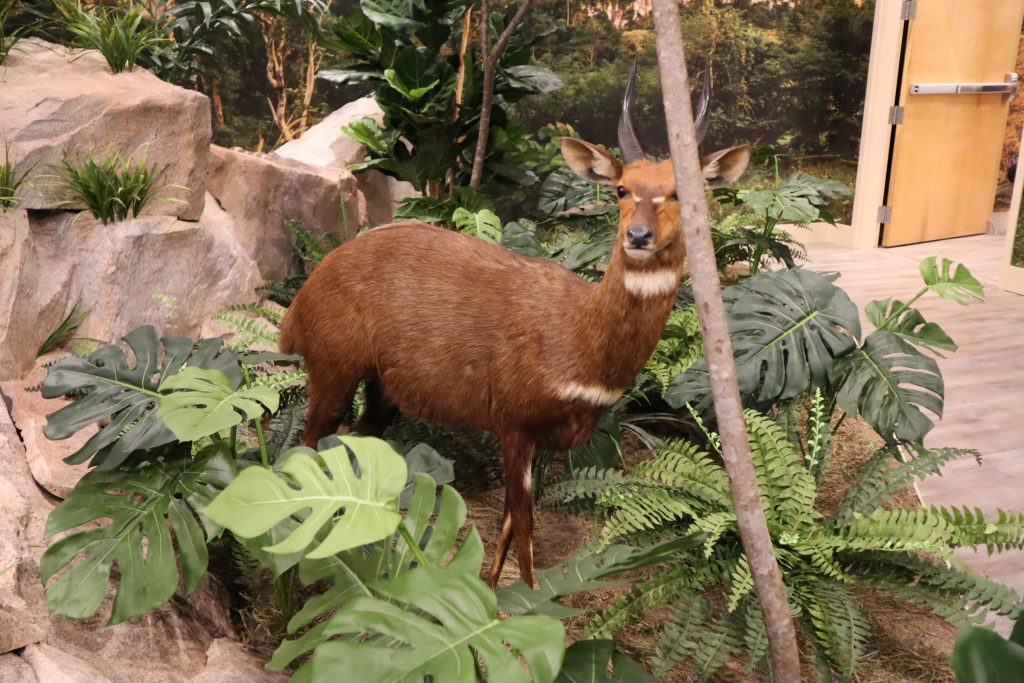
Bushbuck
Tragelaphus scriptus
Additional Information
The Bushbuck is a medium-sized antelope native to sub-Saharan Africa, known for its solitary and elusive nature. They prefer dense underbrush to remain concealed. Interestingly, the bushbuck is also an excellent swimmer. They are not afraid of water and will readily enter rivers and lakes.
- Diet– Herbivorous diet of variety including leaves, twigs, fruits, flowers, grasses, and aquatic plants.
- Habitat– Forests, savannas, woodlands, and urban fringes.
- Behavior– Crepuscular and shy with secretive tendencies.
- Lifespan– The average lifespan is 10 to 12 years in the wild.
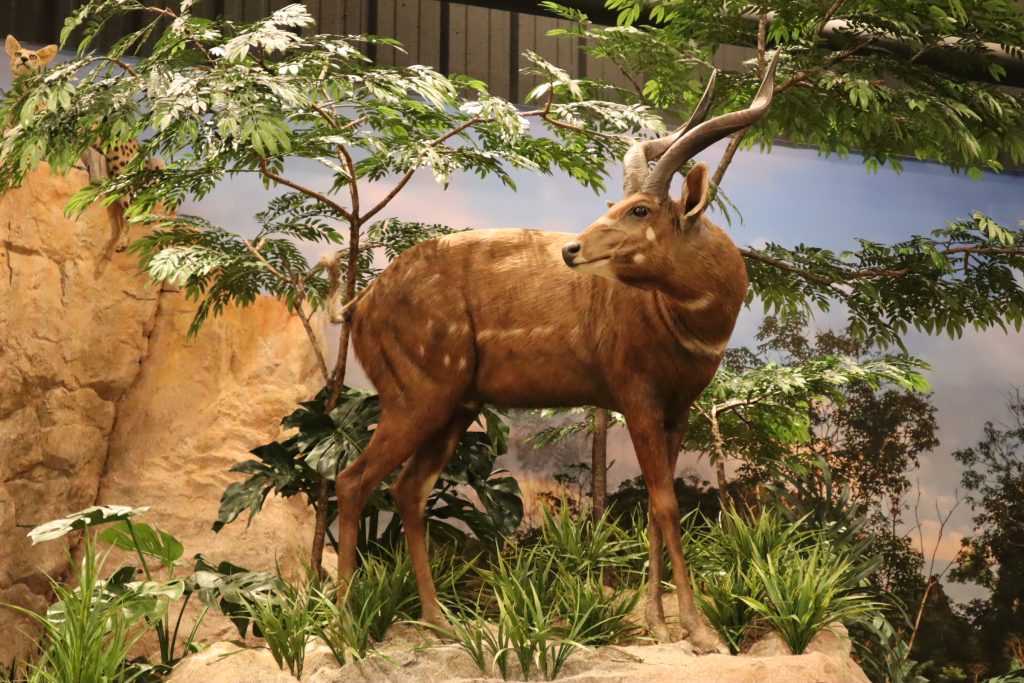
Sitatunga
Tragelaphus spekii
Additional Information
The Sitatunga is a unique and semi-aquatic antelope species native to central Africa, including countries like Uganda, Botswana, and Zambia. Interestingly, they have adapted to a semi-aquatic lifestyle. Their unique, elongated hooves spread widely, allowing them to walk effortlessly on soft, marshy ground and wade through water without sinking. This special adaptation enables them to thrive in their wetland habitats, where other antelopes might struggle.
- Diet– Herbivorous diet primarily consisting of aquatic plants, grasses, sedges, and leaves.
- Habitat– Forests, savannas, grasslands, wetlands, swamps, marshes, and floodplains.
- Behavior– Crepuscular and shy, found in small family groups with males being more solitary and territorial.
- Lifespan– The average lifespan is 15 to 20 years in the wild.
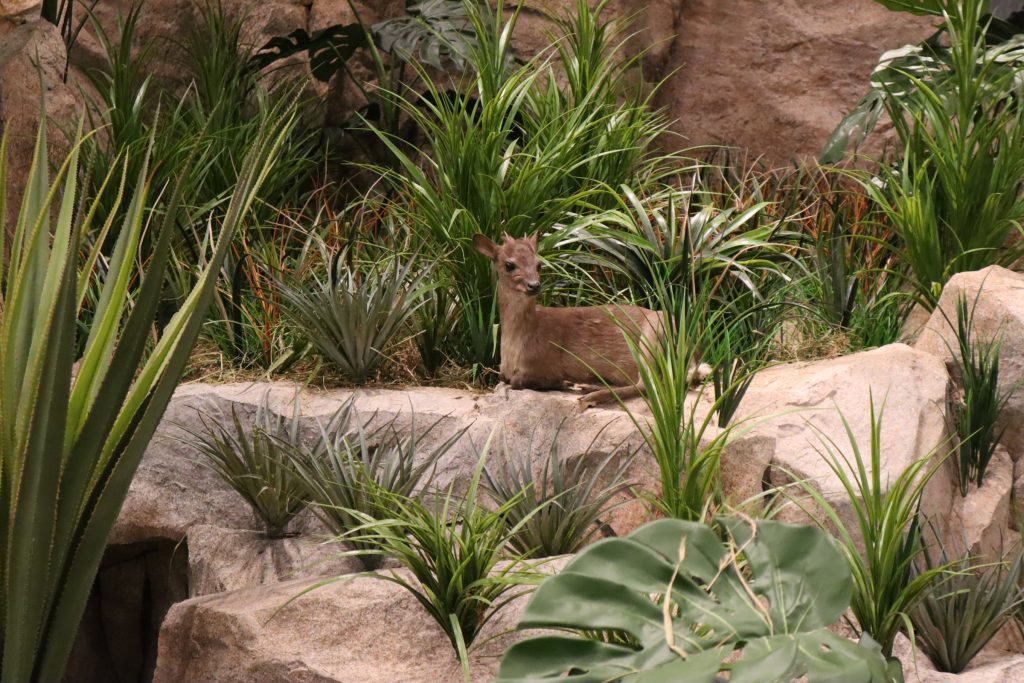
Maxwell’s Duiker
Philantomba maxwellii
Additional Information
Maxwell’s Duiker is a small, elusive antelope found primarily in the dense forests and savannas of West Africa, including countries like Sierra Leone, Liberia, and Ghana. They communicate through a series of vocalizations and scent markings to establish territory and maintain social bonds. The Maxwell’s Duiker has the ability to remain almost completely still when they sense danger.
- Diet– Herbivorous diet consisting of leaves, fruits, seeds, and flowers.
- Habitat– Dense forests and savannas.
- Behavior– Crepuscular, shy, and solitary animals often seen in pairs.
- Lifespan– The average lifespan is 8 to 10 years in the wild.
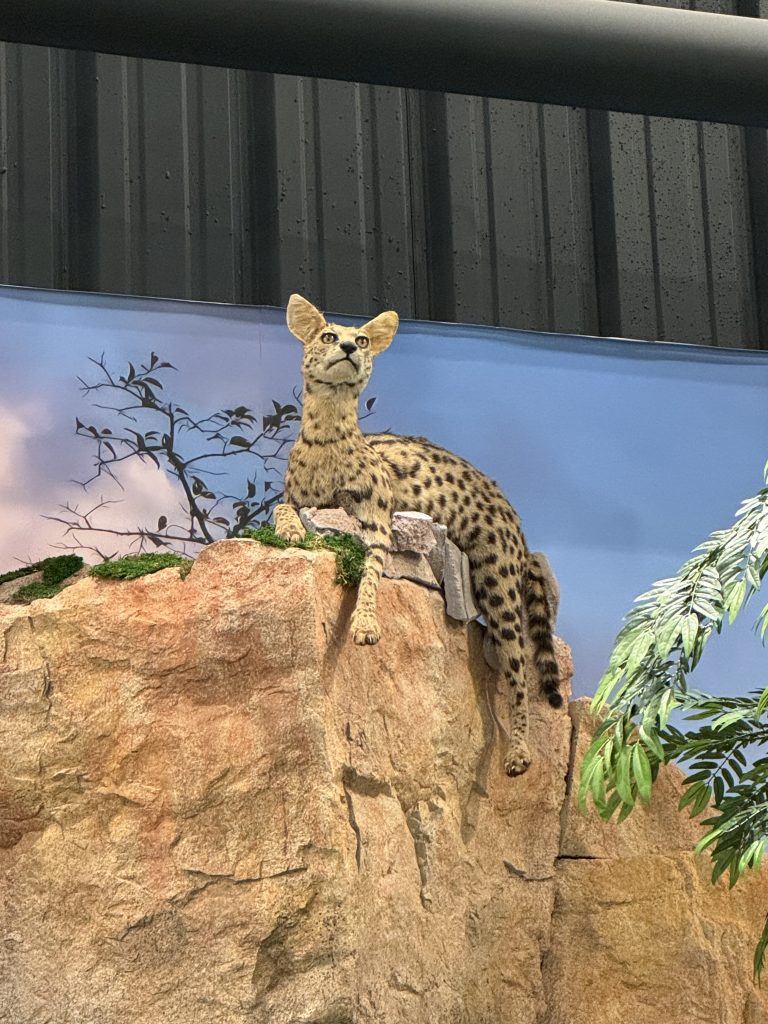
Serval
Leptailurus serval
Additional Information
The Serval, a slender and agile wildcat native to Africa, is recognized by its long legs, large ears, and distinctively spotted coat. They have the highest jump of any cat relative to their size. They can leap over 10 feet vertically to catch birds in mid-air! This incredible jumping ability, combined with their large ears for pinpointing prey, makes them super efficient hunters.
- Diet– Carnivorous diet consisting of small mammals like rodents, birds, frogs, insects, and occasionally fish.
- Habitat– Savannas, grasslands, open wetlands.
- Behavior– Nocturnal, solitary animals.
- Lifespan– The average lifespan is up to 20 years in the wild.
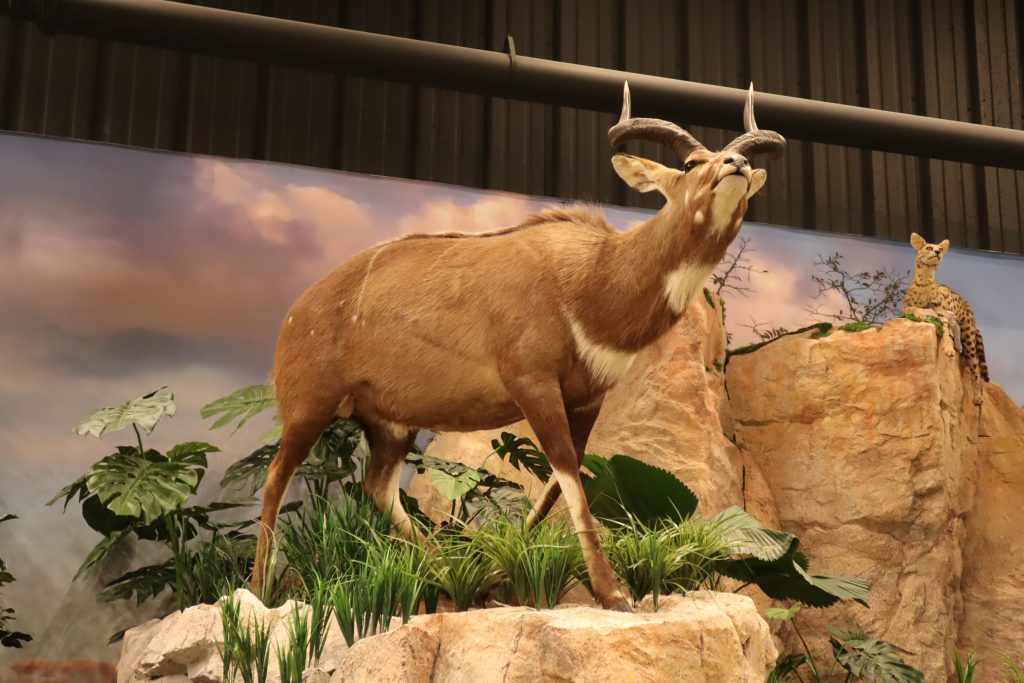
Mountain Nyala
Tragelaphus buxtoni
Additional Information
The Mountain Nyala is a rare and majestic antelope species native to the highland forests and montane regions of Ethiopia. They communicate through a variety of vocalizations and scent markings to establish territory and maintain social bonds. Interestingly, the mountain nyala is one of the least-known and most elusive large mammals in Africa. This species was only discovered by the scientific community in the early 20th century due to their remote and rugged habitat.
- Diet– Herbivorous diet consisting of leaves, shoots, herbs, and grasses.
- Habitat– Dense forest, shrublands, and high-altitude meadows.
- Behavior– Crepuscular, shy, and solitary animals often seen in small family groups, led by a dominant male.
- Lifespan– The average lifespan is 12 to 15 years in the wild.
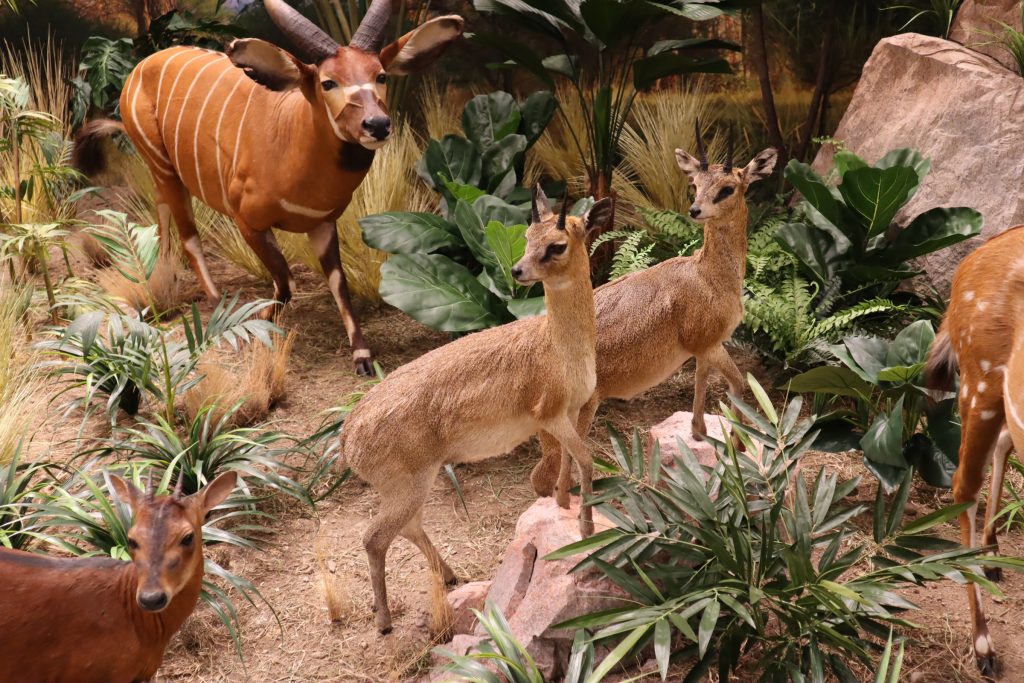
Klipspringer
Oreotragus oreotragus
Additional Information
The Klipspringer is a small, sturdy antelope native to the rocky terrains and mountainous regions of eastern and southern Africa. These agile antelopes are adept at navigating steep and rugged landscapes, using their specialized hooves with rubbery pads for excellent grip on rocky surfaces. Their name means “rock jumper” in Afrikaans, perfectly describing their incredible ability to leap and bound across rocky terrains up to 10 feet in the air.
- Diet– Herbivorous diet consisting of succulent plants, leaves, fruits, and flowers.
- Habitat– Steep rugged terrain and mountainous regions.
- Behavior– Social animals found in monogamous pairs and small family groups. They are also highly territorial.
- Lifespan– The average lifespan is 10 to 15 years in the wild.
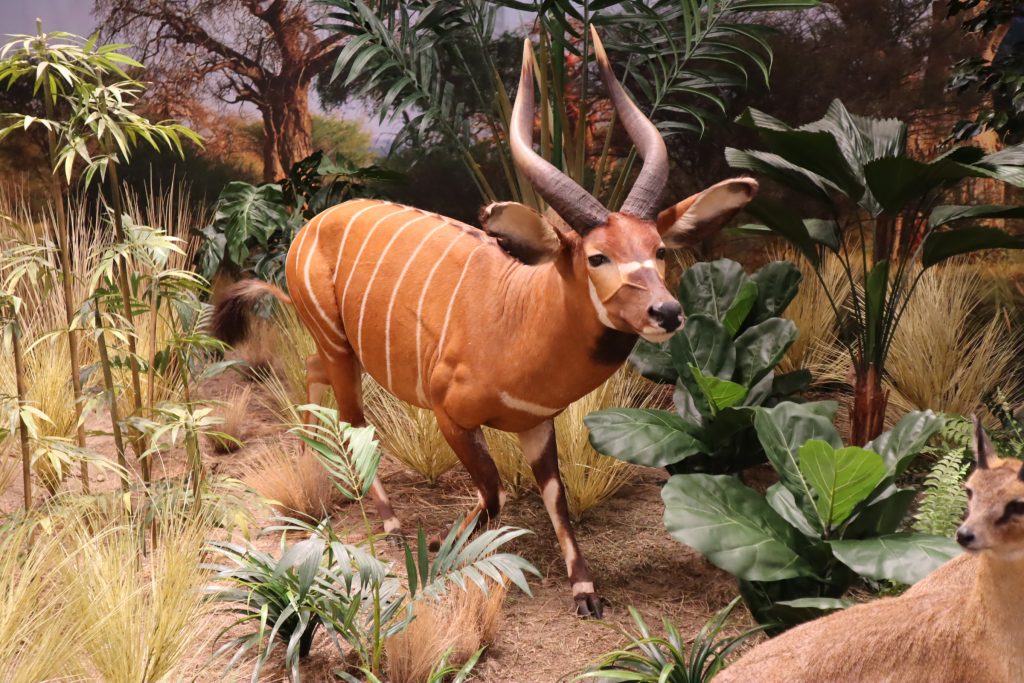
Bongo
Tragelaphus eurycerus
Additional Information
The Bongo is a stunningly beautiful and elusive antelope species native to the dense forests of central and western Africa. They have a chestnut coat adorned with white stripes and long, spiraled horns. The bongo has a unique ability to make a ‘honk’ sound at a low frequency that travels far distances through dense vegetation, allowing consistent contact when visibility is low. It’s like having a natural walkie-talkie in the wild!
- Diet– Herbivorous diet primarily consisting of leaves, shoots, grasses, and some fruits.
- Habitat– Tropical rain forests, montane forests, and bamboo forests.
- Behavior– Nocturnal social animals forming small herds led by a dominant female. Mature males tend to be solitary or form small bachelor groups.
- Lifespan– The average lifespan is 10 to 18 years in the wild.
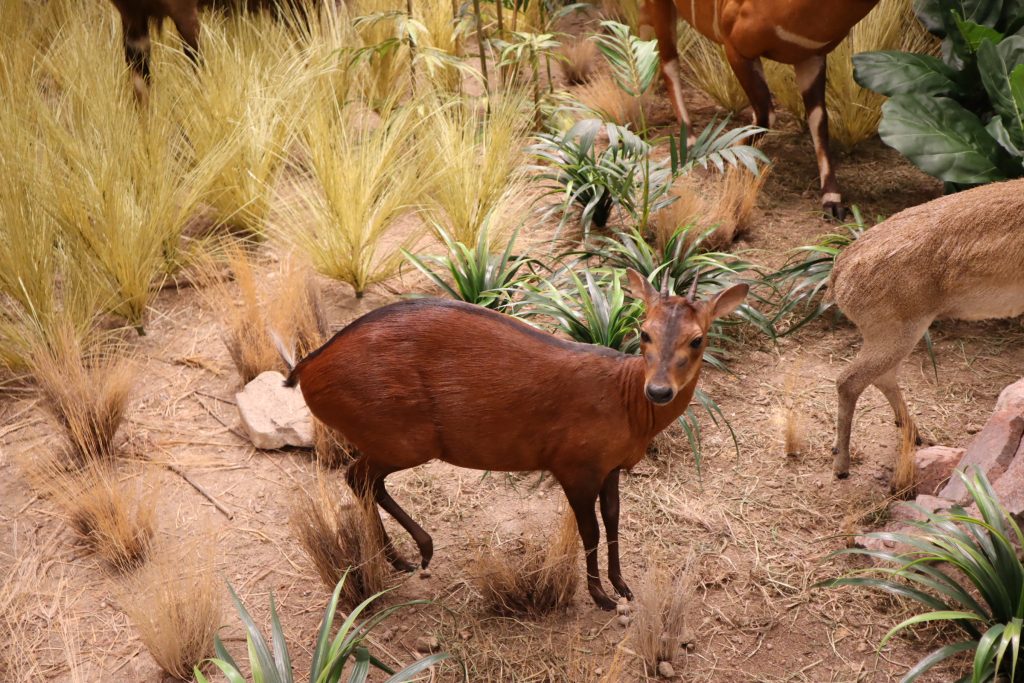
Red-flanked Duiker
Cephalophus rufilatus
Additional Information
The Red-flanked Duiker is a small, elusive antelope native to West and Central Africa, particularly in countries like Senegal, Ghana, Nigeria, and Cameroon. They communicate through a variety of vocalizations and scent markings to establish territory and maintain social bonds. Interestingly, they have a unique way of grooming and bonding with each other. They use their tongues to groom one another, which helps in forming social bonds and maintaining hygiene.
- Diet– Herbivorous diet of leaves, fruits, seeds, and flowers.
- Habitat– Savannas, forests, and scrublands.
- Behavior– Solitary or found in small family groups.
- Lifespan– The average lifespan is 8 to 12 years in the wild.
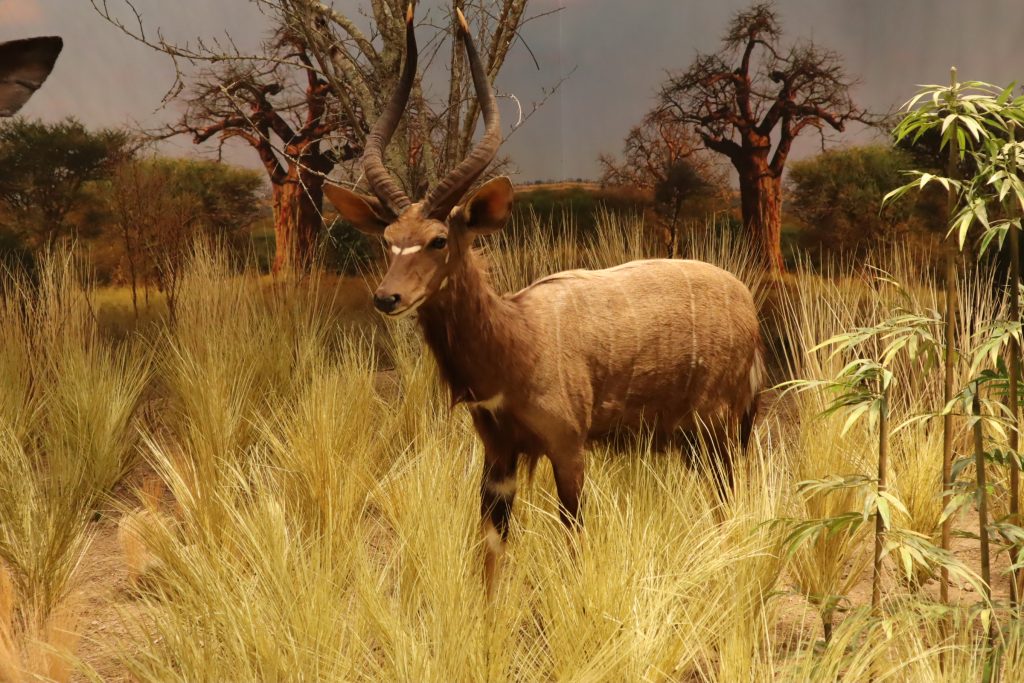
Nyala
Tragelaphus angasii
Additional Information
The Nyala is a striking and graceful antelope native to the woodlands and savannas of southeastern Africa, particularly in countries like South Africa, Mozambique, Zimbabwe, and Malawi. They possess a unique form of communication known as ‘stotting’ or ‘pronking’. When a nyala senses danger, they leap into the air with all four legs straight, creating an impressive display of agility and strength. This behavior is not only a signal to predators that they are healthy and difficult to catch but also a warning to other nyalas in the area.
- Diet– Herbivorous diet consisting of leaves, fruits, twigs, and grasses.
- Habitat– Dense thickets and open grasslands near water sources.
- Behavior– Crepuscular and cautious, males are solitary and territorial, while females and young Nyalas form small family groups.
- Lifespan– The average lifespan is 12 to 15 years in the wild.
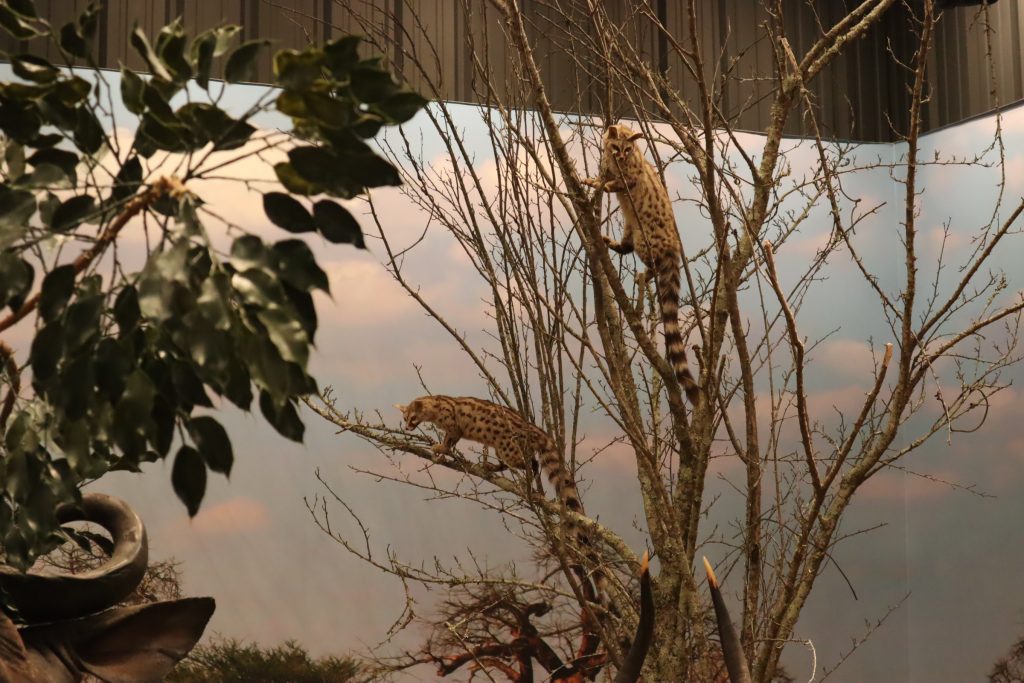
Common Genet
Genetta genetta
Additional Information
The Common Genet is a small, agile carnivore native to Africa but also found in parts of Europe, particularly in the Iberian Peninsula, where it is believed to have been introduced by humans. They are excellent climbers, often using trees and dense vegetation to hunt and escape predators. The common genet has an incredible ability to leap great distances both horizontally and vertically. They can jump up to 6 feet in the air to catch prey or escape predators.
- Diet– Omnivorous diet consisting of small mammals, birds, insects, and fruits.
- Habitat– Dense forests, woodlands, savannas, and semi-arid regions.
- Behavior– Nocturnal and solitary, only coming together during breeding season.
- Lifespan– The average lifespan is up to 20 years in the wild.
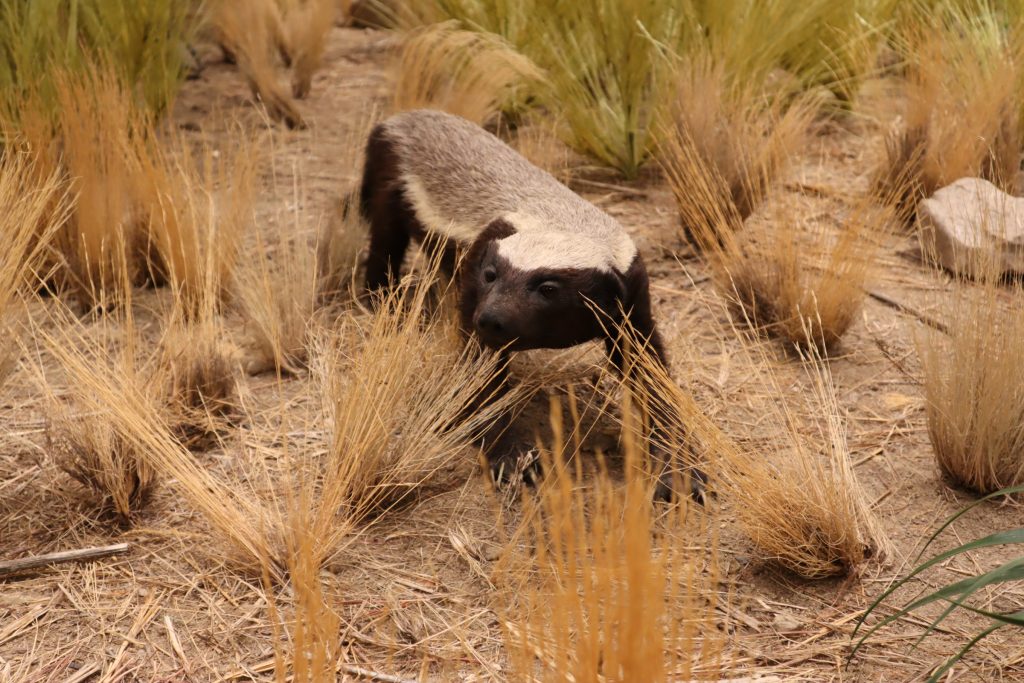
Honey Badger
Mellivora capensis
Additional Information
The Honey Badger is a tenacious and fearless mammal native to a variety of habitats across Africa, the Middle East, and parts of Asia. These small animals are notoriously aggressive and therefore have few predators. The honey badger is incredibly smart, often using tools and exhibiting strategic thinking to access food. An interesting fact is that they are resistant to venom and can withstand bites from some of the most venomous snakes.
- Diet– Omnivorous diet, usually of opportunity, including small mammals, birds, insects, frogs, fruits, and honey.
- Habitat– Grasslands, savannas, forests, and deserts.
- Behavior– Primarily solitary, roaming large territories in search of food and shelter.
- Lifespan– The average lifespan is 7 to 8 years in the wild.
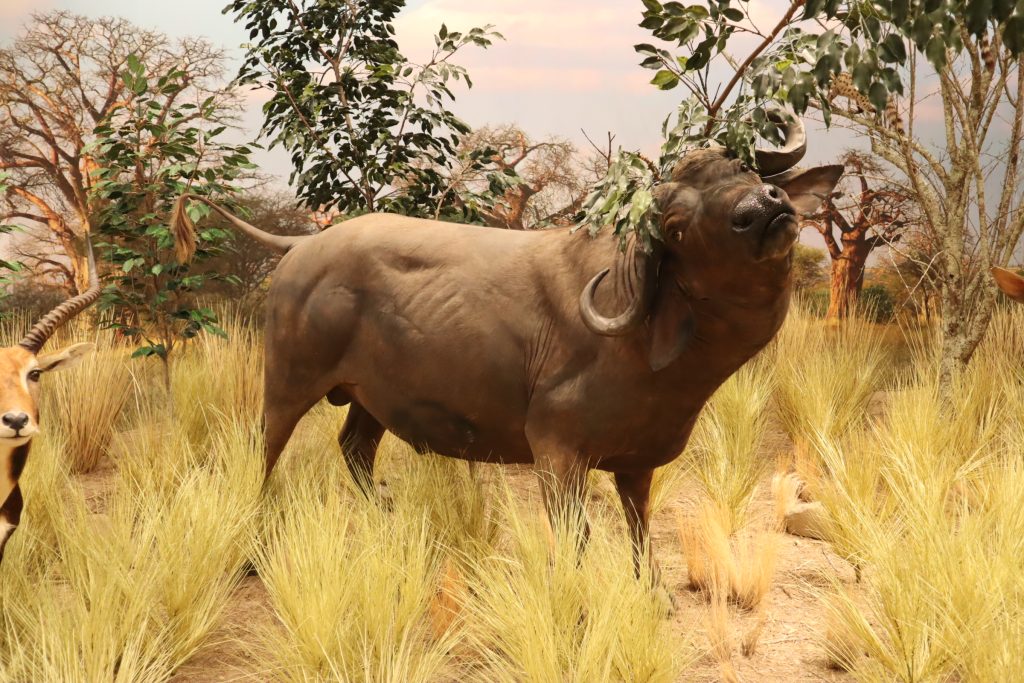
African Buffalo
Syncerus caffer
Additional Information
The African Buffalo, also known as the Cape buffalo, is a formidable and resilient herbivore native to sub-Saharan Africa. They are surprisingly agile and capable of reaching speeds of up to 35 mph. The African buffalo is also intelligent and has a remarkable memory, which helps them avoid dangers. They can remember individual humans and recall which people have previously posed a threat to them.
- Diet– Herbivorous diet consisting of grasses, leaves, twigs, and shrubs.
- Habitat– Savannahs, grasslands, and forested regions near water sources.
- Behavior– Complex social animal forming large herds in the hundreds with a clear hierarchy.
- Lifespan– The average lifespan is 11 to 22 years in the wild.
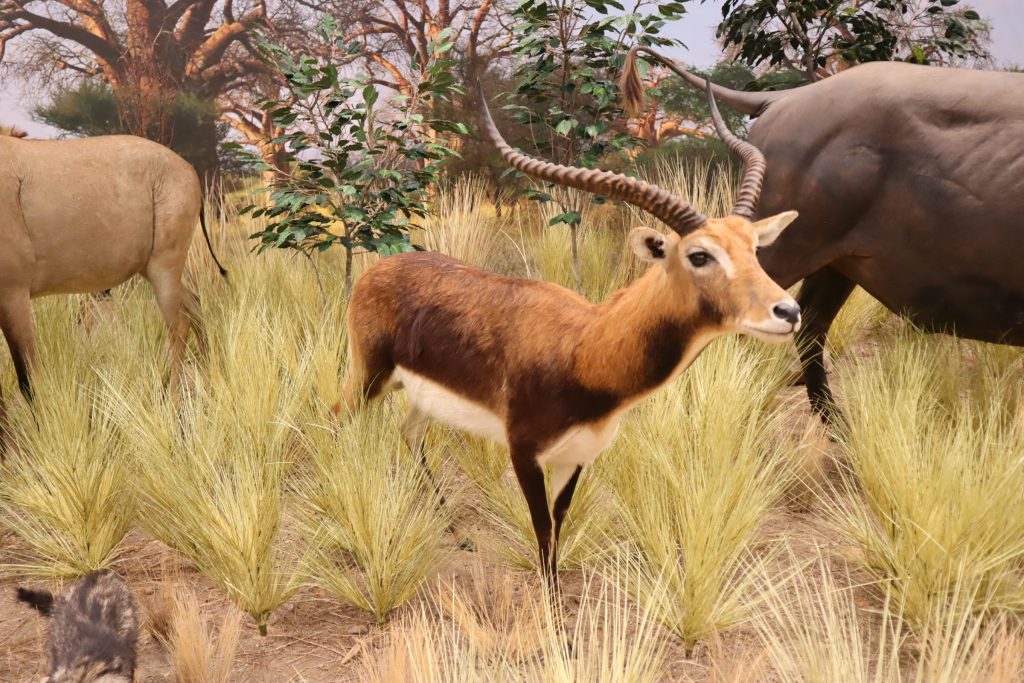
Southern Lechwe
Kobus leche
Additional Information
The Southern Lechwe is an elegant and specialized antelope species found in southern Africa, particularly in countries like Zambia, Botswana, Namibia, and Angola. They are known for their remarkable agility and speed in the water, using their powerful hind legs to leap and run through the wetlands. They also have specialized, elongated, splayed hooves that act like natural flippers, helping them move effortlessly through their wetland habitats.
- Diet– Herbivorous diet primarily consists of aquatic grasses and plants
- Habitat– Floodplains, marshes, and swamps.
- Behavior– Strong social animals forming small herds to large aggregations of several hundred.
- Lifespan– The average lifespan is 10 to 15 years in the wild.
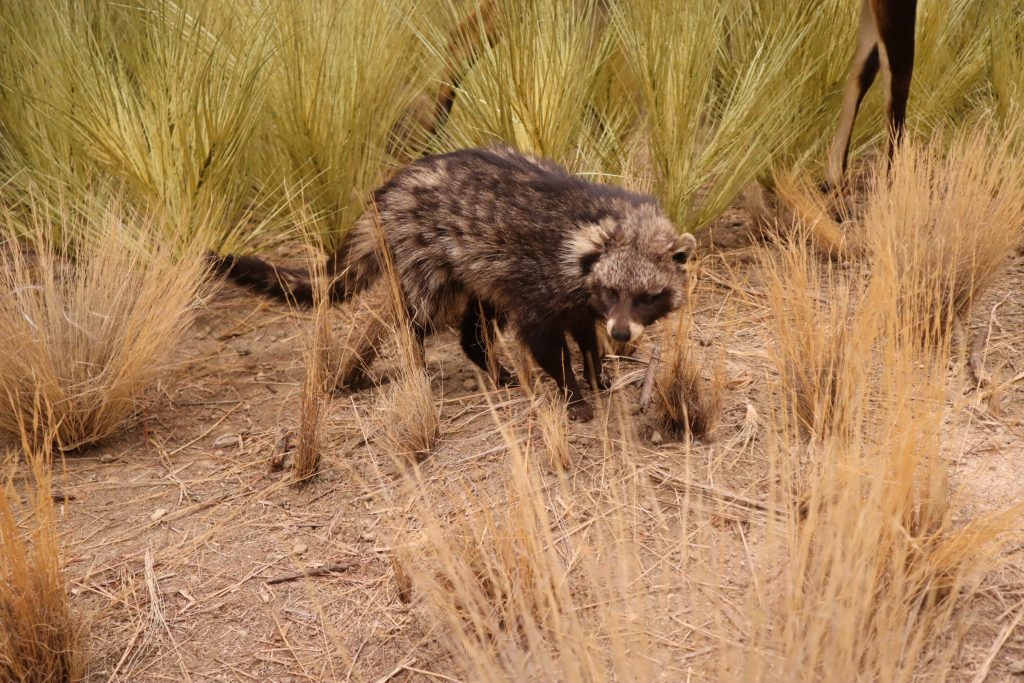
African Civet
Civettictis civetta
Additional Information
The African Civet is a fascinating and elusive mammal native to the sub-Saharan regions of Africa. They are easily distinguished by their distinctive markings, including a black stripe down their back and unique facial markings. Additionally, they are famous for producing a musky secretion called civetone from their perineal glands, which has been historically used in the perfume industry.
- Diet– Omnivorous diet including fruits, berries, small mammals, insects, and carrion.
- Habitat– Diverse habitats such as savannas, forests, and riverine areas.
- Behavior– Nocturnal solitary animals that are overall secretive.
- Lifespan– The average lifespan is 15 to 20 years in the wild.
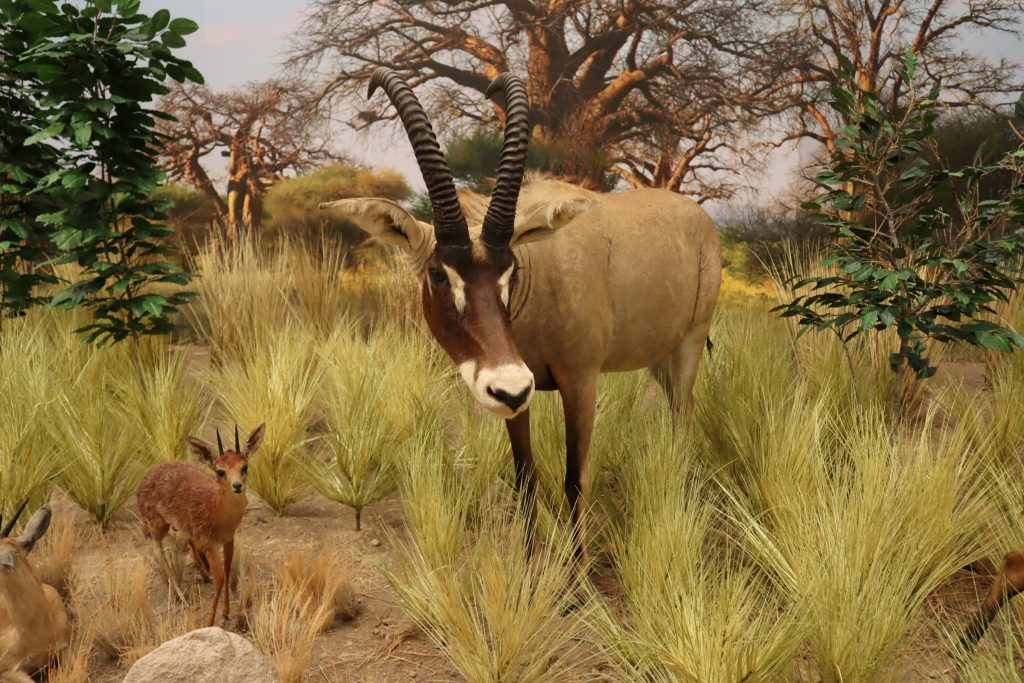
Roan Antelope
Hippotragus equinus
Additional Information
The Roan Antelope is a large and robust species found in countries such as Senegal, Kenya, Botswana, and South Africa. They are easily identifiable by their reddish-brown coat and distinctive facial markings. Interestingly, the roan antelope has an impressive ability to swim. Despite being primarily land-dwelling creatures, roan antelopes can cross rivers and large bodies of water with ease.
- Diet– Herbivorous diet primarily consists of grasses, but also leaves, shoots, and fruits when available.
- Habitat– Savannas, open woodlands, and grasslands.
- Behavior– Social animals living in herds of 6 to 20 individuals led by a dominant male. Males are territorial and often engage in displays of dominance.
- Lifespan– The average lifespan is 15 to 20 years in the wild.
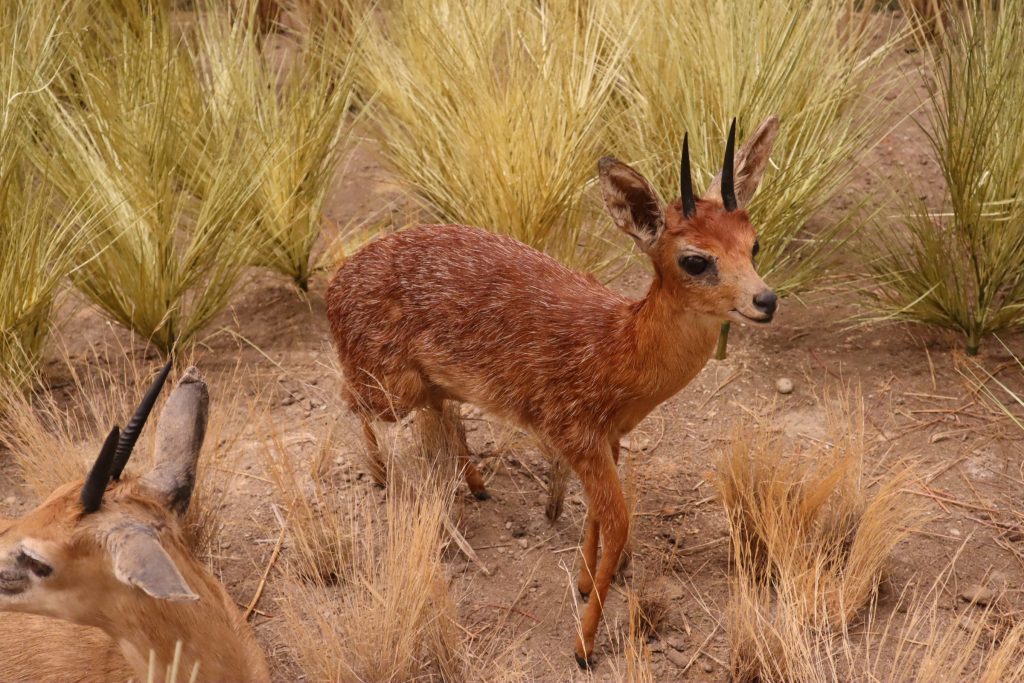
Cape Grysbok
Raphicerus melanotis
Additional Information
The Cape Grysbok is a small, shy antelope native to the fynbos and shrublands of the southwestern regions of South Africa. Their reddish-brown coat, speckled with white, provides excellent camouflage against the vegetation. The Cape grysbok has a remarkable ability to remain almost perfectly still when it senses danger.
- Diet– Herbivorous diet of leaves, shrubs, grasses, and fruits.
- Habitat– Dense bushy shrublands.
- Behavior– Solitary and nocturnal and territorial.
- Lifespan– The average lifespan is 7 to 8 years in the wild.
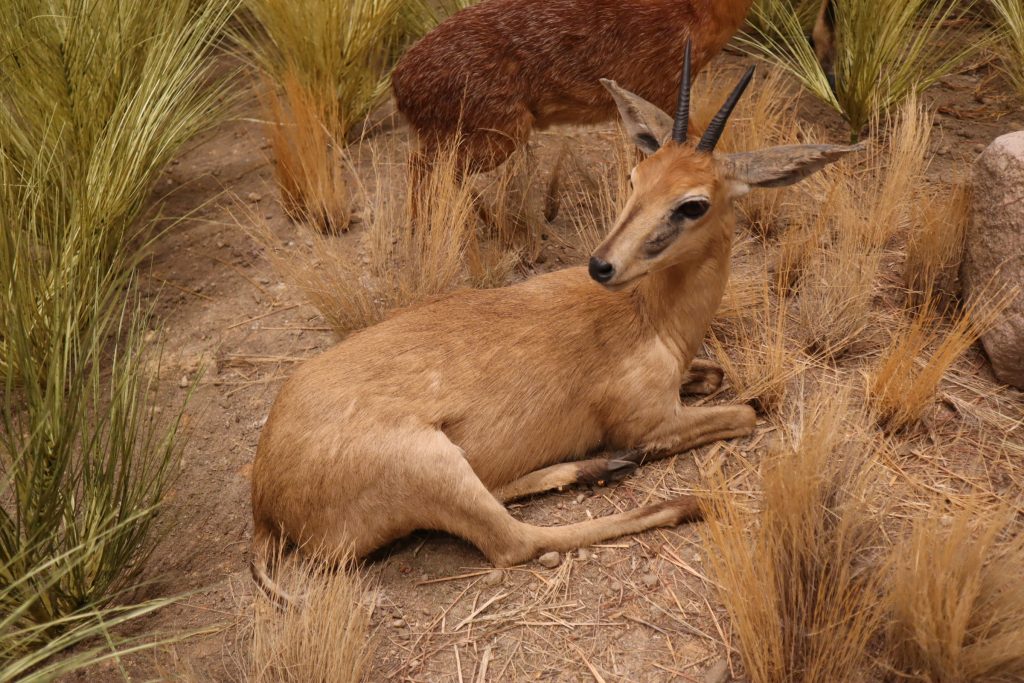
Common Duiker
Sylvicapra grimmia
Additional Information
The Common Duiker is a small to medium-sized antelope found throughout sub-Saharan Africa, known for its adaptability and elusive nature. They use scent glands located near their eyes to mark their territory. Similar to other duikers, they have an incredible ability to remain motionless for extended periods when they sense danger.
- Diet– Opportunistic omnivorous diet consisting of leaves, fruits, seeds, grasses, flower, fungi, and even small animals like birds.
- Habitat– Savannas, woodlands, forests, and semi-arid regions.
- Behavior– Solitary animals active early in the morning and late afternoon. Very territorial.
- Lifespan– The average lifespan is 8 to 12 years in the wild.
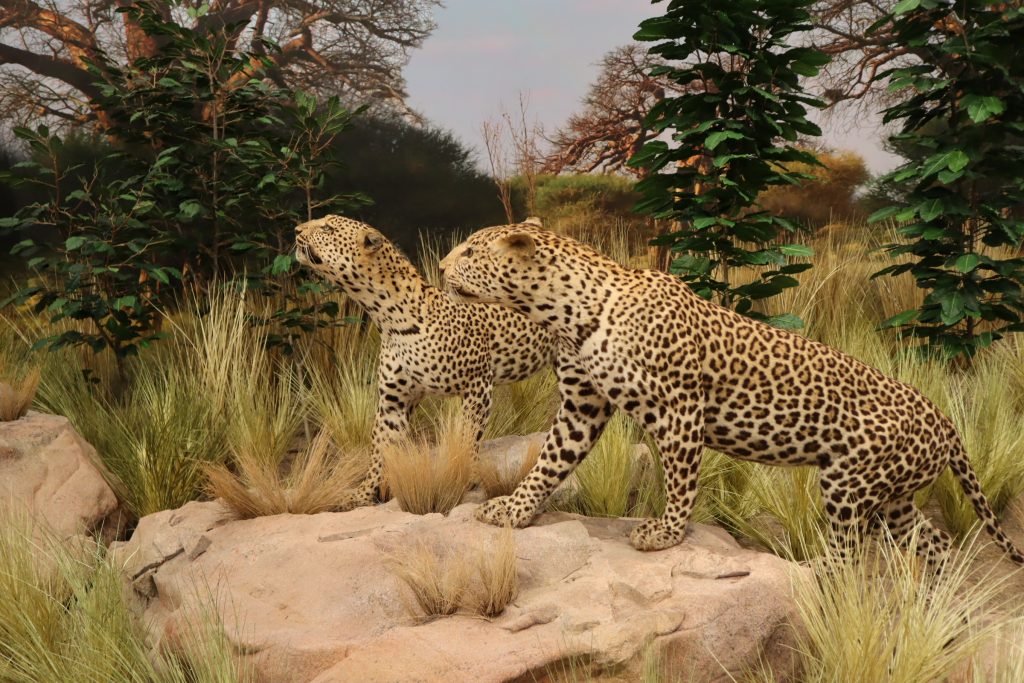
Leopard
Panthera pardus
Additional Information
The Leopard is one of the most adaptable and widely distributed big cats, found in sub-Saharan Africa, parts of Northeast Africa, Central Asia, India, and China. They are adept hunters, known for their stealth, stalking, and powerful ambushes, often dragging their prey into trees to avoid scavengers. Interestingly, they are excellent swimmers, unlike other big cats, and can swim across rivers and lakes, which allows them to hunt fish and other aquatic animals.
- Diet– Carnivorous and incredibly diverse and opportunistic, comprising over 90 species, including ungulates like deer and antelope, primates, rodents, and birds.
- Habitat– Remarkable adaptable, ranging from dense forests and savannas to mountains and semi-deserts.
- Behavior– Nocturnal, solitary, and territorial of large areas.
- Lifespan– The average lifespan is 12 to 17 years in the wild.
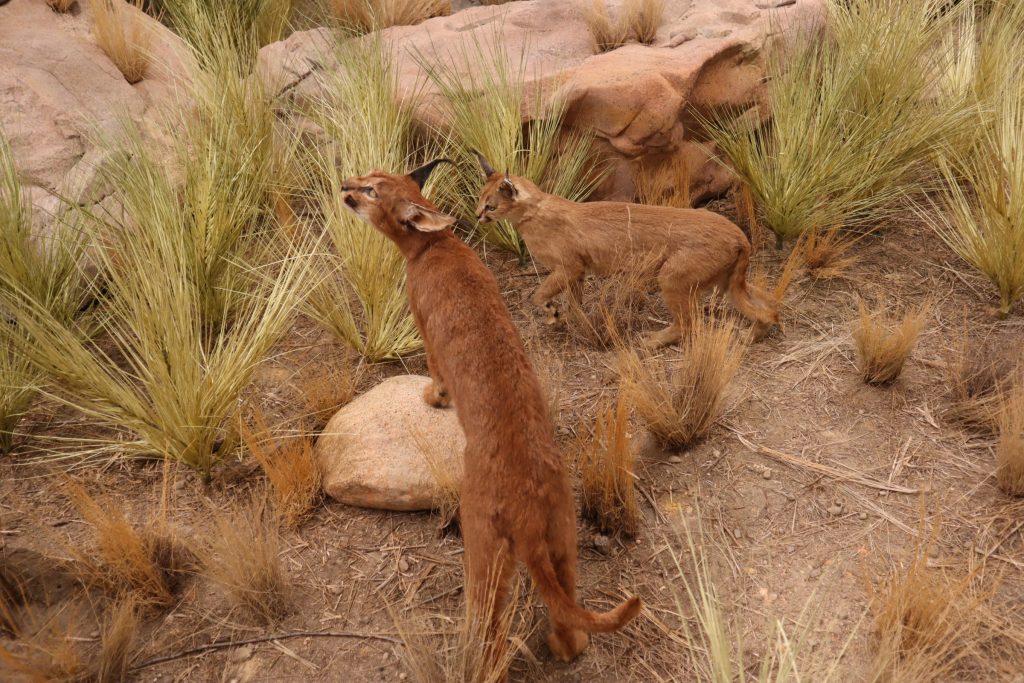
Caracal
Additional Information
The Caracal, a sleek and agile wildcat, is native to Africa, the Middle East, and parts of Central Asia. Distinguished by their long, tufted ears, they are known for their incredible leaping ability, capable of jumping up to 10 feet in the air to catch flying birds.
- Diet– Carnivorous diet consisting of small to medium-sized mammals, birds, and reptiles.
- Habitat– Dry savannas, woodlands, and mountain regions.
- Behavior– Nocturnal, solitary animals.
- Lifespan– The average lifespan is up to 12 years in the wild.
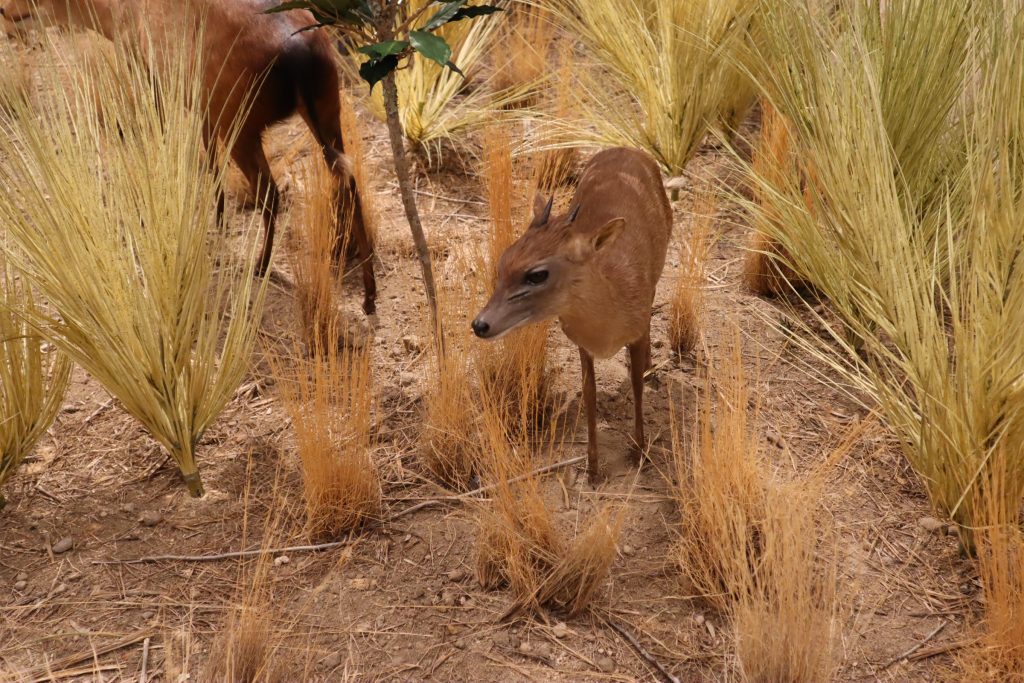
Blue Duiker
Philantomba monticola
Additional Information
The Blue Duiker is a small, elusive antelope native to Central and West Africa. Known for its diminutive size, the blue duiker stands at only 14 to 16 inches tall at the shoulders and weighs between 8 to 20 pounds. Despite their small size, they have an incredible leaping ability of 10 feet in a single bound.
- Diet– Herbivorous diet primarily consisting of leaves, fruits, flowers, and other plant matter.
- Habitat– Tropical rain forests, montane forests, and some savannah regions.
- Behavior– Solitary and form monogamous pairs with small territories.
- Lifespan– The average lifespan is 8 to 12 years in the wild.
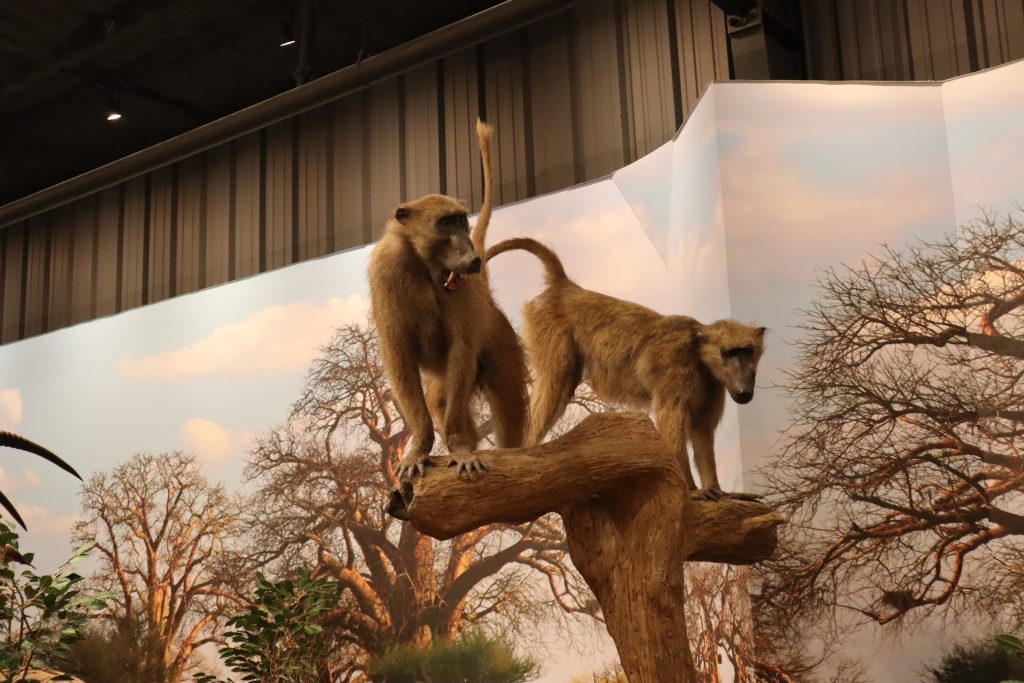
Chacma Baboon
Caracal caracal
Additional Information
The Chacma Baboon is one of the largest and most adaptable of all baboon species, native to southern Africa. They possess complex social structures and bonds that are maintained through grooming, vocalizations, and social interactions. Their intelligence is demonstrated through their use of tools and teamwork. Chacma baboons are known to coordinate activities when raiding crops, where one group might act as a lookout to alert others of potential dangers.
- Diet– Omnivorous diet consisting of fruits, seeds, grass, roots, insects, small mammals, and some birds.
- Habitat– Wide range of habitats including savannas, woodlands, mountains, and coastal areas.
- Behavior– Highly social animals living in hierarchical troops of a few individuals to hundreds.
- Lifespan– The average lifespan is up to 30 years in the wild.
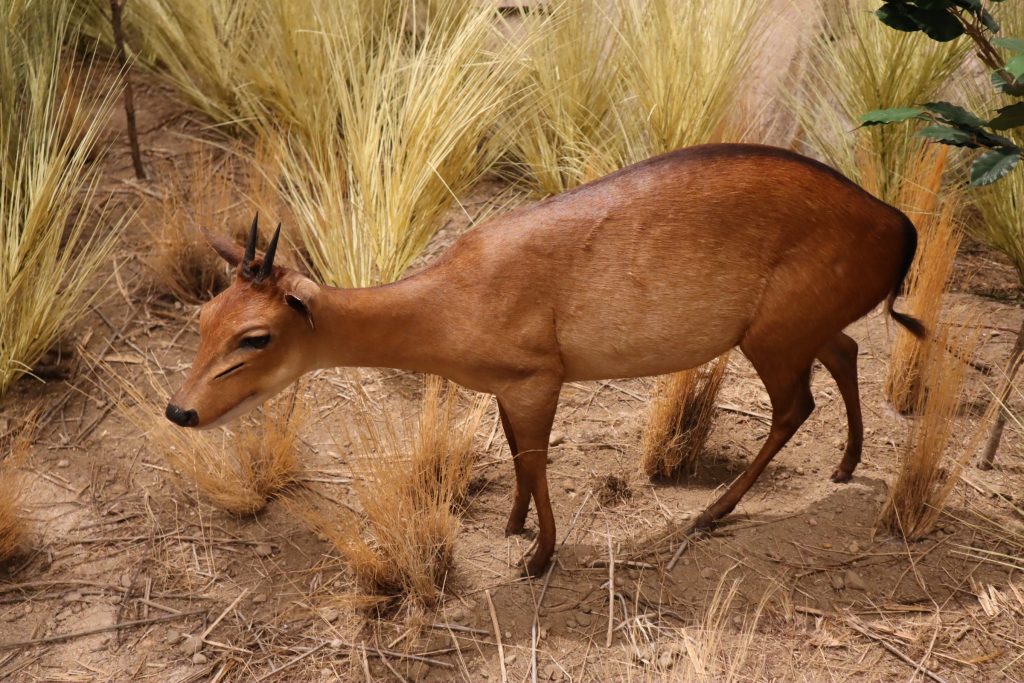
Sharpe’s Grysbok
Raphicerus sharpei
Additional Information
The Sharpe’s Grysbok is a small, shy antelope species native to southeastern Africa, particularly found in countries like Malawi, Zimbabwe, Mozambique, and northern South Africa. A cool fact about Sharpe’s grysbok is their remarkable ability to blend into their environment. Their reddish-brown coats, speckled with white, provide excellent camouflage against the rocky and vegetative backgrounds of their habitat.
- Diet– Herbivorous diet primarily consists of leaves, buds, fruits, and shoots.
- Habitat– Savannas and rocky shrublands.
- Behavior– Solitary animals that live in pairs.
- Lifespan– The average lifespan is 8 to 10 years in the wild.
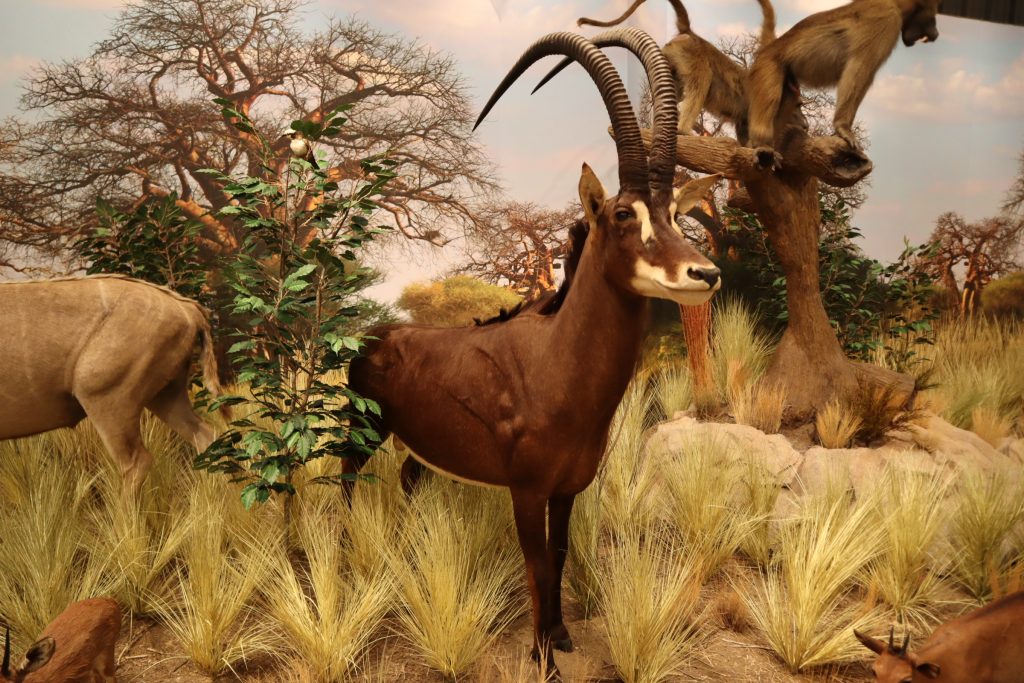
Sable Antelope
Hippotragus niger
Additional Information
The Sable Antelope is a striking and powerful species native to southern and eastern Africa, particularly in countries like Botswana, Zimbabwe, Tanzania, and Mozambique. A cool fact about the sable antelope is their incredible defense mechanisms. When threatened, sable antelopes will stand their ground and face their attackers head-on. With their long, sharp, and curved horns, they can deliver powerful blows to predators, making them formidable opponents.
- Diet– Herbivorous diet primarily consists of grasses, but also leaves, herbs, and shrubs when available.
- Habitat– Savannas, open woodlands, and grasslands.
- Behavior– Social animals living in herds of 10 to 30 individuals led by a dominant male. Males are territorial and often engage in displays of dominance.
- Lifespan– The average lifespan is 16 to 18 years in the wild.
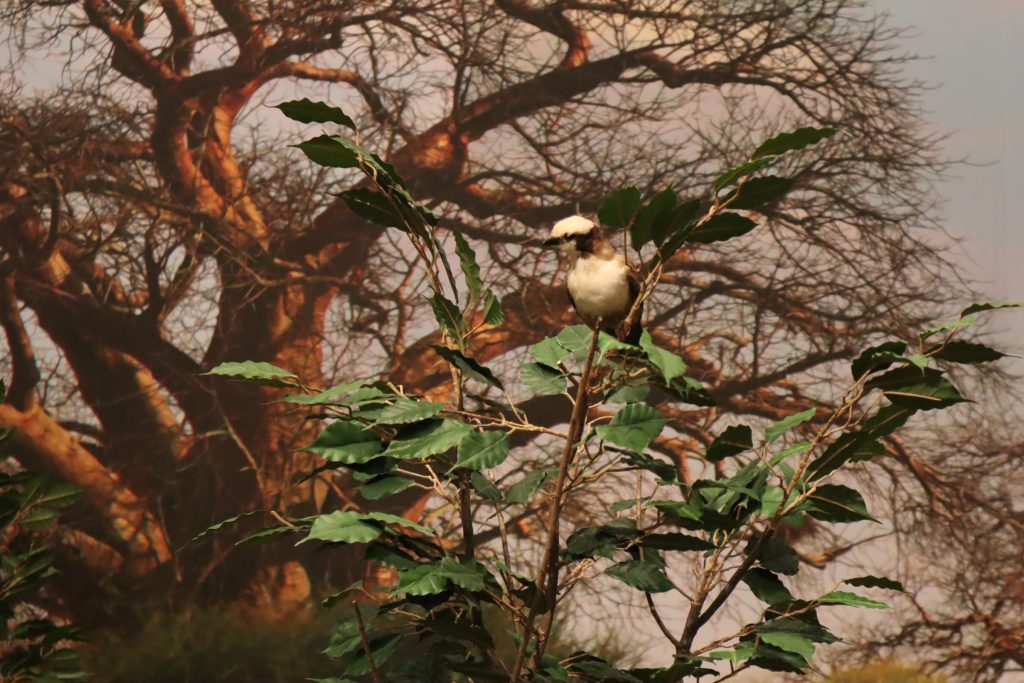
Southern White-crowned Shrike
Eurocephalus anguitimens
Additional Information
The Southern White-crowned Shrike is a distinctive bird species found in the arid and semi-arid regions of southern Africa, including countries like Angola, Botswana, Mozambique, Namibia, and South Africa. Their striking appearance, with a brilliant white crown and forehead contrasted by a stark black mask, makes them easily recognizable in their natural habitat. Interestingly, the southern white-crowned shrike participates in cooperative breeding. In these bird communities, non-breeding individuals often assist in raising the offspring of breeding pairs, including feeding and defending.
- Diet– Insectivorous diet consisting of insects.
- Habitat– Open broadleaf woodlands and riverine woodland in arid savanna.
- Behavior– Social animals engaging in cooperative foraging with other bird species.
- Lifespan– The average lifespan is 10 to 12 years in the wild.
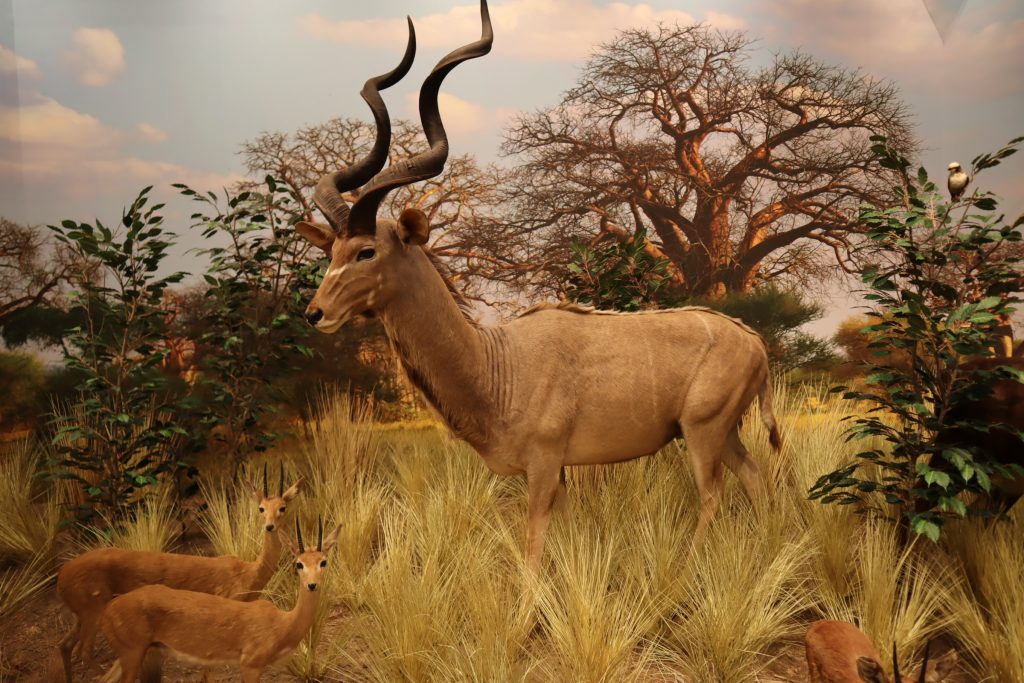
Greater Kudu
Tragelaphus strepsiceros
Additional Information
The Greater Kudu is one of the most majestic antelope species found in the savannas, woodlands, and scrublands of eastern and southern Africa. They are known for their impressive spiral horns, which can reach lengths of over 5 feet and are present in males. These horns are used for defense, dominance displays, and assist in thermoregulation.
- Diet– Herbivorous diet consisting of leaves, shoots, twigs, and fruits.
- Habitat– Dense thickets and forests.
- Behavior– Crepuscular, elusive, and social animals forming herds ranging from small family groups to large aggregations during the dry season.
- Lifespan– The average lifespan is 7 to 8 years in the wild.
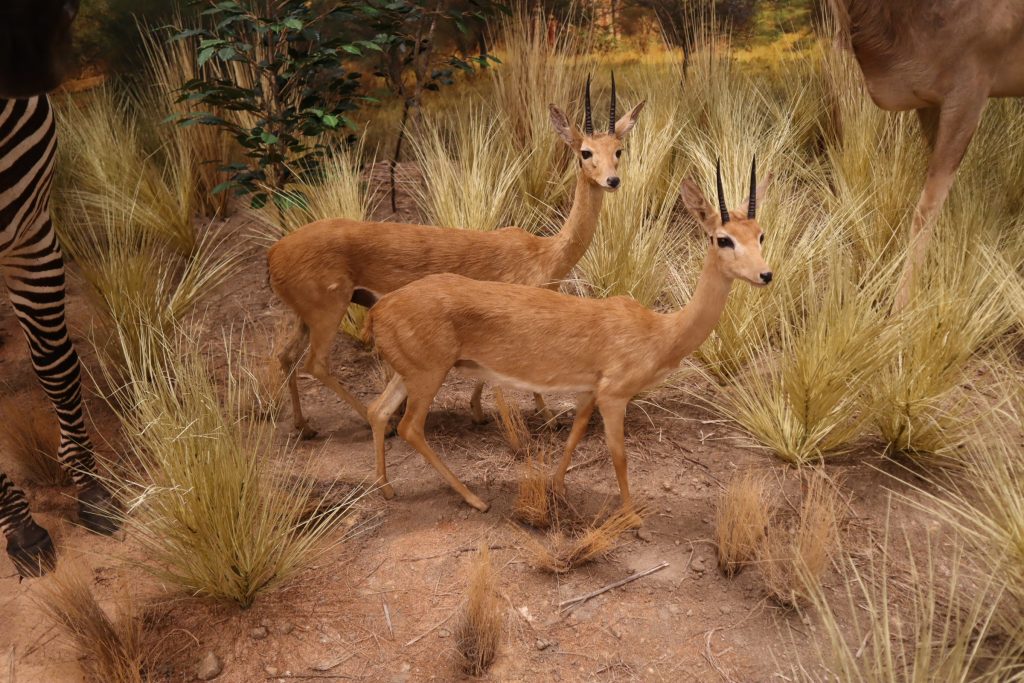
Steenbok
Raphicerus campestris
Additional Information
The Steenbok is a small and graceful antelope species native to the arid and semi-arid regions of southern and eastern Africa, particularly in countries like South Africa, Namibia, Botswana, and Kenya. They are also known for their remarkable speed and agility, which they use to evade predators, darting through the vegetation with ease. When threatened, a steenbok will often lie flat on the ground and remain completely still, relying on its excellent camouflage to blend into the surrounding vegetation. This strategy makes it incredibly difficult for predators to spot them.
- Diet– Herbivorous diet primarily consisting of grasses, leaves, fruits, and shoots.
- Habitat– Savanna, shrubland, and grasslands.
- Behavior– Solitary animals, usually alone or in pairs only during breeding season.
- Lifespan– The average lifespan is 6 to 8 years in the wild.
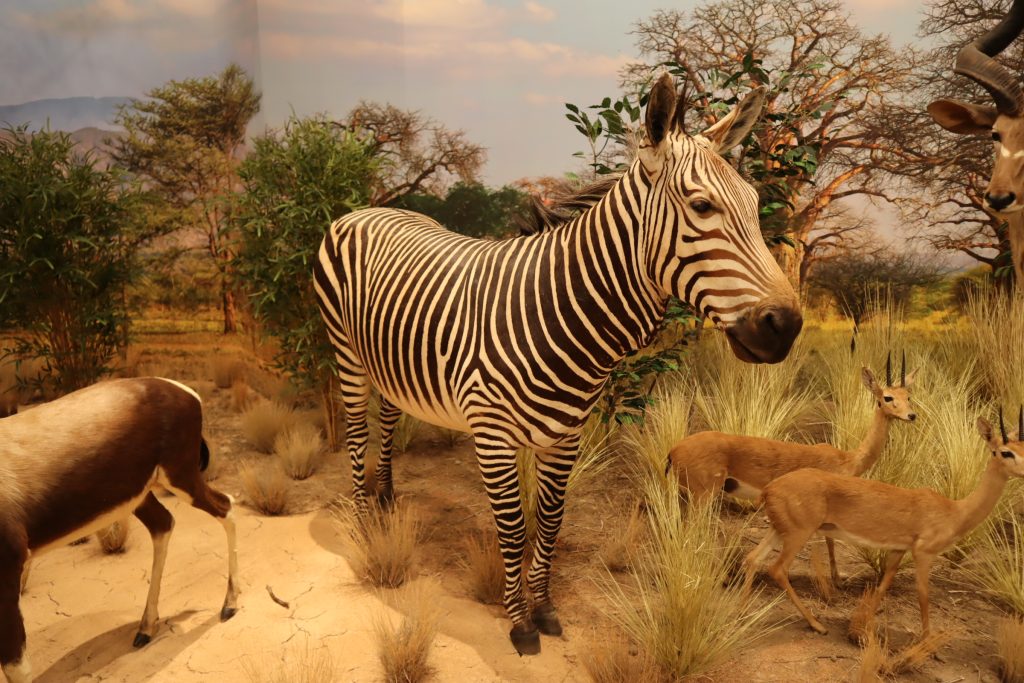
Mountain Zebra
Equus zebra
Additional Information
The Mountain Zebra is a distinctive and hardy species found in the mountainous and hilly regions of southwestern Africa, particularly in Namibia and South Africa.
They are known for their agility and sure-footedness, which allow them to navigate their rocky environments with ease. Interestingly, each zebra’s stripe pattern is as unique as a human fingerprint, making it possible to identify individual zebras by their stripes.
- Diet– Herbivorous diet primarily consisting of grasses, but also leaves, bark, and shrubs when grass is scarce.
- Habitat– Steep rugged terrain and rocky outcrops.
- Behavior– Social animals that live in small family groups or harems usually consisting of one stallion, several mares, and their offspring.
- Lifespan– The average lifespan is 20 to 25 years in the wild.
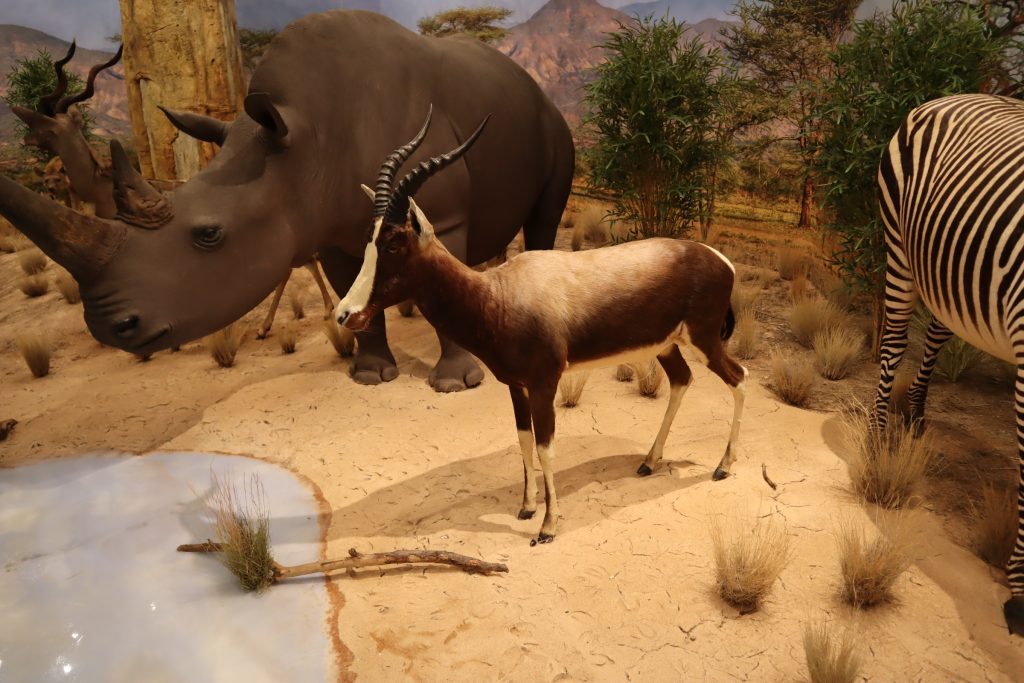
Blesbok
Damaliscus pygargus
Additional Information
The Blesbok is a striking antelope species native to the open plains of South Africa. Their name, derived from the white blaze down the center of their face, is a distinctive feature that sets them apart from other antelope species. At one point during the 19th century, the blesbok was hunted to the brink of extinction, but due to conservation efforts, the population rebounded successfully.
- Diet– Herbivorous diet primarily consisting of small grasses.
- Habitat– Savannas and open grasslands.
- Behavior– Social animal with structured herds and a clear hierarchy.
- Lifespan– The average lifespan is 10 to 12 years in the wild.
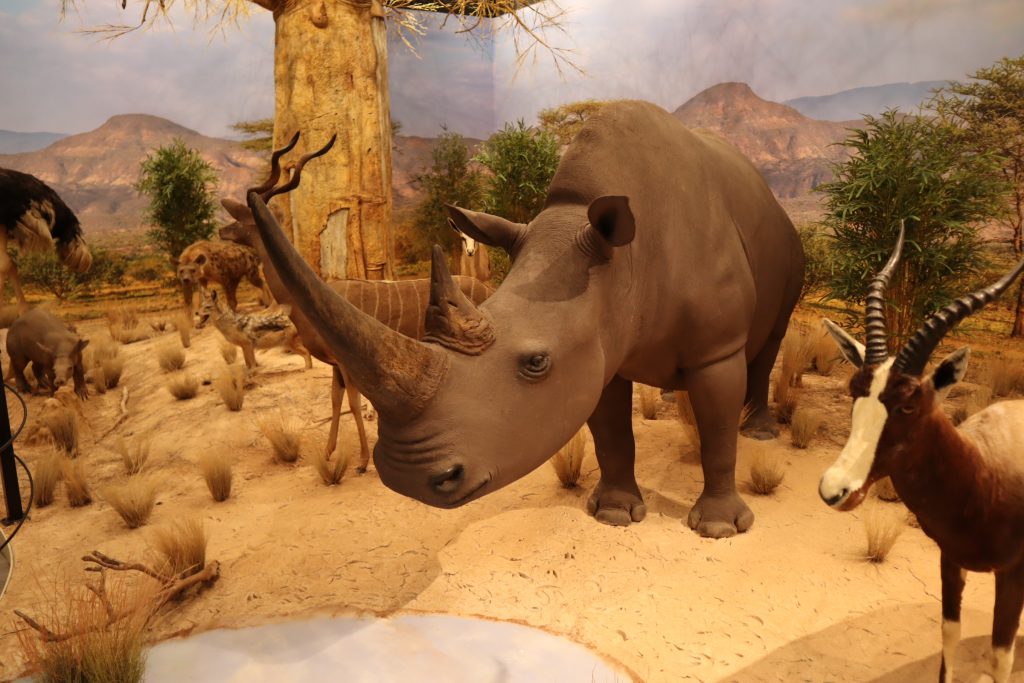
White Rhino
Ceratotherium simum
Additional Information
The White Rhinoceros, also known as the square-lipped rhinoceros, is one of the largest and most impressive land mammals. They prefer large open habitats with access to water. The white rhinoceros is the second-largest land mammal, right after elephants. Despite their immense size and weight, they can run at speeds of up to 30 mph.
- Diet– Herbivorous diet primarily consisting of grasses.
- Habitat– Open grasslands, shrublands, and savannas.
- Behavior– Social animals forming herds called crashes, which consists of females and their calves. Males are more solitary and territorial.
- Lifespan– The average lifespan is 40 to 50 years in the wild.
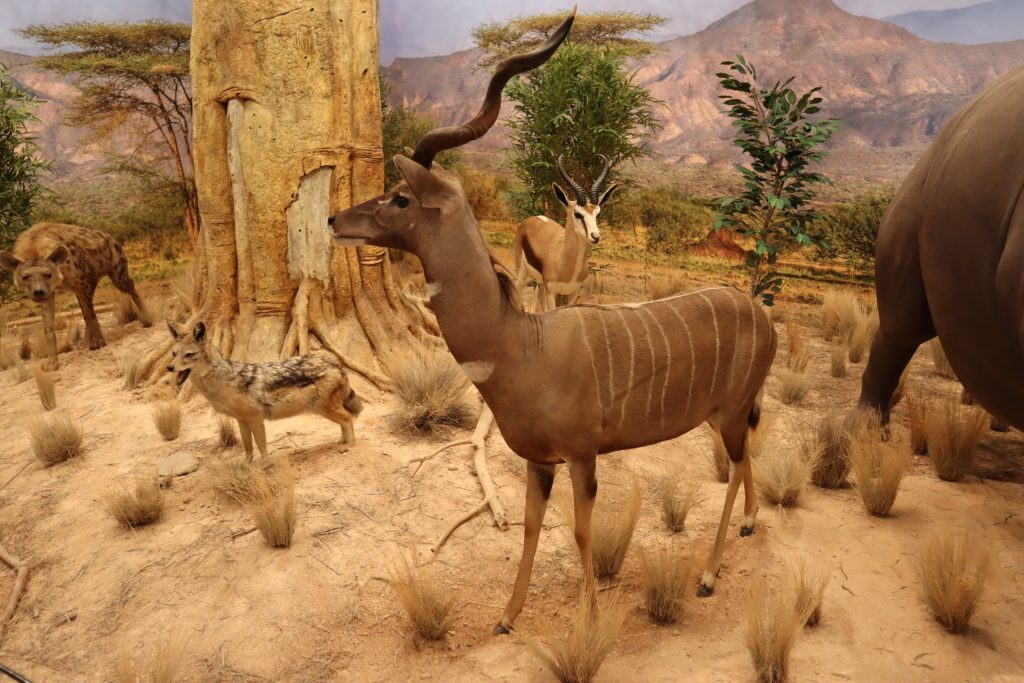
Lesser Kudu
Tragelaphus imberbis
Additional Information
The Lesser Kudu is a beautiful and elusive antelope species native to the semi-arid regions and woodlands of eastern Africa, particularly in Kenya, Tanzania, Ethiopia, and Somalia. They are also known for their agility and can leap impressively to escape threats. The lesser kudu has unique colorations and markings, which help them blend into their surroundings. Their coats are marked with vertical white stripes and spots that mimic the dappled sunlight filtering through the forest canopy.
- Diet– Herbivorous diet consisting of leaves, shoots, twigs, and fruits.
- Habitat– Mix of dense thickets and open woodlands.
- Behavior– Crepuscular, shy and secretive. Found in small groups, with females and their young forming herds while males are solitary or form bachelor groups.
- Lifespan– The average lifespan is 10 to 15 years in the wild.
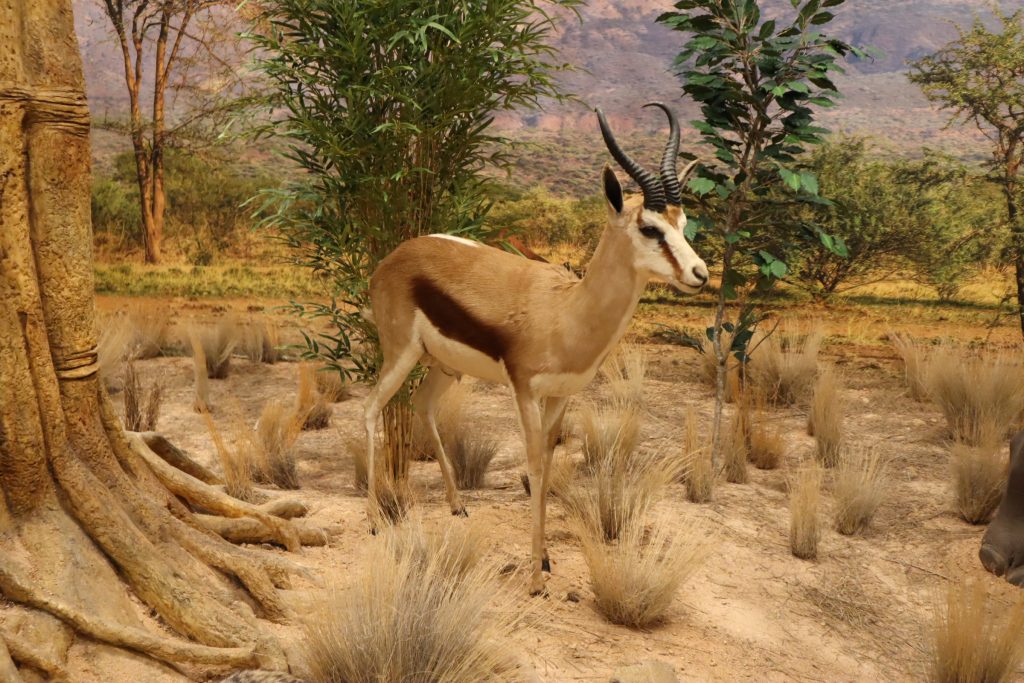
Springbok
Antidorcas marsupialis
Additional Information
The Springbok is a slender and agile antelope species native to southern Africa, including countries like South Africa, Namibia, and Botswana. They are easily distinguished by their reddish-brown coat, white underbelly, and distinctive facial markings. The springbok is also known for their unique “pronking” behavior. When they sense danger or are simply playful, they perform high, stiff-legged jumps into the air, reaching heights of up to 13 feet!
- Diet– Herbivorous diet primarily consisting of grasses, leaves, shrubs, and succulents.
- Habitat– Open grasslands and savannas.
- Behavior– Social animals forming herds that vary in size depending on season and availability of food.
- Lifespan– The average lifespan is 7 to 9 years in the wild.
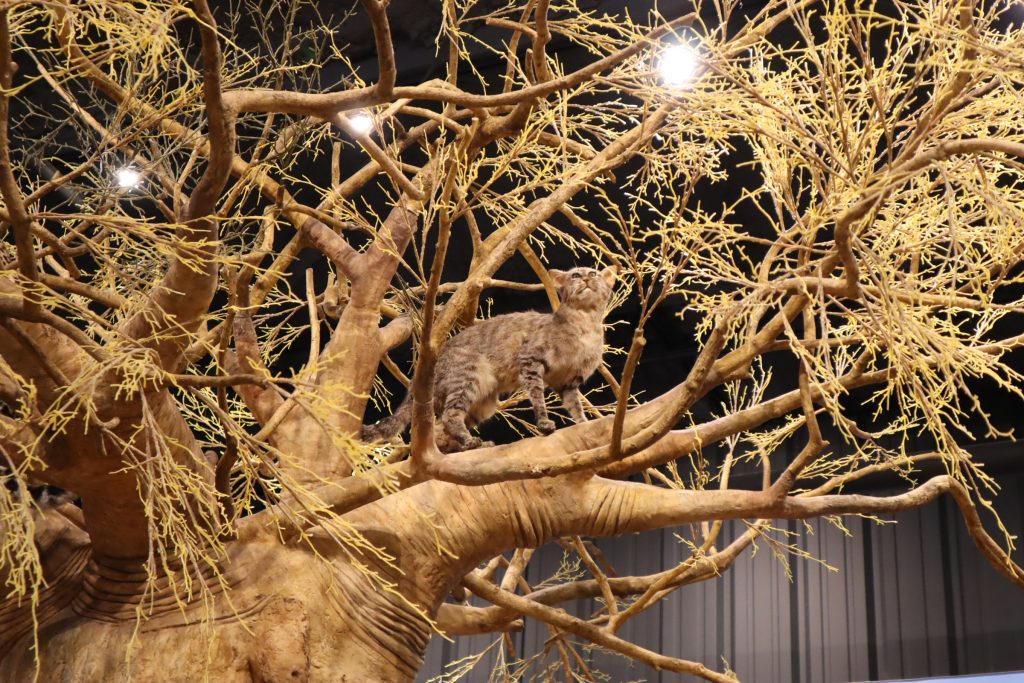
Afro-Asiatic Wildcat
Felis lybica
Additional Information
The Afro-Asiatic Wildcat, also known as the African Wildcat, is a small and elusive feline native to a wide range of habitats across Africa, the Middle East, and parts of Central Asia. These cats are believed to be the direct ancestors of domestic cats that we know and love today. Genetic studies suggest that domestication of the Afro-Asiatic Wildcat began around 9,000 years ago.
- Diet– Carnivorous diet including small mammals such as rodents, birds, insects, and occasionally reptiles.
- Habitat– Various environments including savannas, woodlands, shrublands, and semi-deserts.
- Behavior– Nocturnal solitary animals and very territorial.
- Lifespan– The average lifespan is 12 to 14 years in the wild.
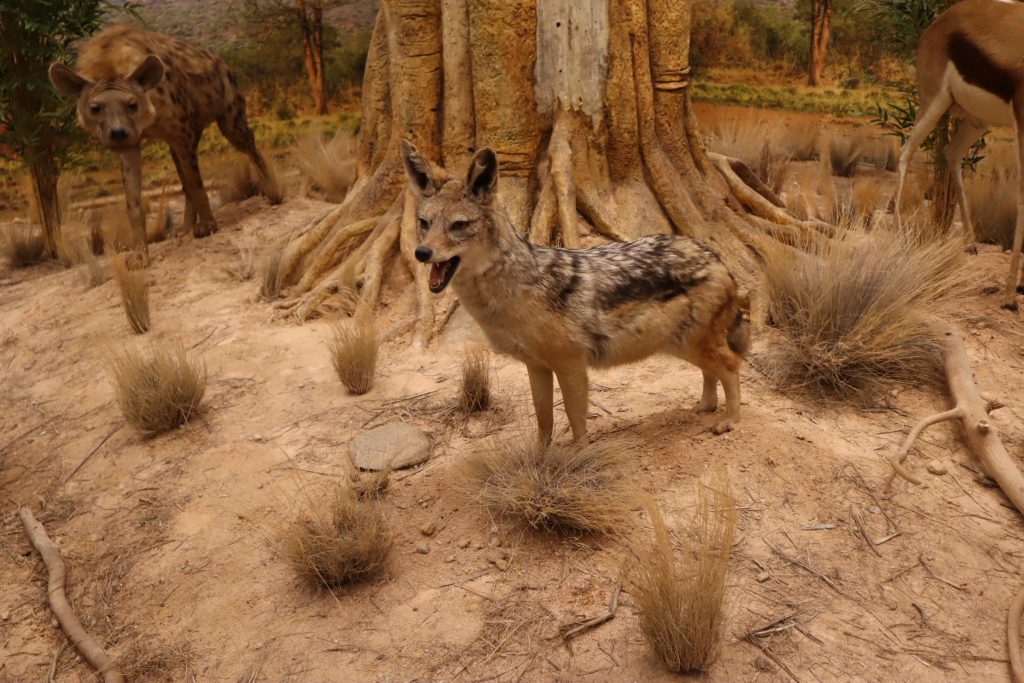
Black-backed Jackal
Lupulella mesomelas
Additional Information
The Black-backed Jackal is a highly adaptable and cunning predator native to
the arid regions of eastern and southern Africa. They are characterized by their striking black saddle marking on their back, which contrast their reddish-brown body. The Black-backed Jackal demonstrates incredible teamwork when hunting. They often hunt in small pairs, using coordinated tactics to flush out prey.
- Diet– Carnivorous diet consisting of small mammals like rodents, hares, birds, reptiles, insects, and carrion.
- Habitat– Savannas and grasslands.
- Behavior– Primarily nocturnal and found in pairs or small family groups forming lifelong bonds. They are known for their monogamous mating system.
- Lifespan– The average lifespan is 8 to 12 years in the wild.
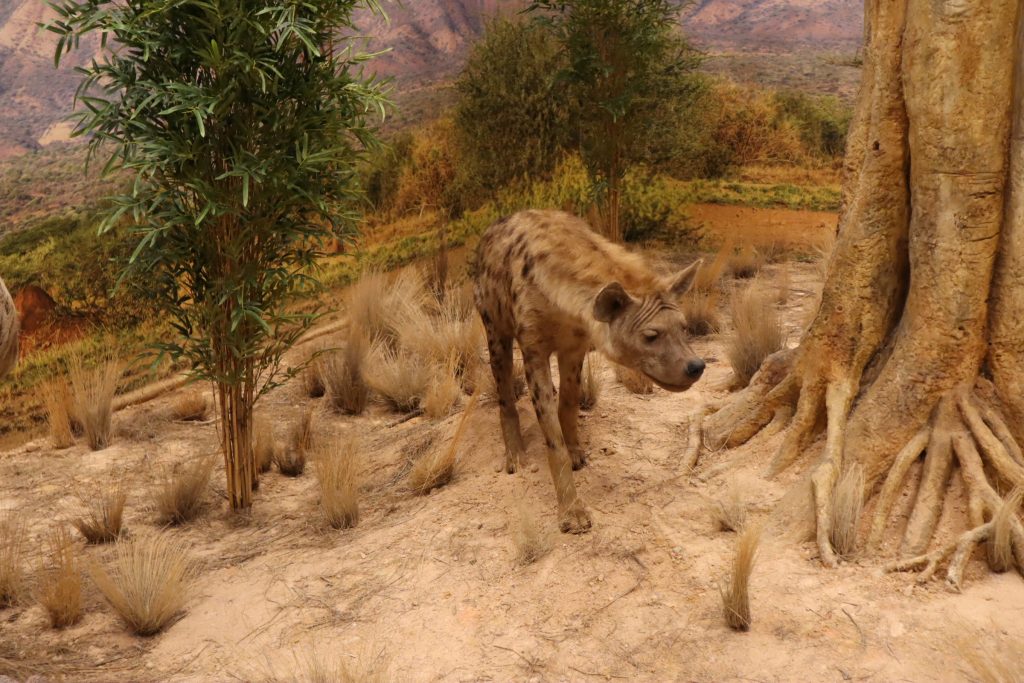
Spotted Hyaena
Crocuta crocuta
Additional Information
The Spotted Hyaena (or hyena), also known as the laughing hyena, is a resilient and highly adaptable carnivore found across sub-Saharan Africa. Spotted hyenas are primarily nocturnal, hunting and scavenging under the cover of darkness, although they can be active during the day. They have exceptional bone-crushing abilities. The spotted hyena’s jaw is among the most powerful of any mammal, capable of exerting enough pressure to crush the bones of even a giraffe leg bone.
- Diet– Carnivorous diet consisting of wildebeests, zebras, birds, and small mammals.
- Habitat– Savannas, grasslands, woodlands, and mountainous regions.
- Behavior– Highly social animals, living in large, complex clans led by a dominate female. Clans are matriarchal and consist of up to 80 individuals.
- Lifespan– The average lifespan is 12 to 20 years in the wild.
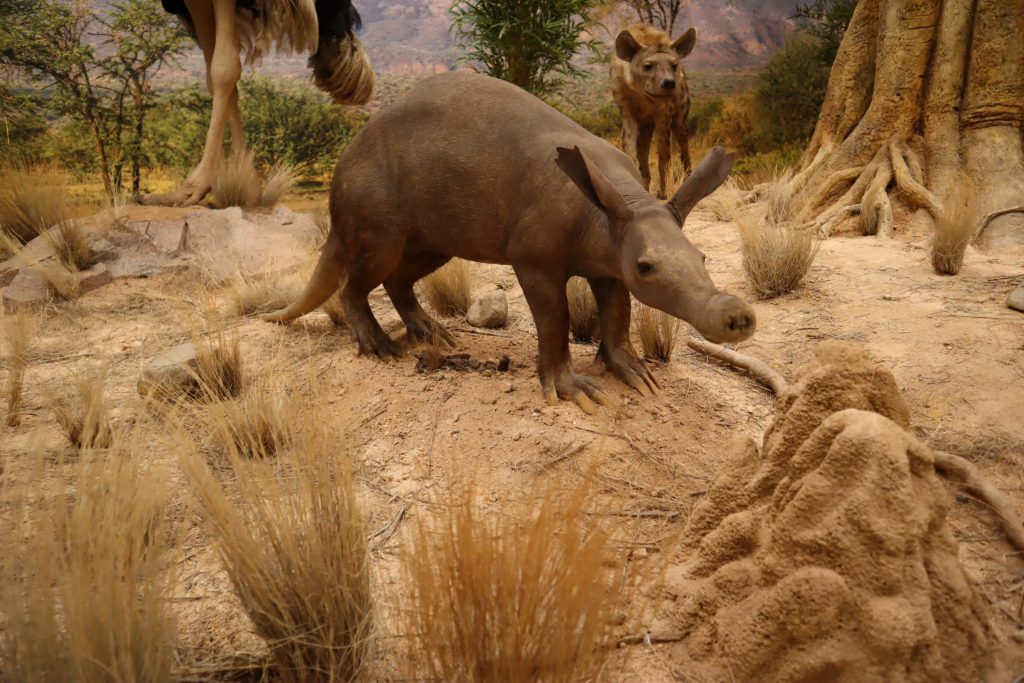
Aardvark
Orycteropus afer
Additional Information
The Aardvark is a nocturnal mammal native to Africa, renowned for its unique appearance and burrowing habits. They have powerful claws that allow them to dig into termite mounds and ant hills with ease. Aardvarks have a long, sticky tongue that can extend up to 12 inches, which they use to consume food. They also have a unique dental structure; their teeth do not have a protective enamel coating and are made of thin tubes of dentine. This dentine continuously grows, allowing them to munch on their favorite meals of ants and termites without wearing down their teeth
- Diet– Primarily consists of ants and termites.
- Habitat– Wide range of habitats including savannas, grasslands, and woodlands.
- Behavior– Solitary and spend the daytime hours sleeping in their burrows.
- Lifespan– The average lifespan is 10 to 15 years in the wild.
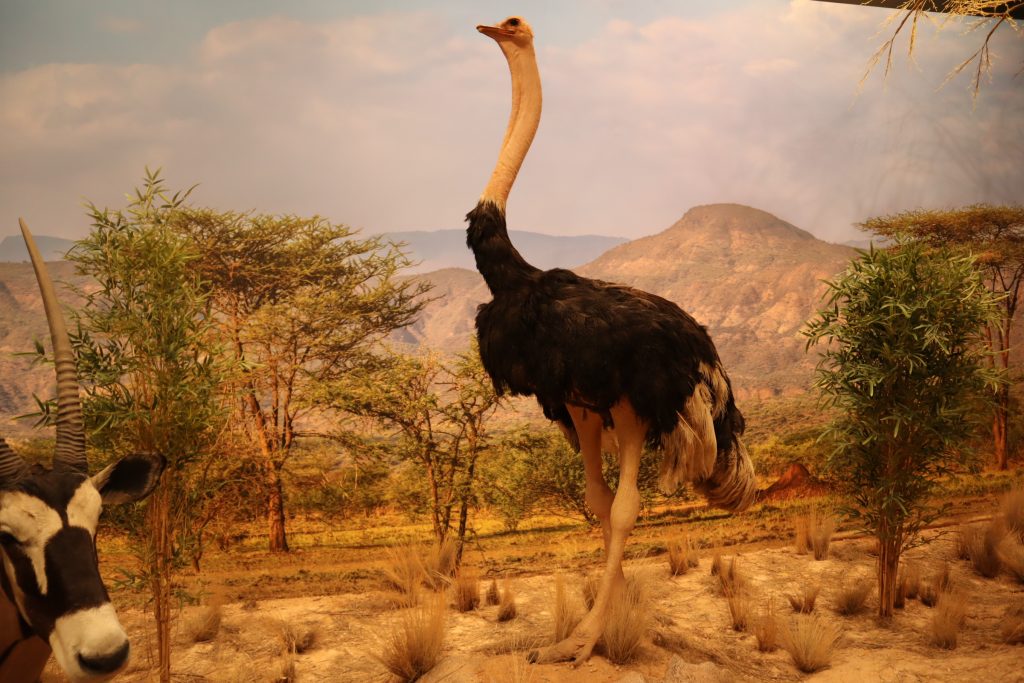
Common Ostrich
Struthio camelus
Additional Information
The Common Ostrich is the largest and heaviest bird in the world, native to the savannas, grasslands, and semi-arid regions of Africa. They inhabit open landscapes that allow them to run at impressive speeds of up to 45 miles per hour, a crucial adaptation for escaping predators. The common ostrich has exceptional vision, with eyes that are among the largest of any land animal, measuring about 2 inches in diameter.
- Diet– Herbivorous diet consisting of a variety of plants, seeds, fruits, and sometimes insects.
- Habitat– Savannas and grasslands.
- Behavior– Social animals forming small flocks from a few up to 50. Dominate males mate with multiple females, who lay their eggs in a communal nest.
- Lifespan– The average lifespan is 30 to 40 years in the wild.
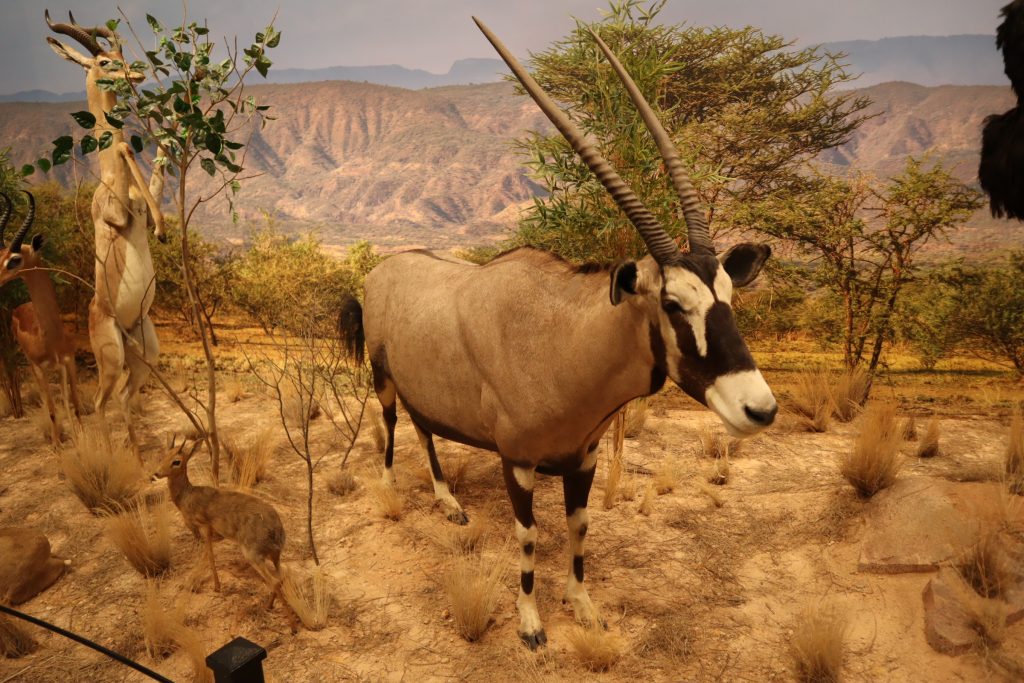
Gemsbok
Oryx gazella
Additional Information
The Gemsbok is a striking and robust antelope native to the arid regions of southern Africa, particularly in Namibia, Botswana, and South Africa. They have several physical adaptations that help them thrive in such harsh conditions. They have thick, leathery tongues that allow them to eat thorny plants, and their light-colored coat reflects the intense desert heat. Additionally, the gemsbok can regulate their body temperature, allowing it to rise to avoid sweating and conserve water. They have blood vessels in their nose that cool the blood before it reaches the brain, preventing overheating.
- Diet– Herbivorous diet consisting of grasses, herbs, roots, and leaves.
- Habitat– Open plains, deserts, and savannas.
- Behavior– Social animals forming herds with a social structure with a dominant male.
- Lifespan– The average lifespan is 18 to 20 years in the wild.
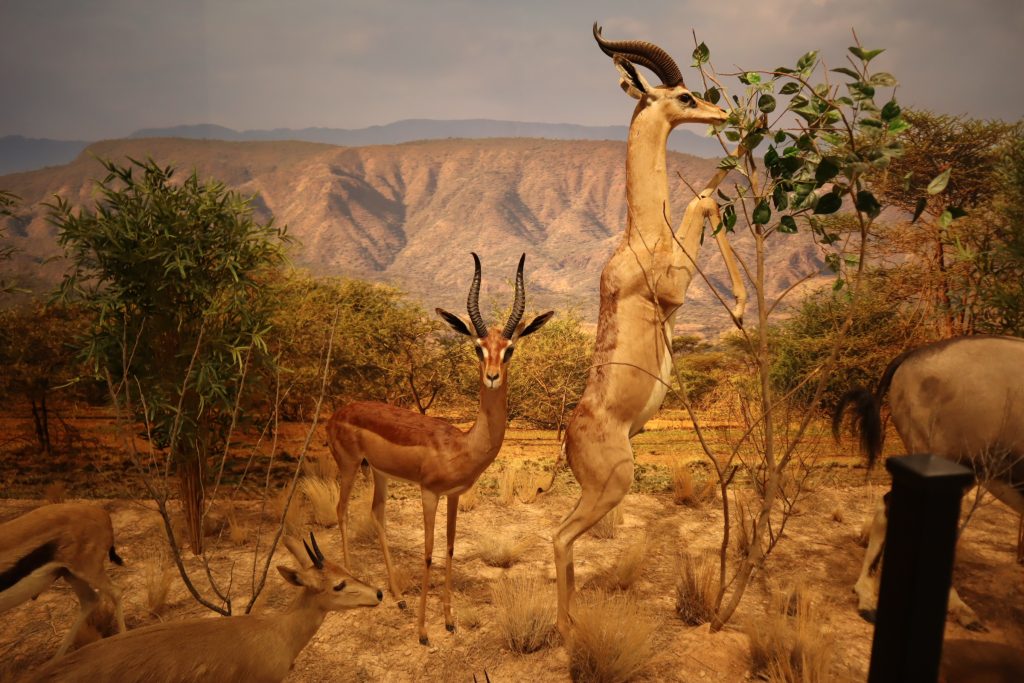
Gerenuk
Litocranius walleri
Additional Information
The Gerenuk, also known as the giraffe gazelle, is an elegant and unique antelope species native to the arid regions of East Africa, particularly in Ethiopia, Somalia, and Kenya. They are distinct in how they can stand on their hind legs and stretch their unique long, slender necks to reach higher vegetation.
- Diet– Herbivorous diet consisting of leaves, flowers, fruits, and buds.
- Habitat– Dry bushlands, savannas, and scrublands.
- Behavior– Crepuscular, solitary animals that sometimes will live in small herds and are territorial.
- Lifespan– The average lifespan is 8 to 12 years in the wild.
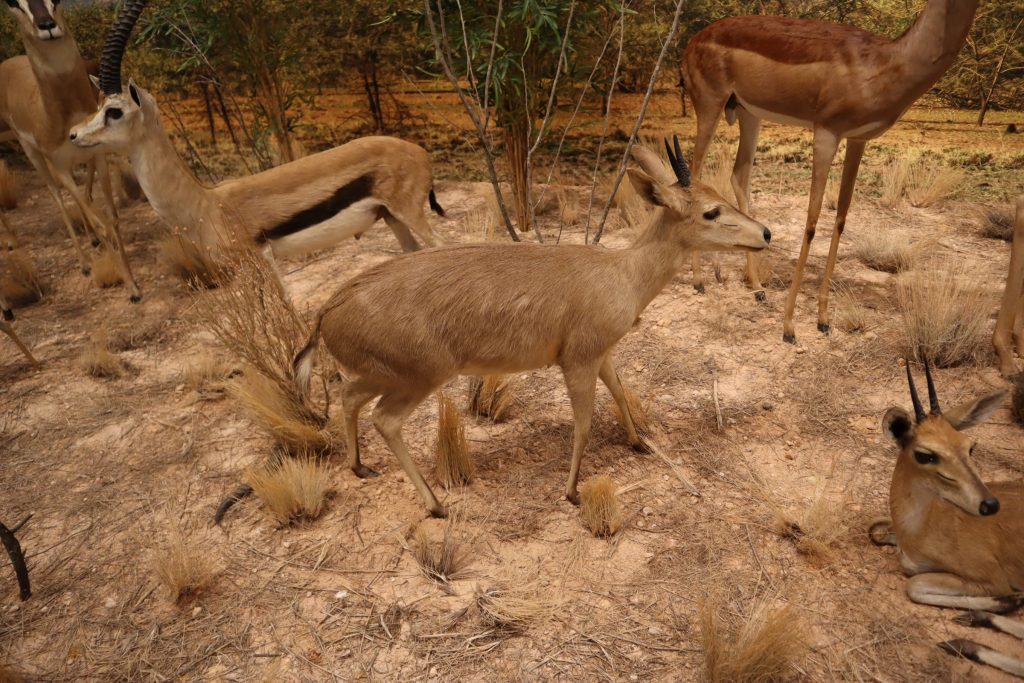
Common Duiker
Sylvicapra grimmia
Additional Information
The Common Duiker is a small to medium-sized antelope found throughout sub-Saharan Africa, known for its adaptability and elusive nature. They use scent glands located near their eyes to mark their territory. Similar to other duikers, they have an incredible ability to remain motionless for extended periods when they sense danger.
- Diet– Opportunistic omnivorous diet consisting of leaves, fruits, seeds, grasses, flower, fungi, and even small animals like birds.
- Habitat– Savannas, woodlands, forests, and semi-arid regions.
- Behavior– Solitary animals active early in the morning and late afternoon. Very territorial.
- Lifespan– The average lifespan is 8 to 12 years in the wild.
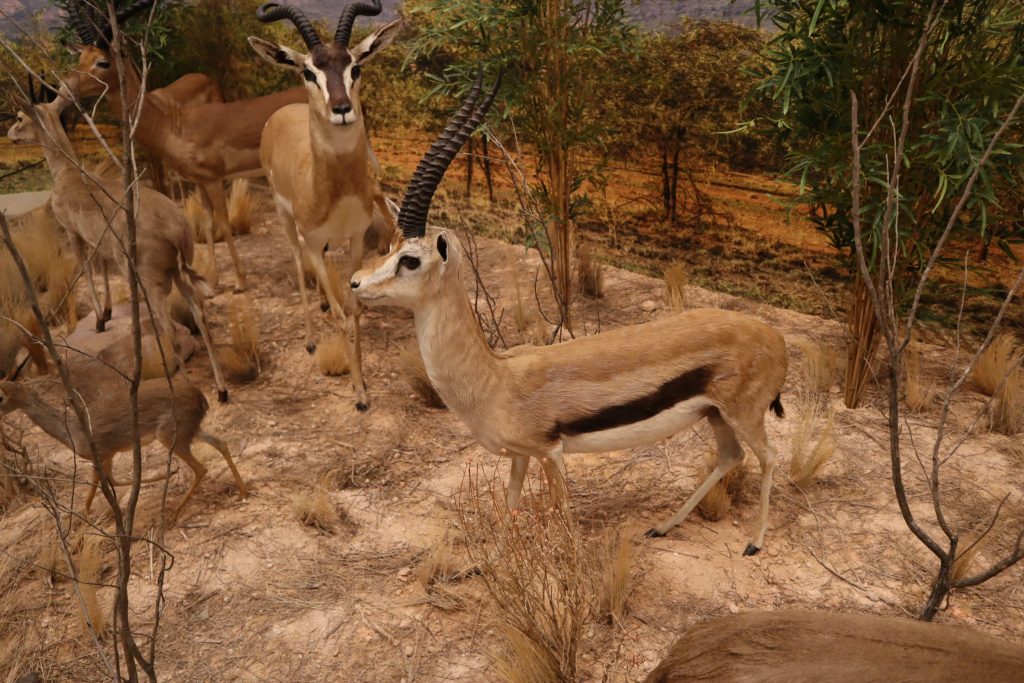
Thomson’s Gazelle
Eudorcas thomsonii
Additional Information
The Thomson’s Gazelle is a small and graceful antelope species native to East Africa, particularly in countries like Kenya and Tanzania. They are easily identifiable by their striking reddish-brown coat, white underbelly, and distinctive black side stripe. The thomson’s gazelle are known for their remarkable speed and agility, capable of reaching speeds of up to 37 mph to escape predators.
- Diet– Herbivorous diet primarily consisting of grasses, leaves, and shrubs.
- Habitat– Savanna and grasslands.
- Behavior– Social animals forming herds that vary in size depending on season and availability of food.
- Lifespan– The average lifespan is 10 to 12 years in the wild.
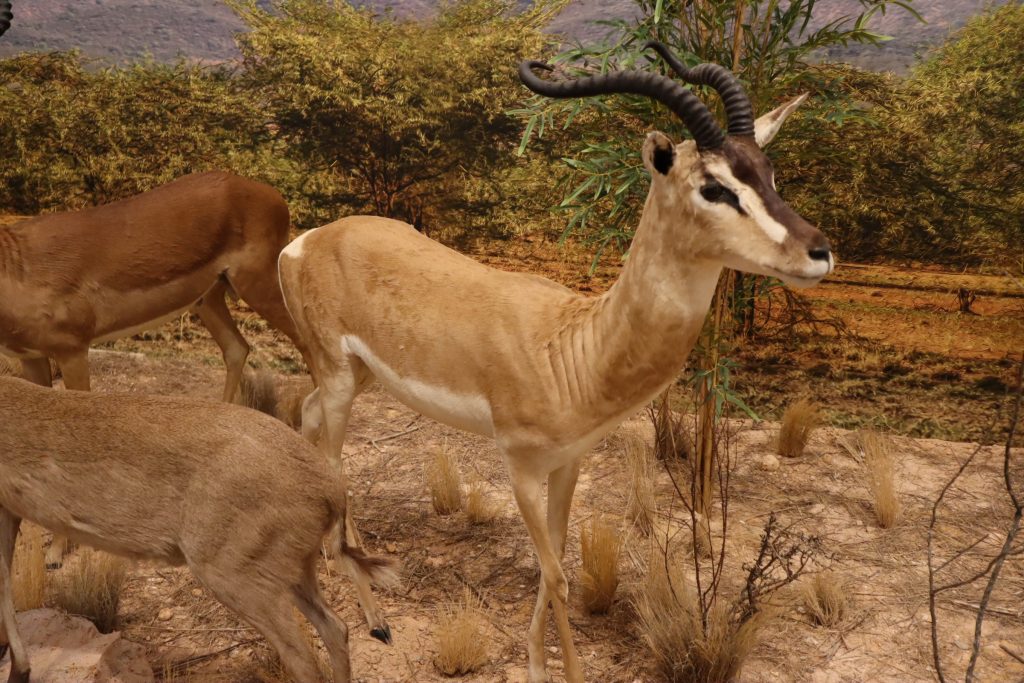
Soemmerring’s Gazelle
Nanger soemmerringii
Additional Information
The Soemmerring’s Gazelle is an elegant antelope species native to the arid and semi-arid regions of the Horn of Africa, specifically in countries like Ethiopia, Eritrea, and Djibouti. They have uniquely adapted to their arid environment. The Soemmerring’s gazelle has specialized kidneys that allow them to conserve water efficiently, enabling them to survive for long periods without drinking. This adaptation is crucial for living in the harsh, dry conditions of the Horn of Africa, where water sources can be scarce.
- Diet– Herbivorous diet primarily consists of grasses, leaves, and shrubs.
- Habitat– Open grasslands and Savannas.
- Behavior– Social animals forming small herds that consist of females and their young, while males are either solitary or form bachelor groups.
- Lifespan– The average lifespan is 10 to 12 years in the wild.
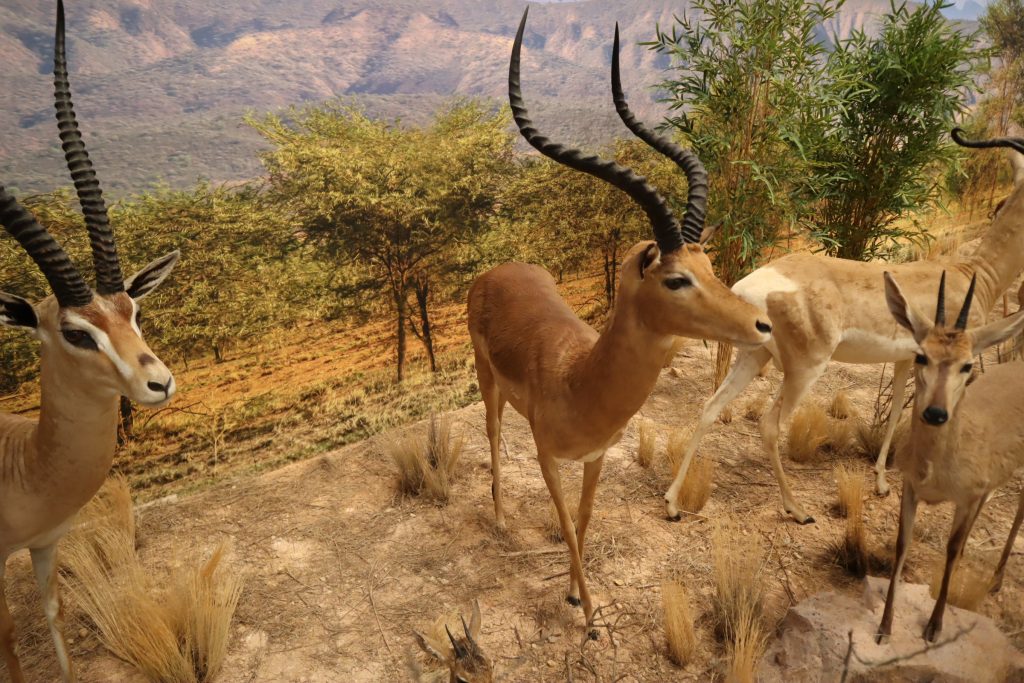
Impala
Aepyceros melampus
Additional Information
The Impala is a medium-sized antelope found in the savannas and light woodlands of eastern and southern Africa. They are known for their agility and incredible leaping ability, capable of making high jumps of up to 10 feet and covering distances of up to 33 feet in a single bound.
- Diet– Herbivorous diet consisting of grasses, leaves, fruits, and seeds.
- Habitat– Savannas, grasslands, and bushy woodlands.
- Behavior– Social animals that form large herds particularly during the dry season.
- Lifespan– The average lifespan is 12 to 15 years in the wild.
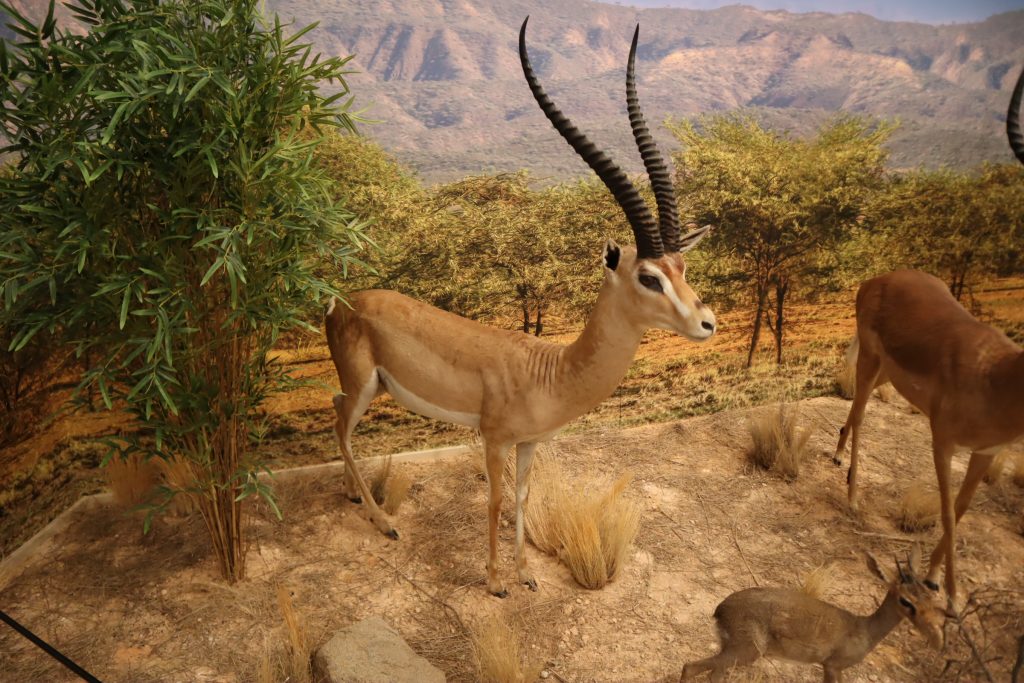
Grant’s Gazelle
Nanger granti
Additional Information
The Grant’s Gazelle is a graceful and resilient antelope species native to the
open plains and shrublands of East Africa, particularly in countries like Kenya, Tanzania, and Ethiopia. They have adapted to thrive in arid environments. The grant’s gazelle, unlike most antelope species, can go for extended periods without drinking water, as they obtain moisture from the plants they consume.
- Diet– Herbivorous diet consisting of grasses, leaves, and shoots.
- Habitat– Open grasslands and sparse woodlands.
- Behavior– Social animals forming herds ranging from small family groups to large aggregations during the dry season.
- Lifespan– The average lifespan is 10 to 12 years in the wild.