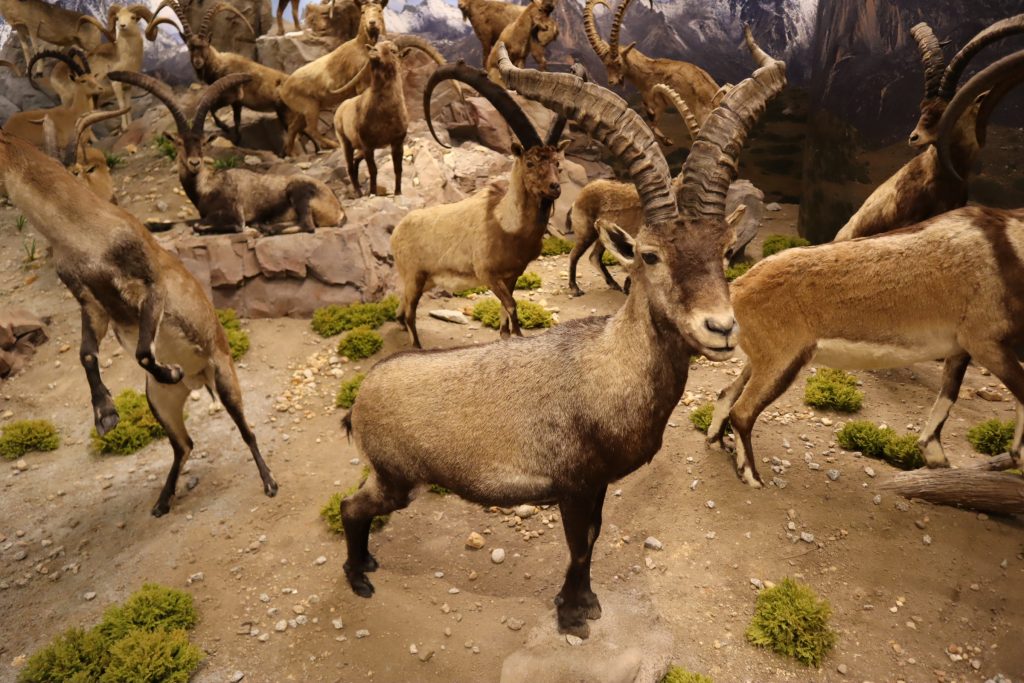
Iberian Wild Goat
Capra pyrenaica
Additional Information
The Iberian Wild Goat, also known as the Spanish ibex, is a hardy and agile ungulate native to the mountainous regions of the Iberian Peninsula, particularly in Spain and Portugal. These goats thrive in rocky, steep terrains and alpine meadows, often found at elevations ranging from 800 to 3,500 meters.
- Diet– Herbivorous diet consisting mainly of dry grasses, shrubs, and leaves.
- Habitat– Rocky mountainous areas.
- Behavior– Crepuscular, social creatures, typically forming small herds led by a dominant male.
- Lifespan– The average lifespan is 10 to 14 years in the wild.
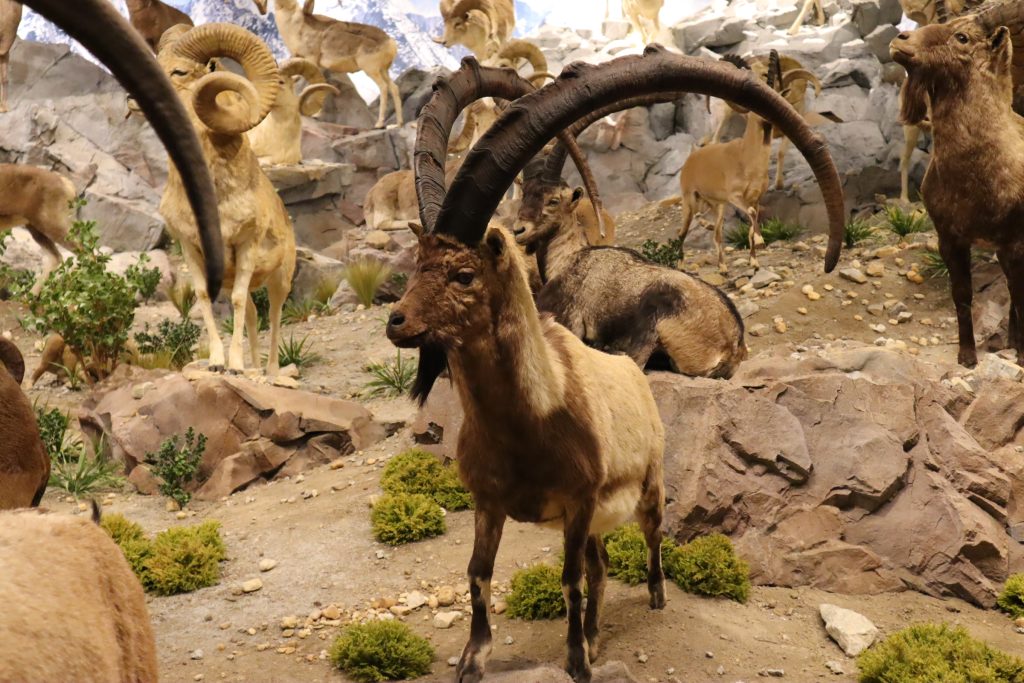
Wild Goat
Capra aegagrus
Additional Information
The Wild Goat, also known as the bezoar ibex, is a hardy and adaptable species found in the rugged mountainous regions of the Middle East and Central Asia, particularly in countries like Turkey, Iran, and Afghanistan. They are known for their agility and surefootedness, often seen leaping and climbing across seemingly inaccessible cliff faces with ease.
- Diet– Herbivorous diet primarily consisting of grasses, leaves, twigs, and bark.
- Habitat– Mix of rocky terrain and open areas for grazing.
- Behavior– Social animal, typically forming groups based on age and sex.
- Lifespan– The average lifespan is 10 to 15 years in the wild.
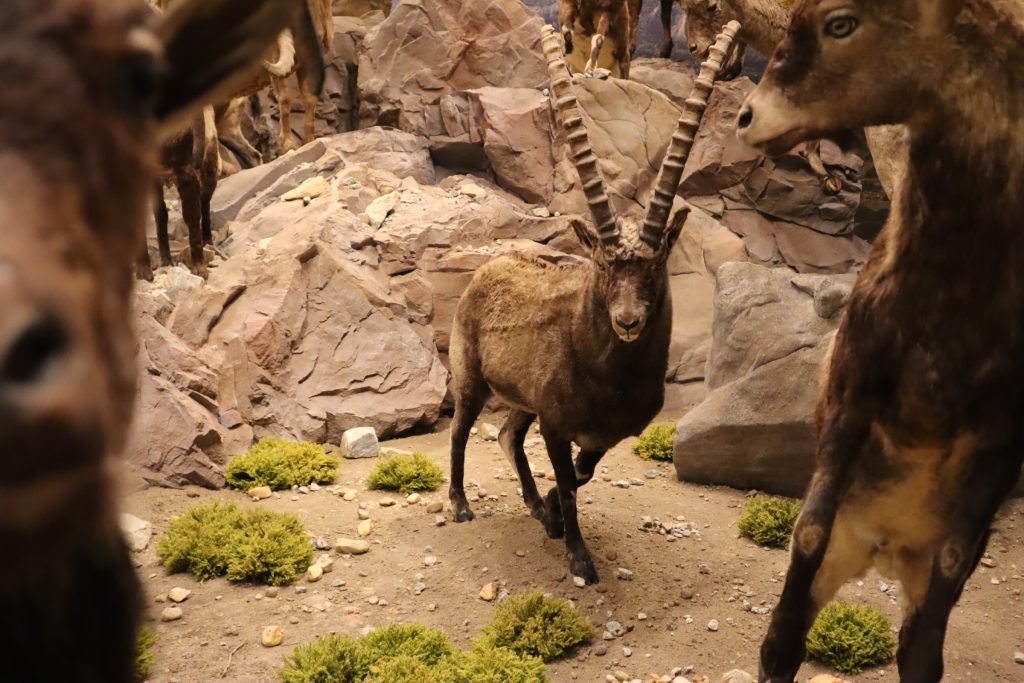
Siberian Ibex
Capra sibirica
Additional Information
The Siberian ibex, a hardy and resilient wild goat, is found across the rugged, mountainous regions of Central Asia, including the Altai, Tien Shan, and Himalayan ranges. These impressive animals thrive in steep, rocky terrains at elevations ranging from 2,000 to 5,000 meters. They have specially adapted hooves with split, cloven feet that provide incredible traction on rocky surfaces.
- Diet– Herbivorous diet consisting mainly of grasses, herbs, and shrubs.
- Habitat– Steep rocky mountainous areas and alpine meadows.
- Behavior– Crepuscular, social creatures, forming small herds, particularly in the winter months. Adult males are more solitary outside breeding season.
- Lifespan– The average lifespan is 10 to 15 years in the wild.
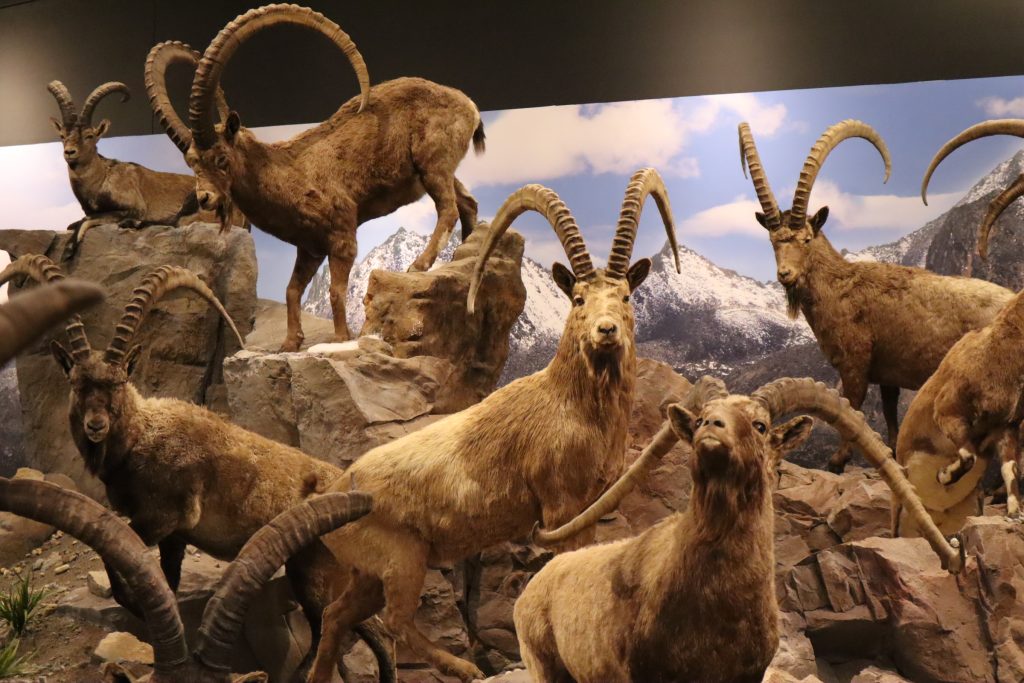
Nubian Ibex
Capra nubiana
Additional Information
The Nubian Ibex, a striking wild goat, is native to the mountainous regions of Northeast Africa and the Arabian Peninsula. These agile climbers thrive in steep, rugged terrains, often found at elevations up to 2,500 meters. They have an extraordinary ability to survive in arid desert climates. They can go for long periods without drinking water, relying on moisture from the plants they eat.
- Diet– Herbivorous diet consisting mainly of grasses, leaves, herbs, and fruits.
- Habitat– Steep rocky terrain and shrublands.
- Behavior– Crepuscular, social creatures, typically forming small herds led by a dominant male.
- Lifespan– The average lifespan is up to 15 years in the wild.
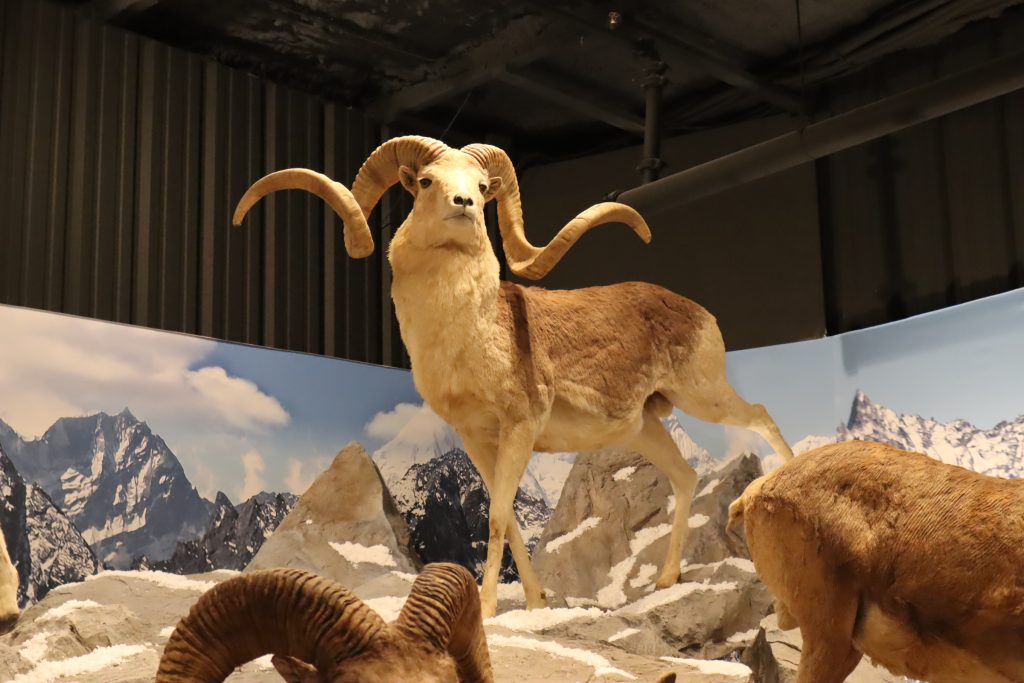
Argali
Ovis ammon
Additional Information
The Argali, the world’s largest species of wild sheep, roams the high-altitude regions of Central Asia, including Mongolia, Tibet, and Kazakhstan. These impressive animals thrive in alpine meadows and rocky, mountainous terrains at elevations often exceeding 3,000 meters. They have truly impressive horns. Not just for show, these horns, which can grow over six feet long, are used by males in dramatic battles for dominance during the mating season. The sound of two argali rams clashing their horns can echo across the mountains.
- Diet– Herbivorous diet consisting mainly of dry grasses, sedges, and shrubs.
- Habitat– Rocky mountainous areas.
- Behavior– Social creatures, typically forming groups that vary in size depending on the season- large hers in winter and smaller groups in summer.
- Lifespan– The average lifespan is 10 to 13 years in the wild.
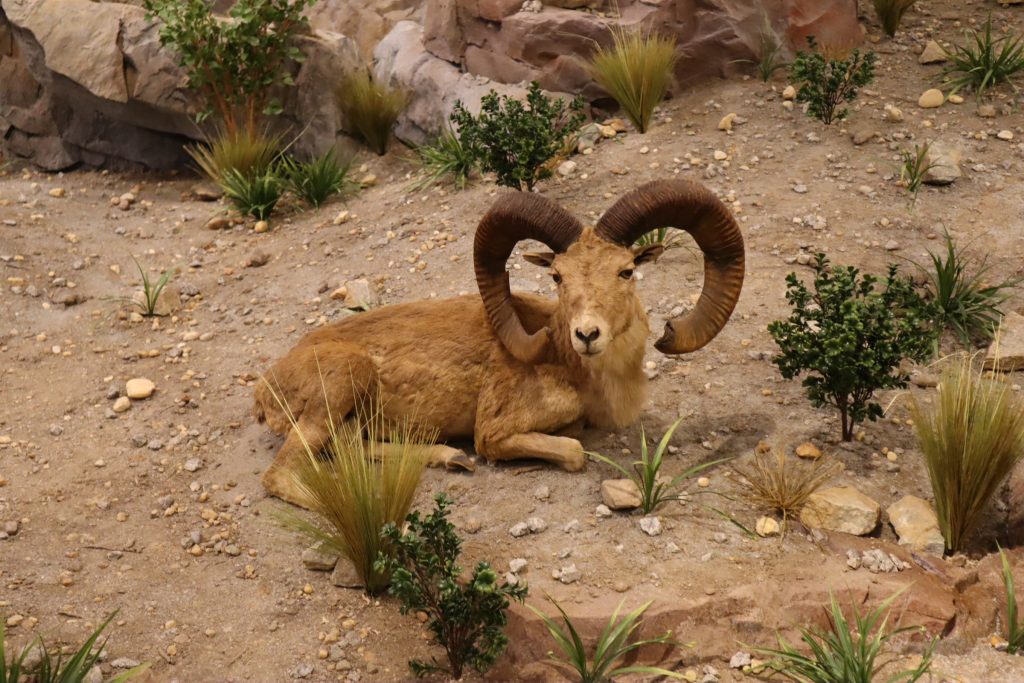
Snow Sheep
Ovis nivicola
Additional Information
The Snow Sheep, also known as Siberian bighorn sheep, is a resilient and hardy animal native to the rugged mountain ranges of northeastern Russia, particularly in the Kamchatka Peninsula and the Siberian regions. These sheep thrive in steep, rocky terrains and alpine meadows, often found at elevations between 1,000 and 3,000 meters. Snow sheep have a fascinating adaptation to cold environments: their thick, double-layered coats. The outer layer of long, coarse hair helps repel moisture and block wind, while the dense, woolly undercoat provides excellent insulation.
- Diet– Herbivorous diet consisting mainly of fruits, leaves, and lichen.
- Habitat– Steep rocky mountainous areas and alpine meadows.
- Behavior– Crepuscular, social creatures, forming small herds, particularly in the winter months. Adult males are more solitary outside breeding season.
- Lifespan– The average lifespan is 10 to 15 years in the wild.
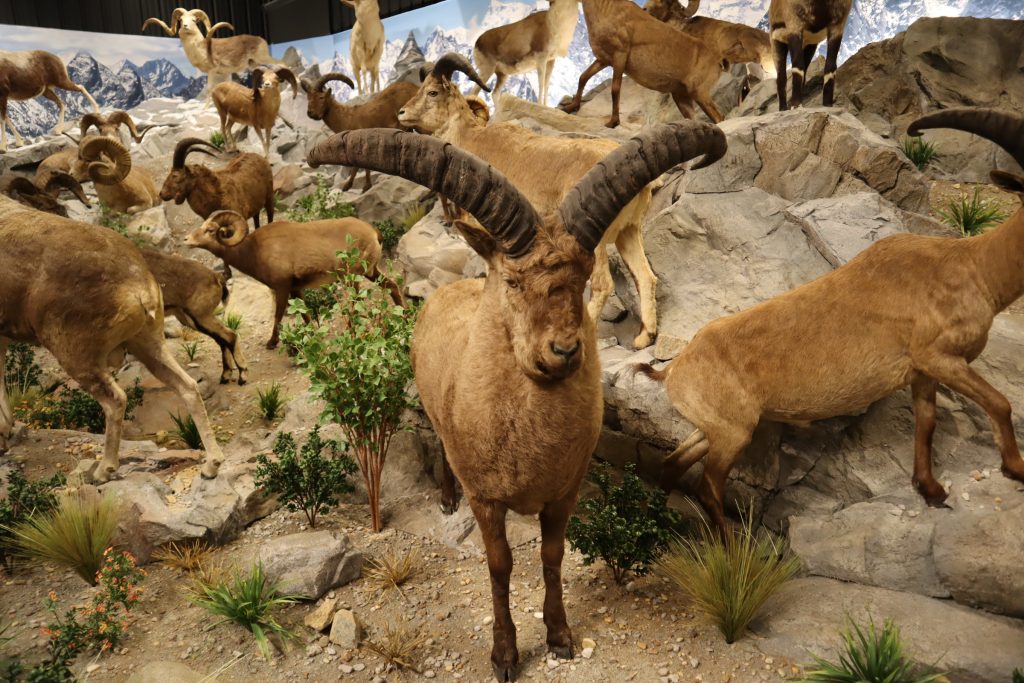
Western Tur
Capra caucasica
Additional Information
The West Caucasian Tur is a mountain-dwelling goat-antelope native to the western half of the Caucasus Mountains range, in Georgia and European Russia. They inhabit rough mountainous terrain between 2,600 and 13,100 feet above sea level. The West Caucasian tur has an incredible knack for survival in harsh mountainous environments. These animals are such adept climbers that they can scale nearly vertical rock faces to reach food and evade predators
- Diet– Herbivorous diet consisting mainly of grasses and leaves.
- Habitat– Steep rocky mountainous areas and alpine meadows.
- Behavior– Nocturnal, social animals living in small herds of around 10 individuals. Adult males are more solitary.
- Lifespan– The average lifespan is 10 to 16 years in the wild.
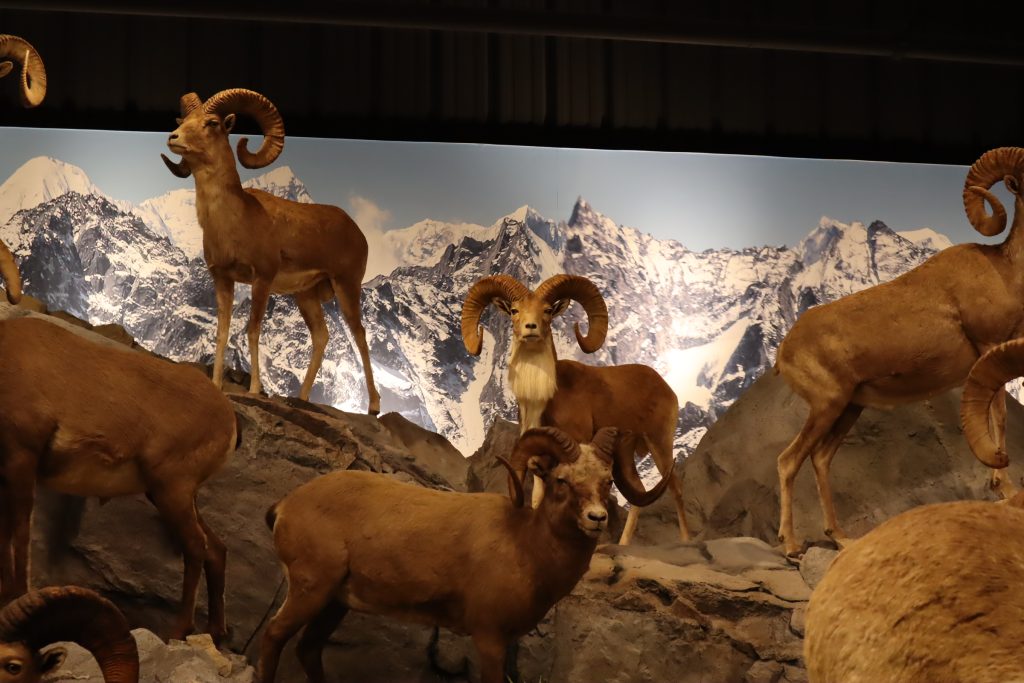
Urial
Ovis vignei
Additional Information
The Urial, a wild sheep species, thrives in the arid, rugged landscapes of Central Asia, including the mountainous regions of Afghanistan, Iran, and Pakistan. Urials have a fascinating adaptation for water conservation. In the arid and mountainous habitats where they live, water sources can be scarce. To cope, urials can reabsorb water from their own urine, allowing them to stay hydrated longer in such challenging environments.
- Diet– Herbivorous diet consisting of grasses, shrubs, and herbs.
- Habitat– Forests, shrublands, grasslands, and rocky areas.
- Behavior– Crepuscular, social animals forming small herds, with larger groups forming during breeding season.
- Lifespan– The average lifespan is 10 to 12 years in the wild.
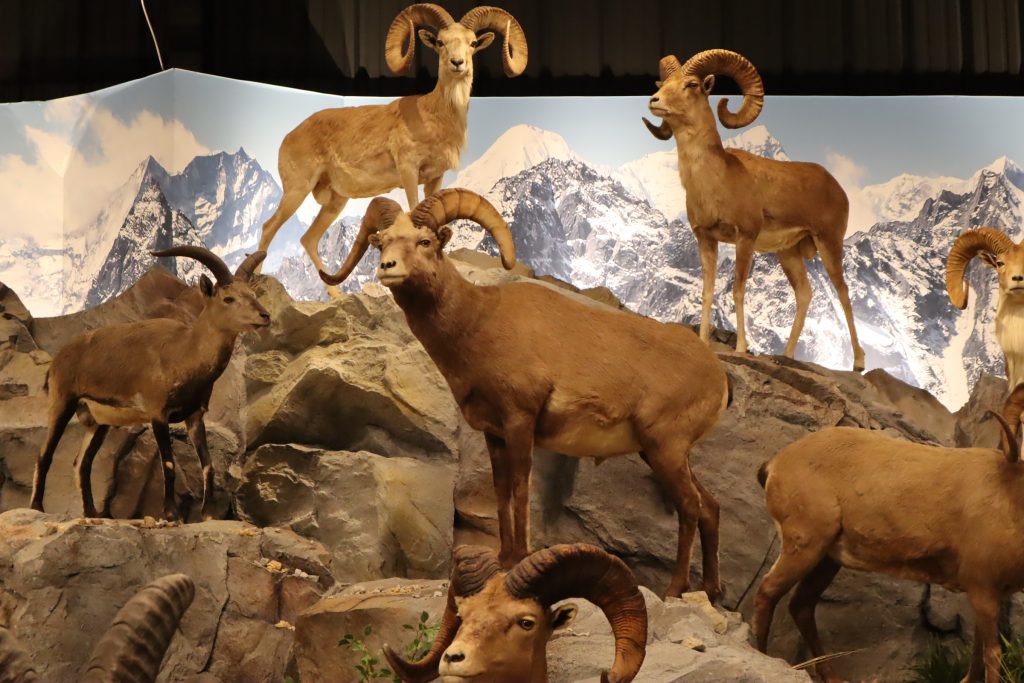
Snow Sheep
Ovis nivicola
Additional Information
The Snow Sheep, also known as Siberian bighorn sheep, is a resilient and hardy animal native to the rugged mountain ranges of northeastern Russia, particularly in the Kamchatka Peninsula and the Siberian regions. These sheep thrive in steep, rocky terrains and alpine meadows, often found at elevations between 1,000 and 3,000 meters. Snow sheep have a fascinating adaptation to cold environments: their thick, double-layered coats. The outer layer of long, coarse hair helps repel moisture and block wind, while the dense, woolly undercoat provides excellent insulation.
- Diet– Herbivorous diet consisting mainly of fruits, leaves, and lichen.
- Habitat– Steep rocky mountainous areas and alpine meadows.
- Behavior– Crepuscular, social creatures, forming small herds, particularly in the winter months. Adult males are more solitary outside breeding season.
- Lifespan– The average lifespan is 10 to 15 years in the wild.
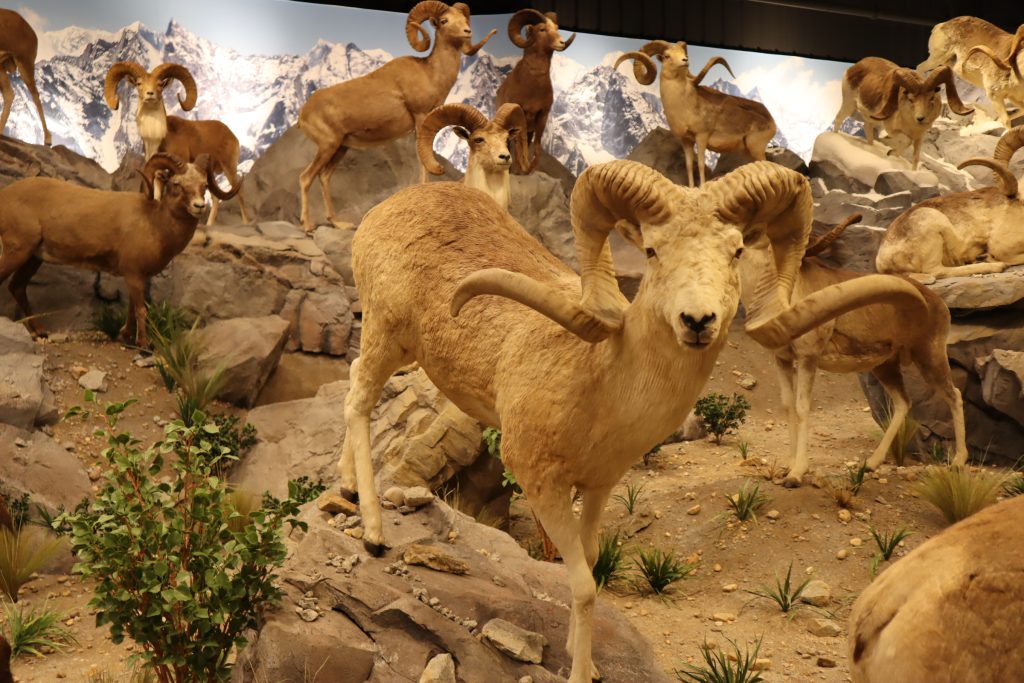
Argali
Ovis ammon
Additional Information
The Argali, the world’s largest species of wild sheep, roams the high-altitude regions of Central Asia, including Mongolia, Tibet, and Kazakhstan. These impressive animals thrive in alpine meadows and rocky, mountainous terrains at elevations often exceeding 3,000 meters. They have truly impressive horns. Not just for show, these horns, which can grow over six feet long, are used by males in dramatic battles for dominance during the mating season. The sound of two argali rams clashing their horns can echo across the mountains.
- Diet– Herbivorous diet consisting mainly of dry grasses, sedges, and shrubs.
- Habitat– Rocky mountainous areas.
- Behavior– Social creatures, typically forming groups that vary in size depending on the season- large hers in winter and smaller groups in summer.
- Lifespan– The average lifespan is 10 to 13 years in the wild.
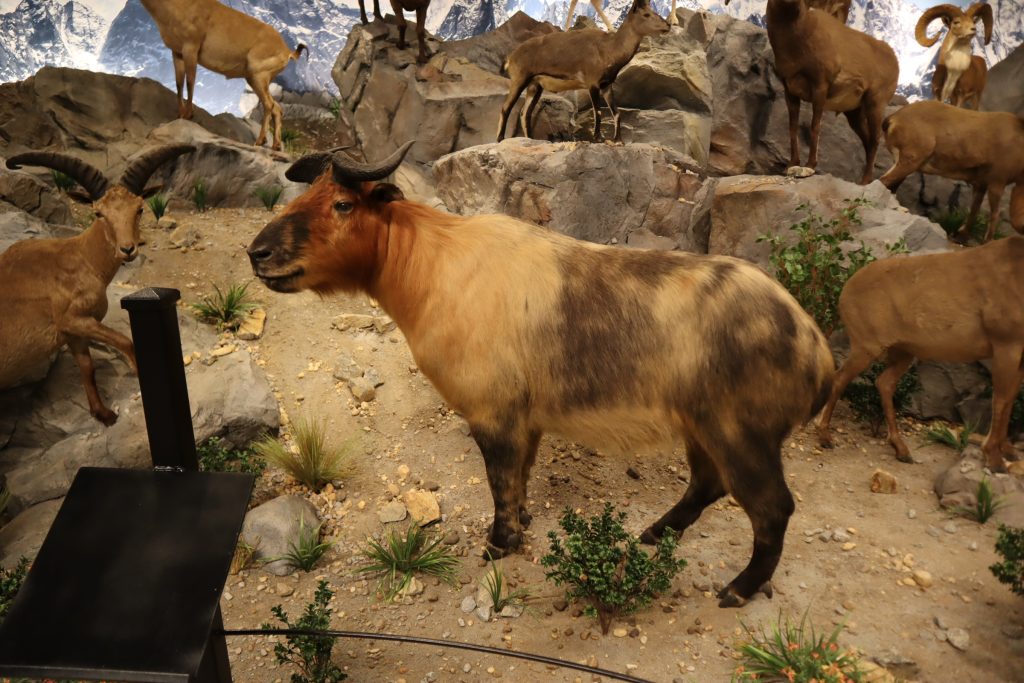
Takin
Budorcas taxicolor
Additional Information
The Takin, a sturdy and robust goat-antelope, inhabits the mountainous regions of Bhutan, China, India, and Myanmar, typically found at elevations between 1,000 and 4,500 meters. They are known for their unique, moose-like appearance, takins have a distinctive golden or reddish-brown coat. Takins have a unique defense mechanism: when threatened, they release a strong, musky odor from their skin, which can deter predators and alert other takins to danger.
- Diet– Herbivorous diet consisting mainly of grasses, leaves, bamboo, shoots, and flowers.
- Habitat– Highly adaptable, living in forests, shrublands, and grasslands.
- Behavior– Socials animals that form small herds.
- Lifespan– The average lifespan is 12 to 15 years in the wild.
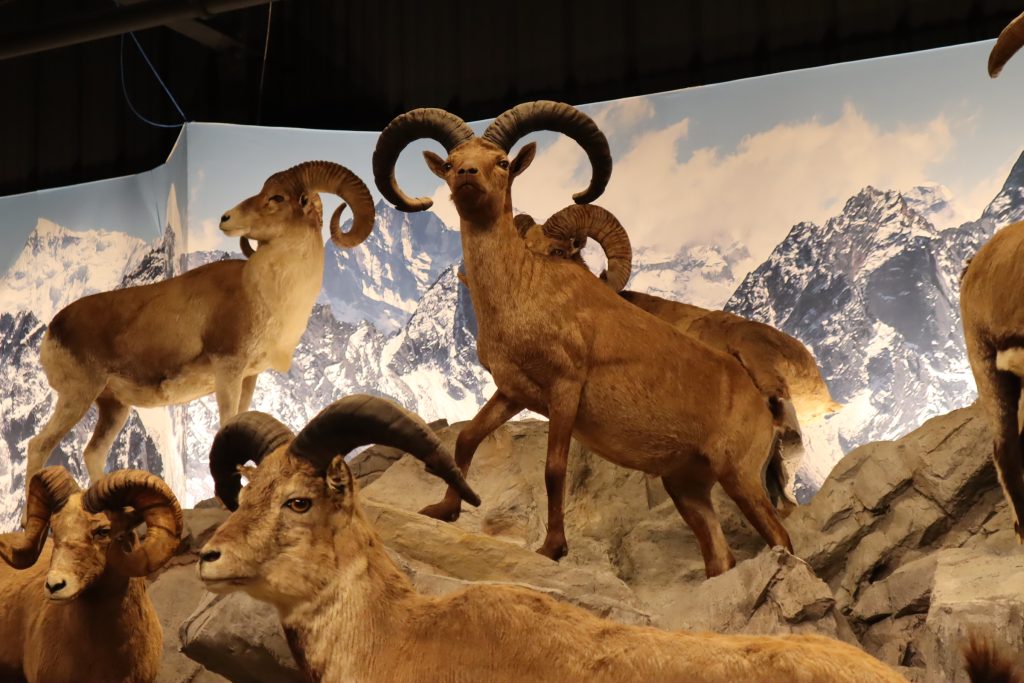
Eastern Tur
Capra cylindricornis
Additional Information
The Eastern Tur, a robust and agile wild goat, is native to the rugged mountainous regions of the Caucasus, particularly in Russia, Georgia, and Azerbaijan. These animals thrive in steep, rocky terrains and alpine meadows, often found at elevations between 1,000 and 4,000 meters. They are exceptional climbers, using their sure-footedness and incredibly strong leg muscles to navigate the challenging landscapes and evade predators.
- Diet– Herbivorous diet consisting mainly of grasses, herbs, and lichen.
- Habitat– Steep rocky mountainous areas and alpine meadows.
- Behavior– Crepuscular, social creatures, forming small herds, particularly in the winter months. Adult males are more solitary or form bachelor groups.
- Lifespan– The average lifespan is 12 to 15 years in the wild.
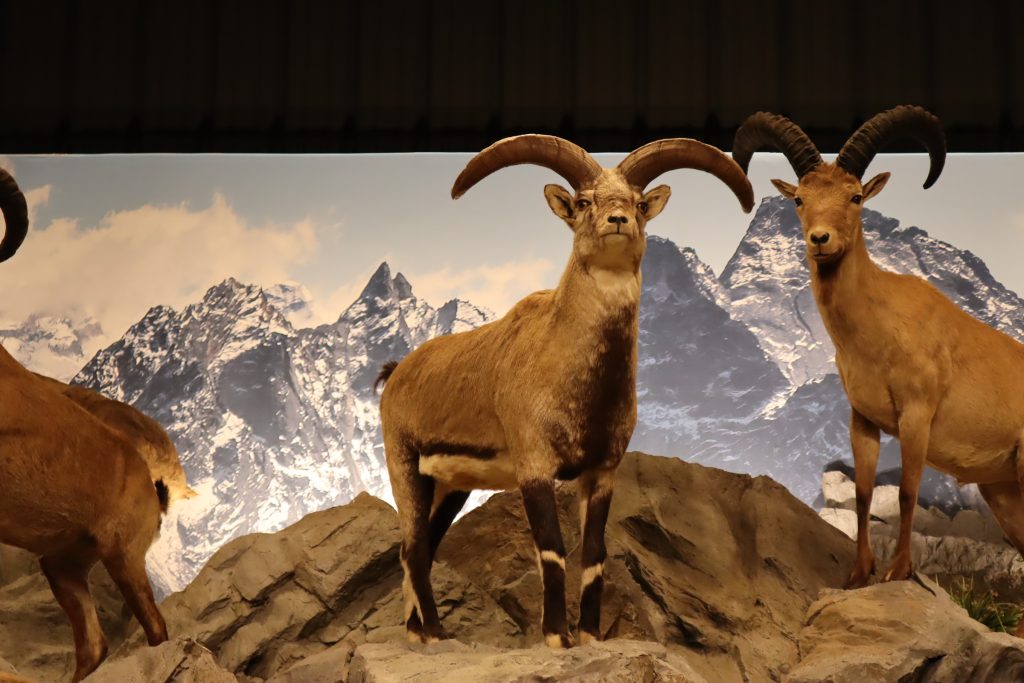
Blue Sheep
Pseudois nayaur
Additional Information
The Blue Sheep, also known as bharal, is a fascinating herbivore native to the high-altitude regions of the Himalayas, Tibet, and parts of China. These resilient animals thrive in rocky, mountainous terrains at elevations between 3,000 and 5,500 meters. They have a fascinating adaptation for survival in high-altitude regions: their blood contains a high concentration of red blood cells, allowing them to efficiently transport oxygen even in thin air.
- Diet– Herbivorous diet consisting mainly of grasses, herbs, and lichens.
- Habitat– Rocky mountainous areas.
- Behavior– Crepuscular, social creatures, forming herds from a few individuals to several dozen.
- Lifespan– The average lifespan is 10 to 15 years in the wild.
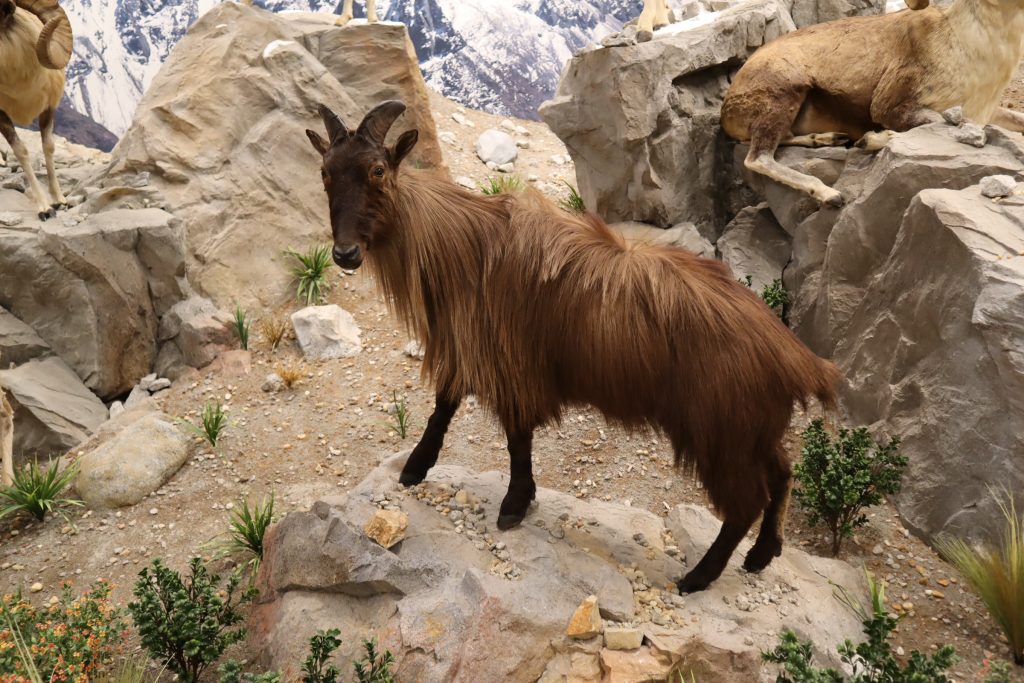
Himalayan Tahr
Hemitragus jemlahicus
Additional Information
The Himalayan Tahr is a unique mammal that thrives in the rugged terrain of the Himalayas. They inhabiting steep, rocky slopes at altitudes ranging from 2,500 to 5,000 meters. Snow sheep are built for the heights and the cold. Their hooves are specially adapted to grip icy surfaces, acting like natural crampons, allowing them to scale steep, slippery cliffs with ease.
- Diet– Herbivorous diet consisting mainly of grasses, shrubs, and leaves.
- Habitat– Steep rocky mountainous areas and alpine meadows.
- Behavior– Crepuscular, social creatures, forming small herds. Adult males are more solitary outside breeding season.
- Lifespan– The average lifespan is up to 15 years in the wild.
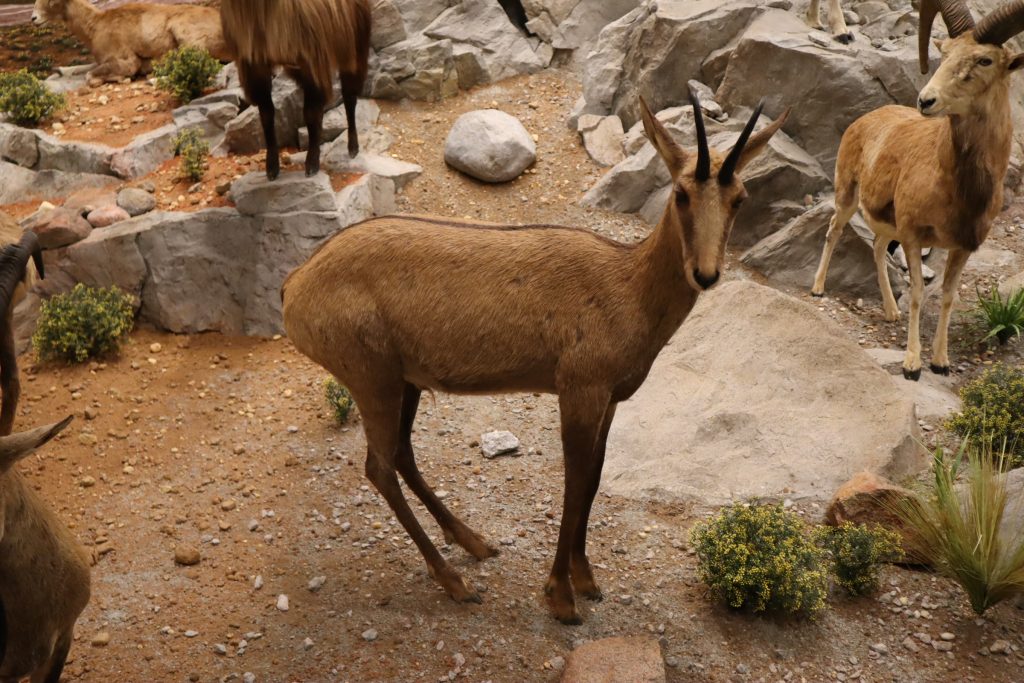
Northern Chamois
Rupicapra rupicapra
Additional Information
The Northern Chamois, a sure-footed and agile goat-antelope, is native to the mountainous regions of Europe, including the Alps, Carpathians, and Balkan ranges. These animals thrive in steep, rocky terrains and alpine meadows, often found at elevations between 1,000 and 3,000 meters. They are known for their incredible climbing abilities, allowing them to navigate precipitous slopes and escape predators.
- Diet– Herbivorous diet consisting mainly of grasses, herbs, leaves, and shoots.
- Habitat– Rocky mountainous areas and alpine meadows.
- Behavior– Crepuscular, social creatures, forming small herds, particularly in the winter months. Adult males are more solitary or form bachelor groups.
- Lifespan– The average lifespan is up to 15 years in the wild.
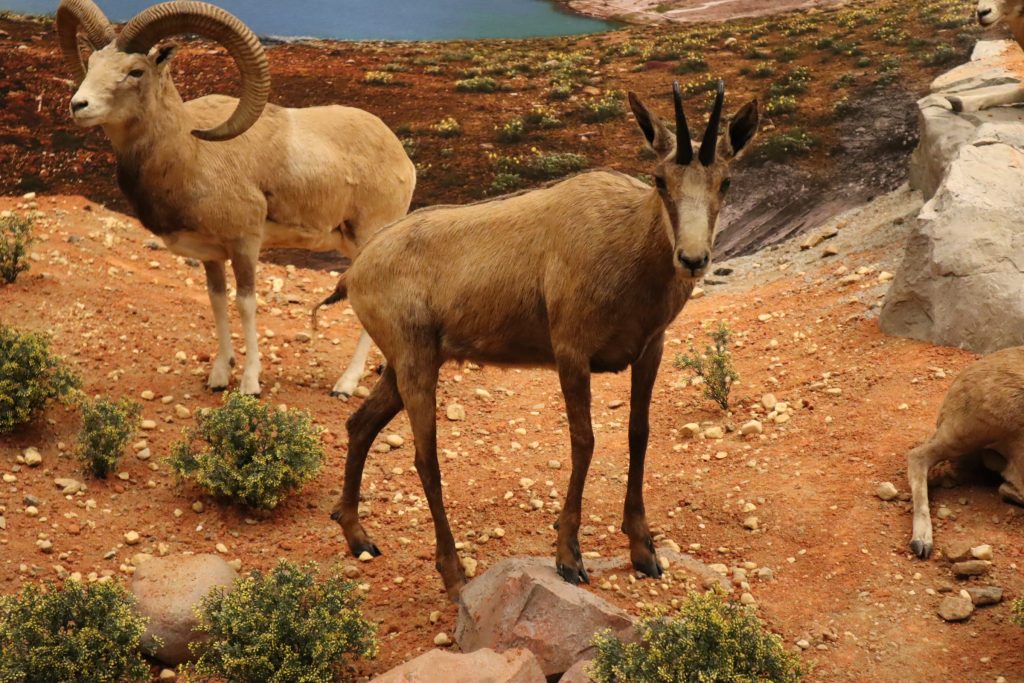
Southern Chamois
Rupicapra pyrenaica
Additional Information
The Southern chamois, also known as the Pyrenean chamois, is a nimble, mountainous creature native to the Pyrenees and Cantabrian Mountains in Europe. These animals thrive in steep, rocky terrains and alpine meadows, often found at elevations ranging from 1,800 to 3,000 meters. Southern chamois have special adaptations in their hooves that help them navigate their rocky, mountainous habitats. Their hooves have a hard outer rim that grips onto rock surfaces, while the softer center provides a cushion. It’s like having built-in rock climbing shoes.
- Diet– Herbivorous diet primarily consisting of grasses, herbs, and leaves.
- Habitat– Shrublands, grasslands, and rocky areas.
- Behavior– Crepuscular, social animal, forming small herds, especially during winter months.
- Lifespan– The average lifespan is up to 15 years in the wild.
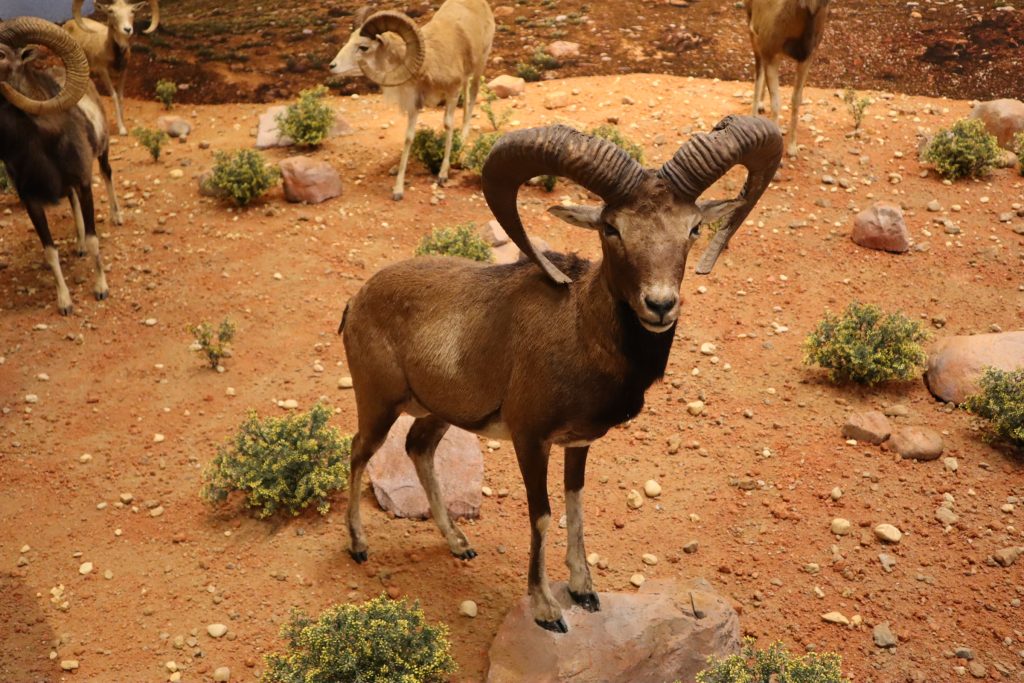
Mouflon
Ovis gmelini
Additional Information
The Mouflon is a wild sheep species native to the mountainous regions of the Mediterranean, particularly on the islands of Corsica and Sardinia, and introduced to parts of Europe and Asia. A cool fact about the mouflon is their impressive climbing ability. These wild sheep can navigate steep, rocky terrains with remarkable ease, thanks to their strong, muscular legs and specialized hooves that provide excellent grip
- Diet– Herbivorous diet primarily consisting of grasses, herbs, shrubs, leaves, bark, and acorns.
- Habitat– Steep, rocky, rugged mountainous regions with open forests and scrublands.
- Behavior– Social animal, typically forming groups based on age and sex.
- Lifespan– The average lifespan is 10 to 15 years in the wild.
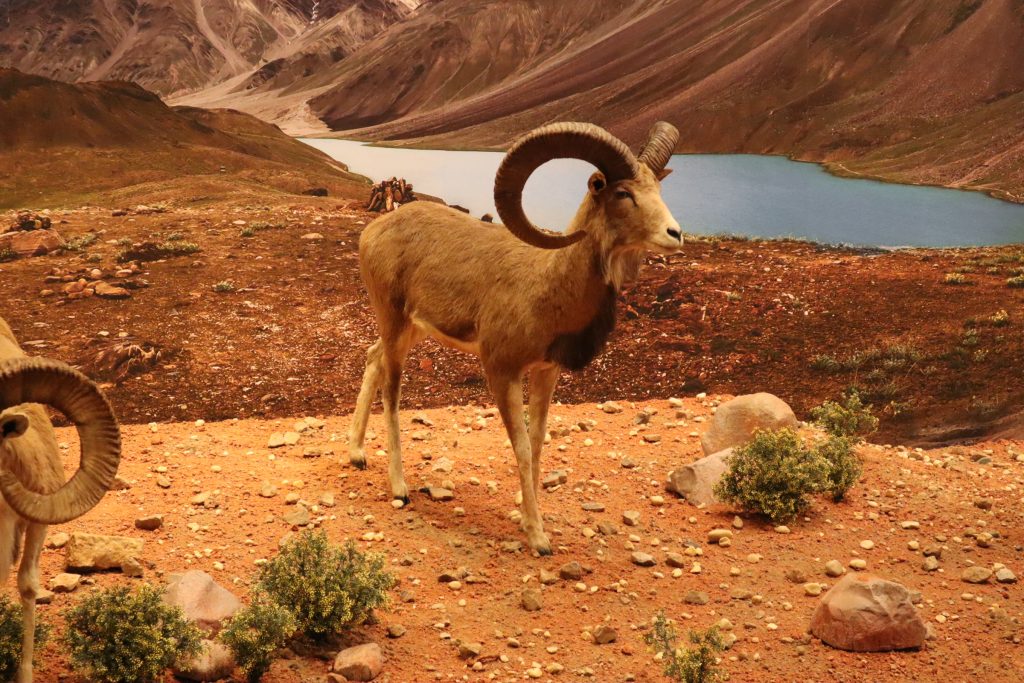
Urial
Ovis vignei
Additional Information
The Urial, a wild sheep species, thrives in the arid, rugged landscapes of Central Asia, including the mountainous regions of Afghanistan, Iran, and Pakistan. Urials have a fascinating adaptation for water conservation. In the arid and mountainous habitats where they live, water sources can be scarce. To cope, urials can reabsorb water from their own urine, allowing them to stay hydrated longer in such challenging environments.
- Diet– Herbivorous diet consisting of grasses, shrubs, and herbs.
- Habitat– Forests, shrublands, grasslands, and rocky areas.
- Behavior– Crepuscular, social animals forming small herds, with larger groups forming during breeding season.
- Lifespan– The average lifespan is 10 to 12 years in the wild.
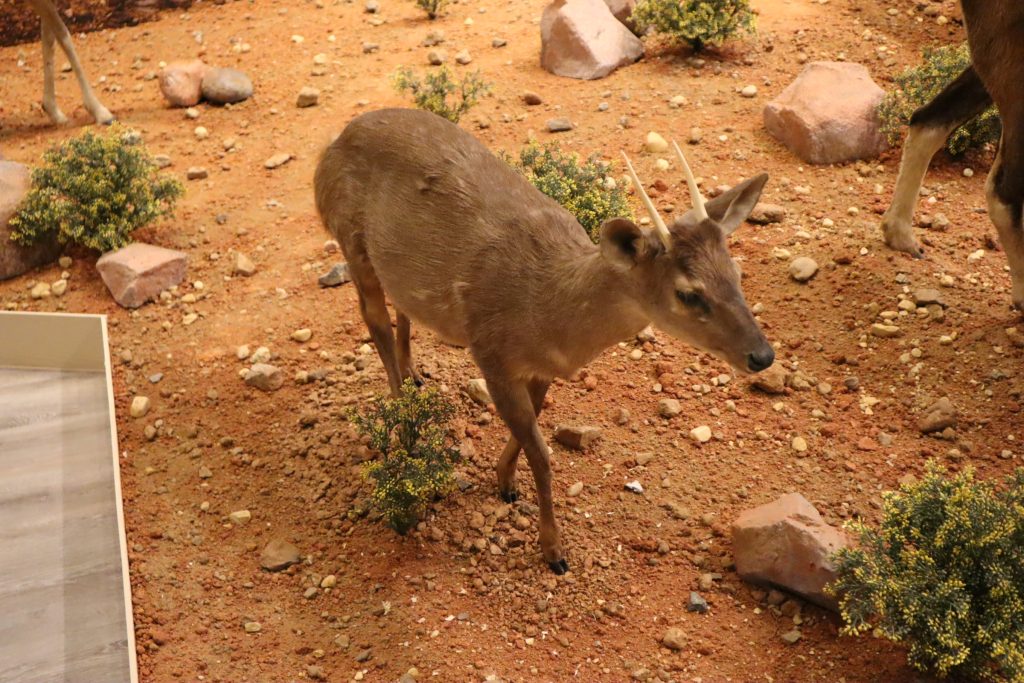
Gray Brocket
Mazama gouazoubira
Additional Information
The Gray Brocket is a small, elusive deer native to the forests of Central and South America. They have a fascinating role as seed dispersers in their ecosystems. By eating a variety of fruits and plants, they help spread seeds through their droppings, promoting plant growth and forest regeneration.
- Diet– Herbivorous diet consisting mainly of fruits, leaves, and small plants.
- Habitat– Dense tropical and subtropical forests, savanna, and shrublands.
- Behavior– Crepuscular, solitary and notoriously shy and elusive animals.
- Lifespan– The average lifespan is 10 to 12 years in the wild.
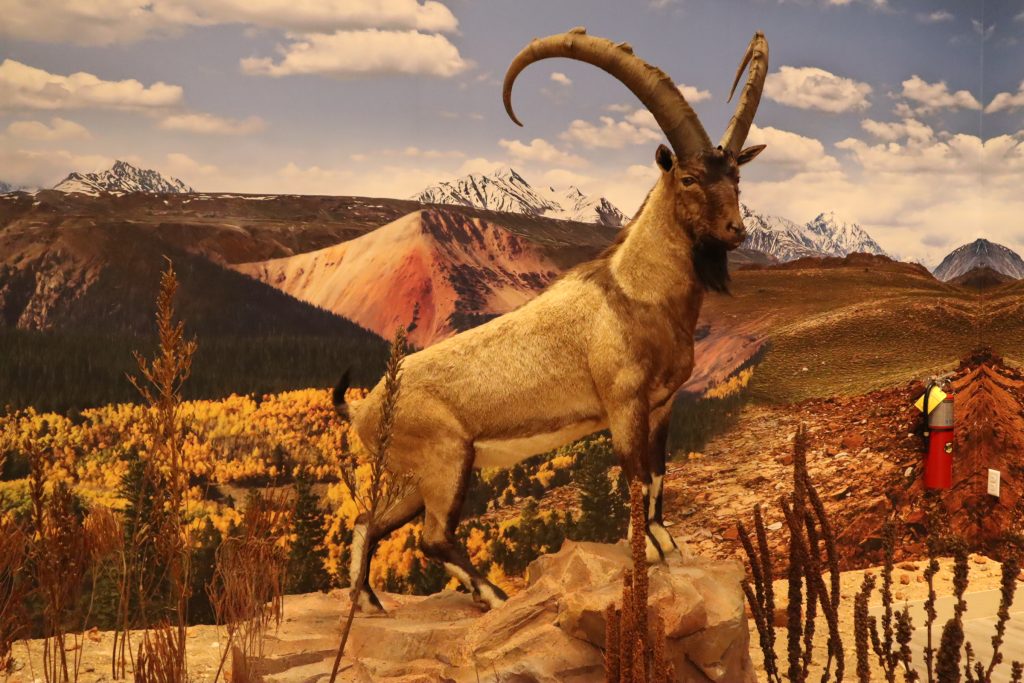
Wild Goat
Capra aegagrus
Additional Information
The Wild Goat, also known as the bezoar ibex, is a hardy and adaptable species found in the rugged mountainous regions of the Middle East and Central Asia, particularly in countries like Turkey, Iran, and Afghanistan. They are known for their agility and surefootedness, often seen leaping and climbing across seemingly inaccessible cliff faces with ease.
- Diet– Herbivorous diet primarily consisting of grasses, leaves, twigs, and bark.
- Habitat– Mix of rocky terrain and open areas for grazing.
- Behavior– Social animal, typically forming groups based on age and sex.
- Lifespan– The average lifespan is 10 to 15 years in the wild.
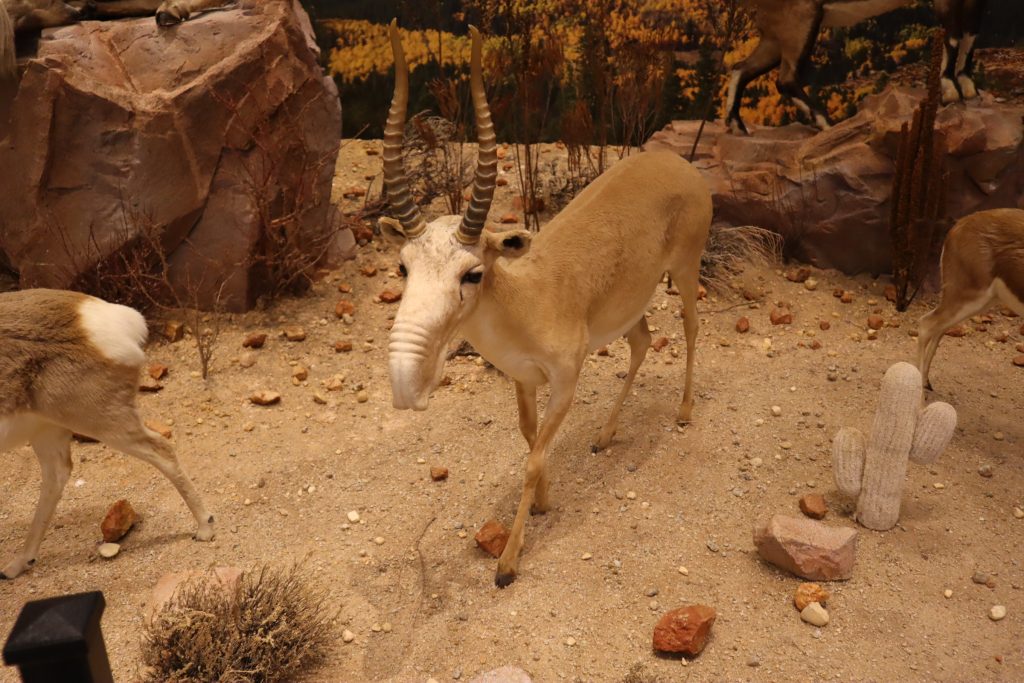
Saiga
Saiga tatarica
Additional Information
The Saiga is an antelope native to the vast steppes of Central Asia, particularly in countries like Kazakhstan, Mongolia, and Russia. These distinctive animals are known for their unique bulbous noses. Saigas have a built-in “air conditioner” thanks to their unique noses. The large, flexible nostrils help filter dust and cool the air they breathe in during the hot summers, while in the winter, these noses help warm the cold air before it reaches their lungs. It’s like having a personal HVAC system in their faces!
- Diet– Herbivorous diet consisting mainly of grasses, herbs, and shrubs.
- Habitat– Grasslands and semi-desert regions.
- Behavior– Social animals that form large groups and exhibit migratory behavior based on the season.
- Lifespan– The average lifespan is 6 to 10 years in the wild.
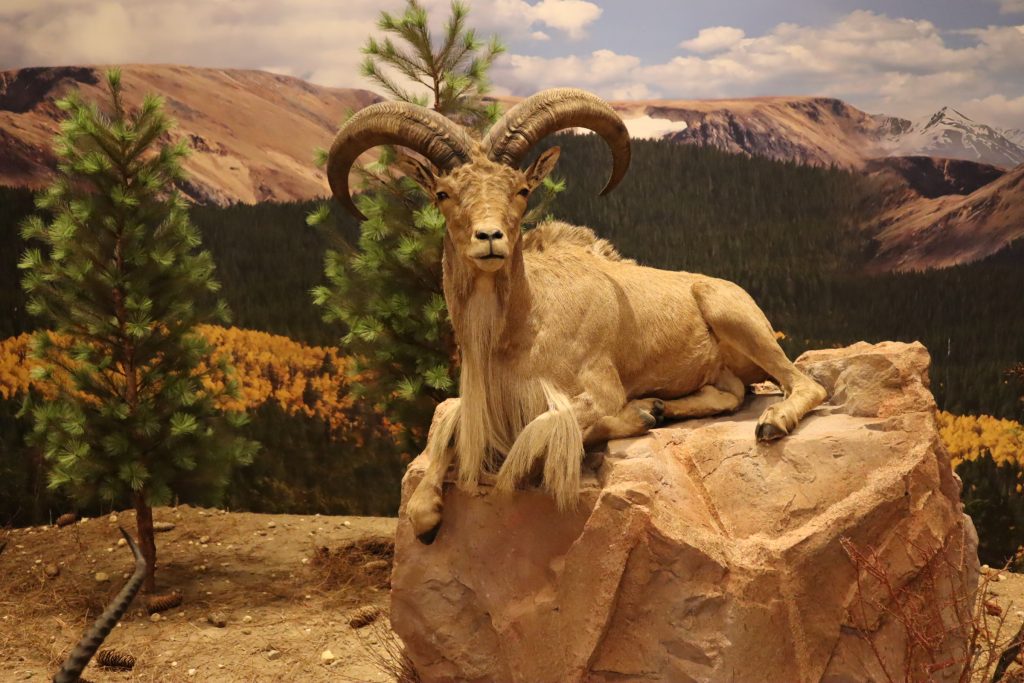
Aoudad
Ammotragus lervia
Additional Information
The Aoudad, or Barbary sheep, is a resilient and adaptable animal native to the rocky, arid mountainous regions of North Africa. They have an incredible ability to go without water for extended periods. They can extract most of the moisture they need from their food, which is crucial for surviving in their arid habitats.
- Diet– Herbivorous diet consisting mainly of dry grasses, shrubs, and other available vegetation.
- Habitat– Savanna, shrubland, grassland, rocky mountainous areas.
- Behavior– Crepuscular, social animals forming small herds of 5 to 20 individuals, with larger groups forming during breeding season.
- Lifespan– The average lifespan is 10 to 15 years in the wild.
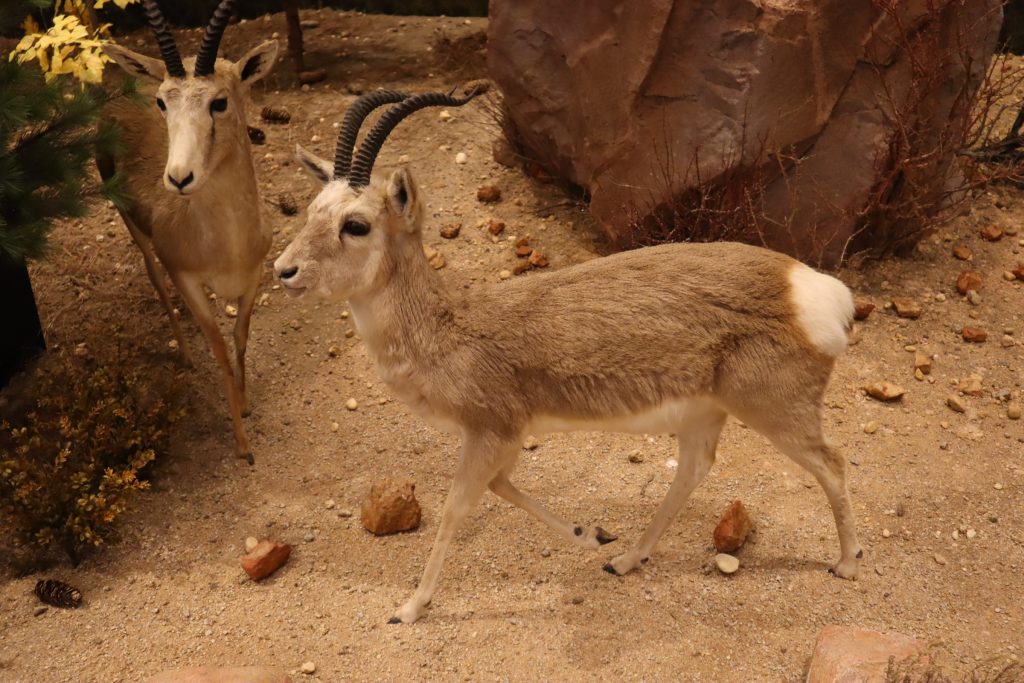
Tibetan Gazelle
Procapra picticaudata
Additional Information
The Tibetan Gazelle, a delicate and nimble mammal, is native to the high-altitude plateaus of the Tibetan Plateau in China. These animals are well-adapted to the harsh, cold environments, often found at elevations between 3,000 and 5,500 meters. Tibetan gazelles have an incredible adaptation to survive the high-altitude environment: their blood contains a higher concentration of hemoglobin. This allows them to efficiently transport oxygen in the thin air of the Tibetan Plateau, where oxygen levels are significantly lower than at sea level.
- Diet– Herbivorous diet consisting mainly of grasses, herbs, and lichen.
- Habitat– High altitude plateaus, grasslands, and wetlands.
- Behavior– Crepuscular, solitary or found in small groups.
- Lifespan– The average lifespan is 10 to 12 years in the wild.
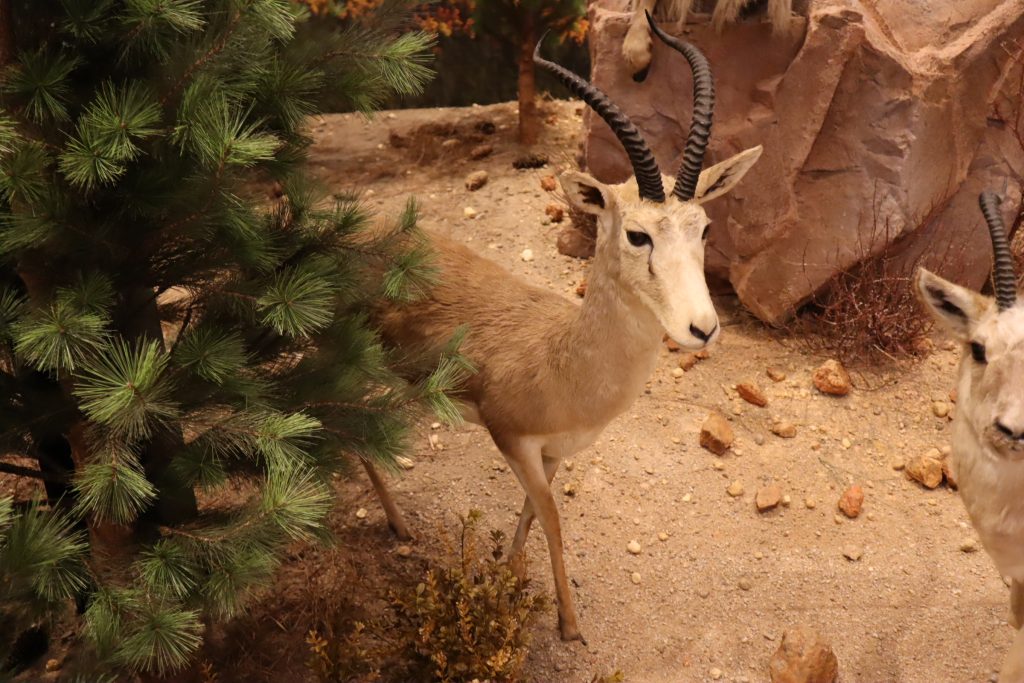
Goitered Gazelle
Gazella subgutturosa
Additional Information
The Goitered Gazelle, also known as the black-tailed gazelle, is a graceful and resilient herbivore native to the arid and semi-arid regions of Central Asia, including parts of Iran, Afghanistan, and Turkmenistan. They have an incredible ability to run at speeds of up to 60 mph! This remarkable speed, combined with their agility and swift, sharp turns, helps them evade predators in their open desert habitats. It’s like having built-in turbo boosters!
- Diet– Herbivorous diet consisting mainly of grasses, leaves, and shrubs.
- Habitat– Open desert, shrublands, and steppes.
- Behavior– Crepuscular, solitary or found in small groups. During breading season, they gather in larger herds.
- Lifespan– The average lifespan is up to 12 years in the wild.
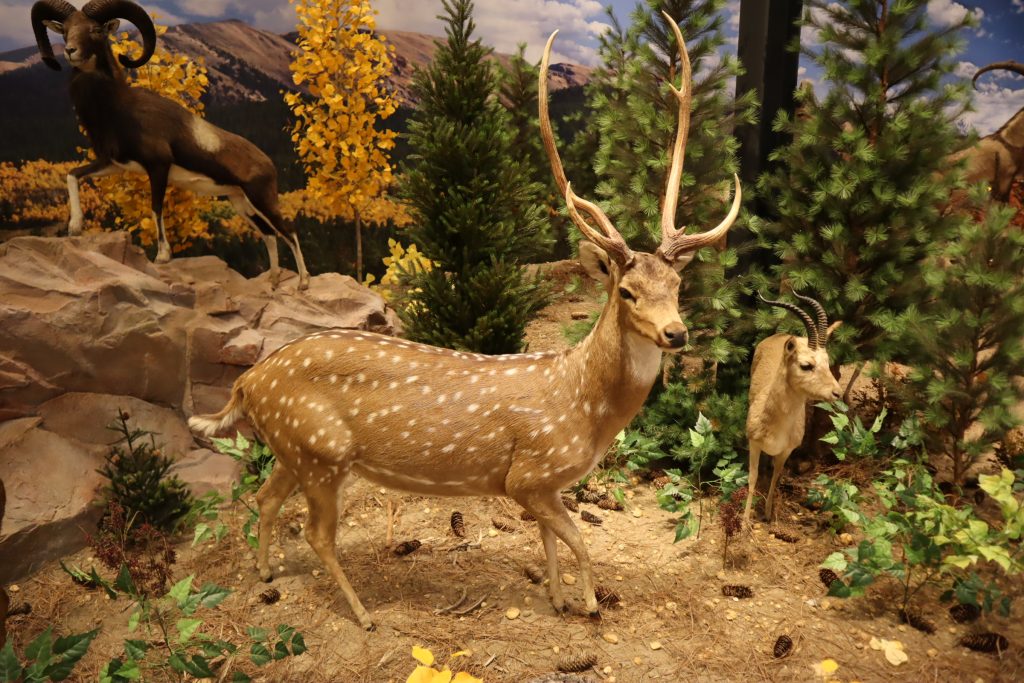
Chital
Axis axis
Additional Information
The Chital, also known as the spotted deer, is a graceful, medium-sized deer native to the Indian subcontinent. Chital have a unique symbiotic relationship with langur monkeys: the monkeys alert the chital to danger from predators, and in return, the chital help the monkeys find food by disturbing insects and small prey from the forest floor.
- Diet– Herbivorous diet primarily consisting of grasses, leaves, and fruits.
- Habitat– Forests, savanna, and grasslands.
- Behavior– Crepuscular, highly social animals in herds of several dozen indiviuals.
- Lifespan– The average lifespan is 8 to 14 years in the wild.
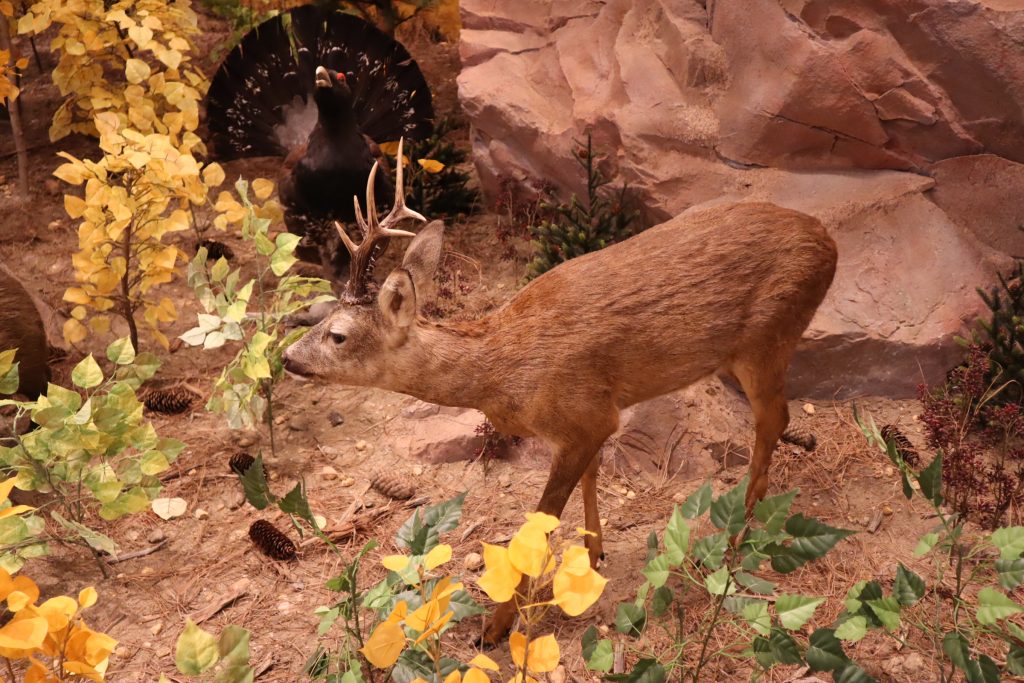
European Roe Deer
Capreolus capreolus
Additional Information
The European Roe Deer, a small and graceful deer species, is native to various habitats across Europe and parts of Asia. They have a fascinating reproductive strategy called “delayed implantation.” After mating in the summer, the fertilized egg doesn’t immediately implant in the uterus. Instead, it waits until early winter to start developing, ensuring that the fawn is born in spring when conditions are optimal. It’s like nature’s way of perfect timing!
- Diet– Herbivorous diet consisting mainly of grasses, leaves, herbs, and shoots.
- Habitat– Forests, farmlands, and grasslands.
- Behavior– Crepuscular, solitary or forming small family groups.
- Lifespan– The average lifespan is 1o to 12 years in the wild.
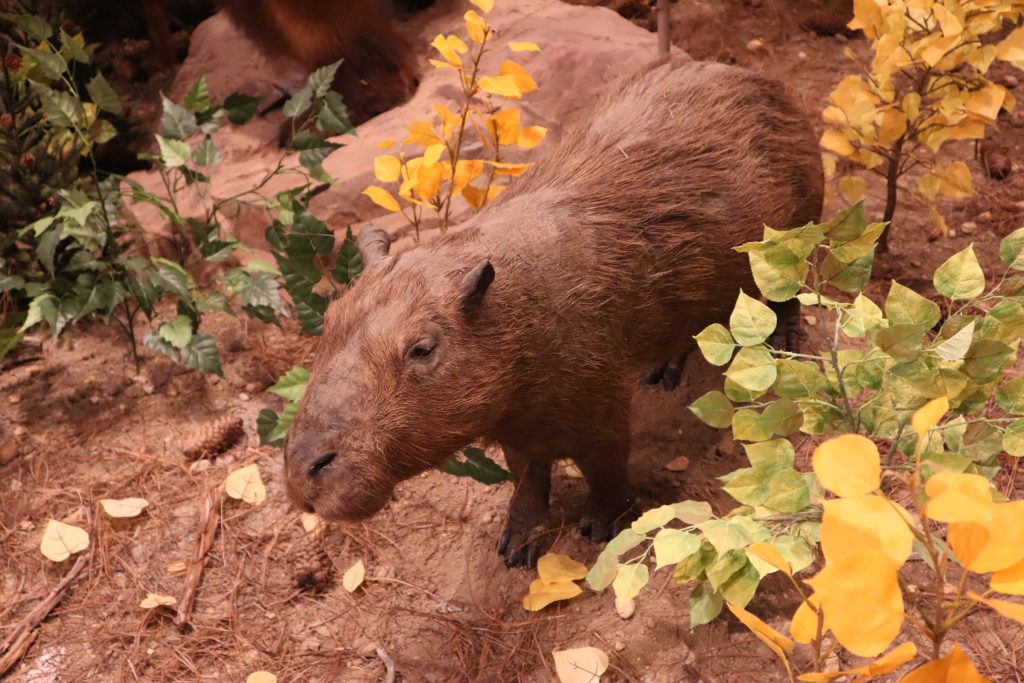
Capybara
Hydrochoerus hydrochaeris
Additional Information
The Capybara, the world’s largest rodent, is native to South America and thrives
in densely vegetated areas near bodies of water. Capybaras have a quirky social habit: they’re known for their penchant for forming interspecies friendships! They often hang out with other animals, like birds, monkeys, and even cats and dogs. These chill rodents are the ultimate social butterflies of the animal kingdom!
- Diet– Herbivorous diet primarily consisting of grasses, aquatic plants, and sometimes fruits and tree bark.
- Habitat– Wetlands, marshes, and savannas
- Behavior– Crepuscular, highly social animals in groups of over 20 individuals.
- Lifespan– The average lifespan is 8 to 10 years in the wild.
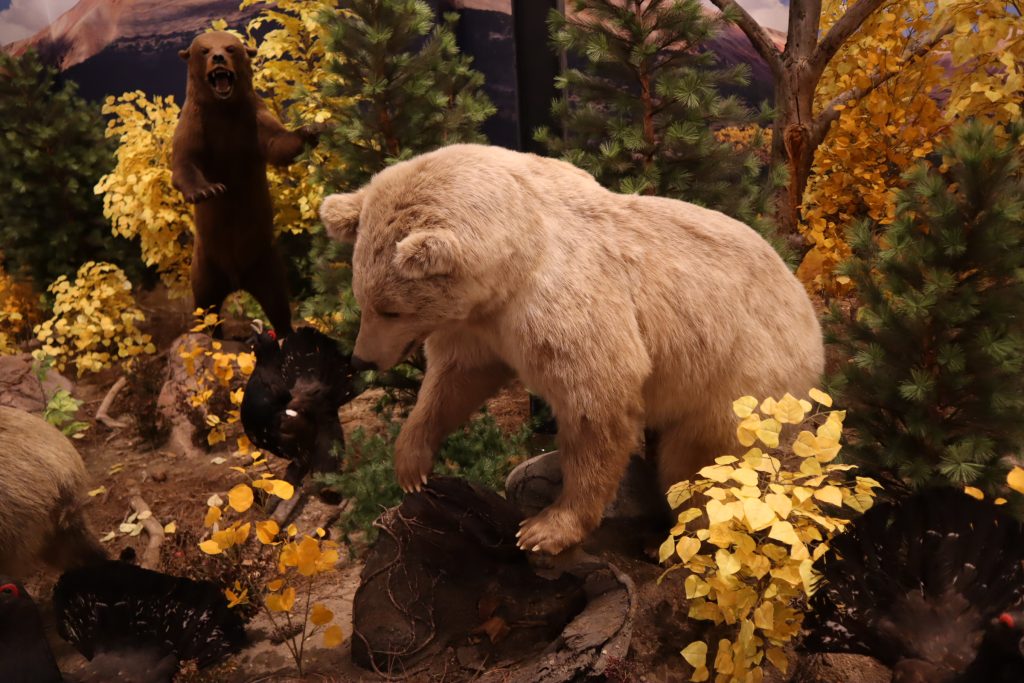
Brown Bear
Ursus arctos
Additional Information
The Brown Bear inhabits forests and mountains across northern North America, Europe, and Asia. They hold the title for the most widely distributed bear in the world. The magnificent creatures will hibernate anywhere between 4 to 7 months during the winter. Cubs stay with their mothers for up to 3 years before venturing out on their own. Interestingly, Grizzlies are a sub species of Brown Bears distinguished by geographical region which influences diet, size, and behavior!
- Diet– Omnivores with an 80-99% diet being plant based. Opportunistic eaters and will consume what is readily available.
- Habitat– Live in diverse habitats to include prairies, alpine meadows, woodlands, and forests. Prefer areas near rivers and streams.
- Behavior– Active during early morning and evenings. Generally solitary inhabiting a wide range of environments preferring semi-open regions.
- Lifespan– 20 to 30 years in the wild
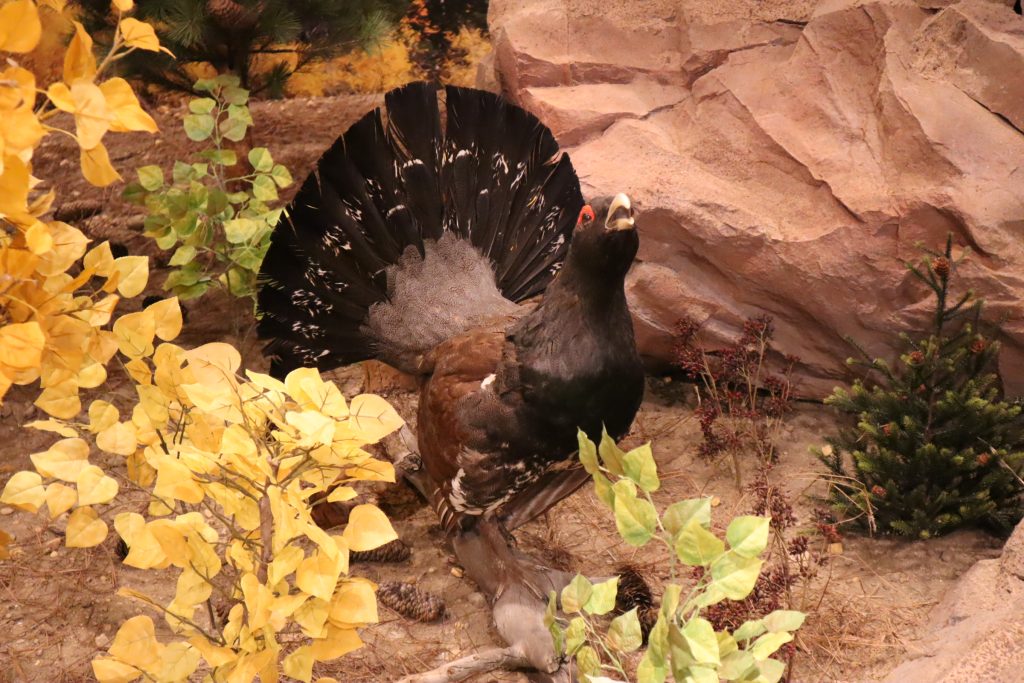
Western Capercaillie
Tetrao urogallus
Additional Information
The Western Capercaillie, also known as the wood grouse, is an impressive bird native to boreal forests across Europe and parts of Asia. They are known for their elaborate courtship displays where males perform dramatic dances, puff up their feathers, and make a unique clicking sounds to attract females.
- Diet– Primarily herbivorous, feeding on a variety of plant materials such as berries, leaves, buds, and pine needles. Insects supplement their diet.
- Habitat– Coniferous forests with dense underbrush.
- Behavior– Solitary animals outside of breeding season, typically living alone or in small family groups.
- Lifespan– The average lifespan is up to 10 years in the wild.
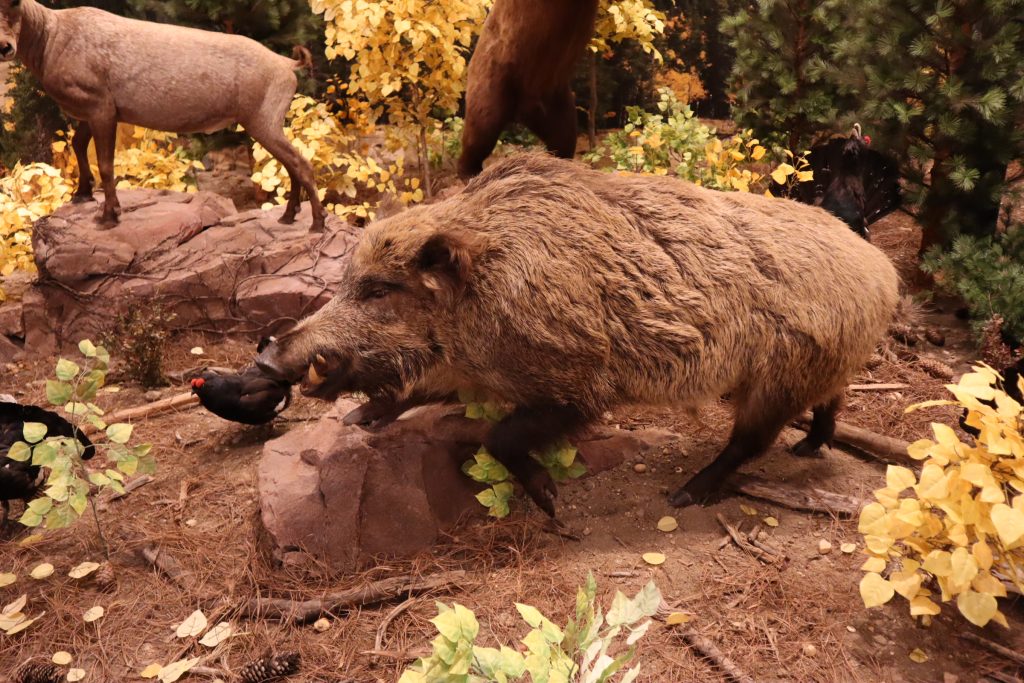
Wild Boar
Sus scrofa
Additional Information
The Wild Boar, also known as Sus scrofa, is a versatile and adaptable mammal found across Europe, Asia, and North Africa. Wild boars have an exceptional sense of smell—they can sniff out food buried up to 3 feet underground! This incredible olfactory ability makes them expert foragers, able to locate hidden roots, tubers, and even truffles. It’s like having a built-in treasure detector in their snouts.
- Diet– Omnivorous diet consisting of roots, fruits, nuts, insect, small mammals, and even carrion.
- Habitat– Shrublands, grasslands, wetlands, and deserts.
- Behavior– Nocturnal and crepuscular, highly social animals forming matriarchal groups called sounders. Males tend to be more solitary.
- Lifespan– The average lifespan is 5 to 10 years in the wild.
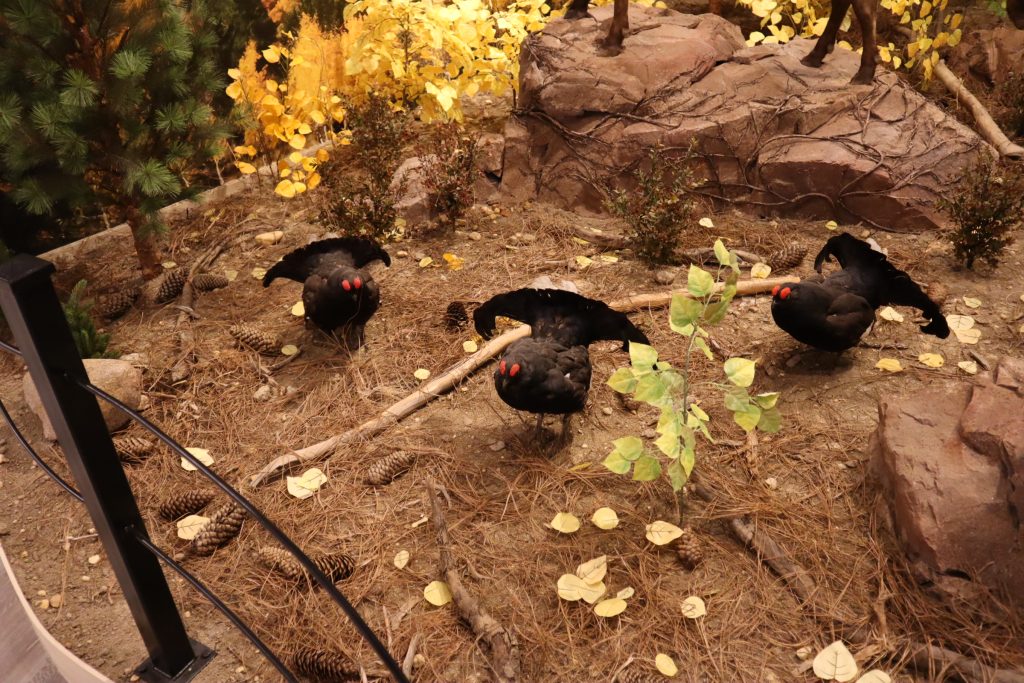
Black Grouse
Lyrurus tetrix
Additional Information
The Black Grouse is a striking and charismatic bird species native to the heaths, moorlands, and open woodlands of Europe and Asia, particularly in countries such as the United Kingdom, Finland, and Russia. A cool fact about the black grouse is their incredible lekking behavior. During the breeding season, males gather in traditional display grounds called leks, where they perform elaborate courtship displays to attract females.
- Diet– Herbivorous diet, highly varied, consisting of plant material and insects. Habitat– Mix of open ground and dense cover.
- Behavior– Generally solitary outside of breeding season, with males and females occupying separate territories.
- Lifespan– The average lifespan is 4 to 7 years in the wild.
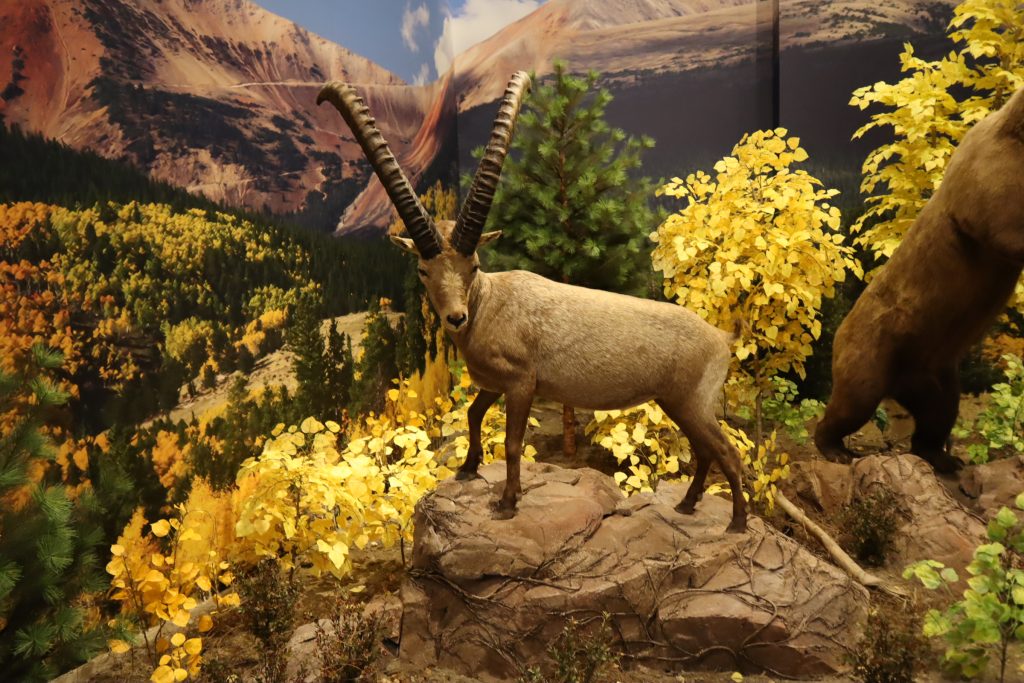
Alpine Ibex
Capra ibex
Additional Information
The Alpine Ibex is a majestic and robust mountain goat species native to the European Alps, found in countries such as Switzerland, France, Italy, and Austria. They are typically found in rugged mountainous regions at elevation between 6,500 to 15,000 feet. A cool fact about the alpine ibex is their incredible ability to climb almost vertical rock faces. Their hooves are specially adapted with a hard outer rim and a soft, grippy inner pad, allowing them to navigate the sheerest of cliffs with ease.
- Diet– Herbivorous diet primarily consisting of grasses, herbs, mosses, and shrubs.
- Habitat– Steep, rocky, rugged mountainous regions.
- Behavior– Social animal, typically forming groups based on age and sex.
- Lifespan– The average lifespan is 15 to 20 years in the wild.