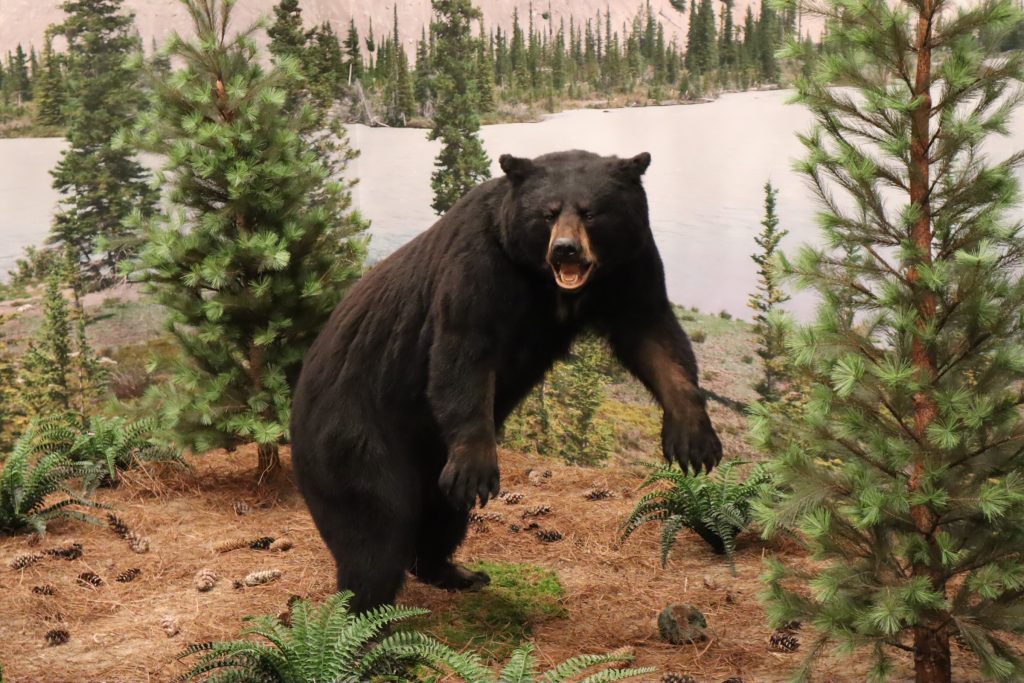
American Black Bear
Ursus americanus
Additional Information
The American Black Bear, also known simply as the black bear, is a medium-sized bear species endemic to North America. The population of the black bear is estimated to be twice that of all other bear species combined, making it the most common bear species in the United States. Standing upright, they range from 5 to 7 feet in height and can weigh anywhere between 100 and 600 pounds.
- Diet– Omnivorous diet, varying significantly based on season and location.
- Habitat– Variety of environments to include forests, marshes, and wetlands.
- Behavior– Solitary animal roaming large territories. In the winter, they are dormant in dens.
- Lifespan– The average lifespan is 18 to 20 years in the wild.
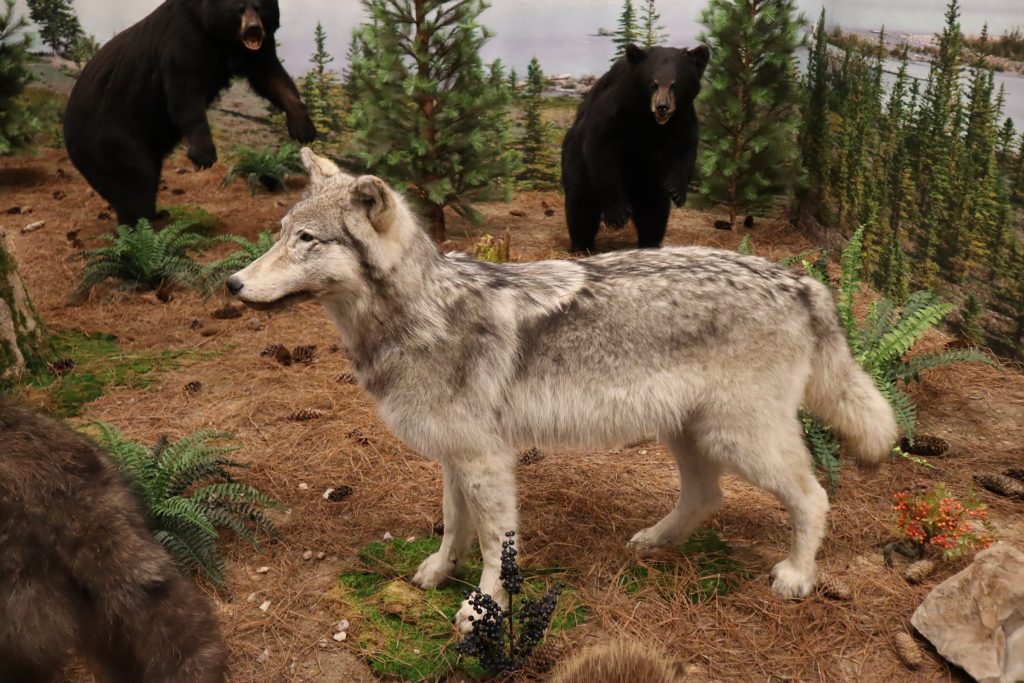
Grey Wolf
Canis lupus
Additional Information
The Grey Wolf is the largest member of the canine family. Its fur varies from gray to brown, black, or white, with buffy facial markings and undersides. Males typically weigh around 95 lbs, while females weigh around 80 lbs. They live in large packs, demonstrating cooperative hunting, advanced expressive behaviors, and strong territorial instincts.
- Diet– Carnivore with a diet primarily consisting of meat. Often prey on larger animals such as deer, moose, bison, as well as smaller animals.
- Habitat– Highly adaptable and can thrive in various habitats such as forests, Tundra, Mountains, Deserts, etc.
- Behavior– Hunt at night in packs using their speed, sharp teeth, and claws to catch prey.
- Lifespan– The average lifespan is 7 to 8 years in the wild.
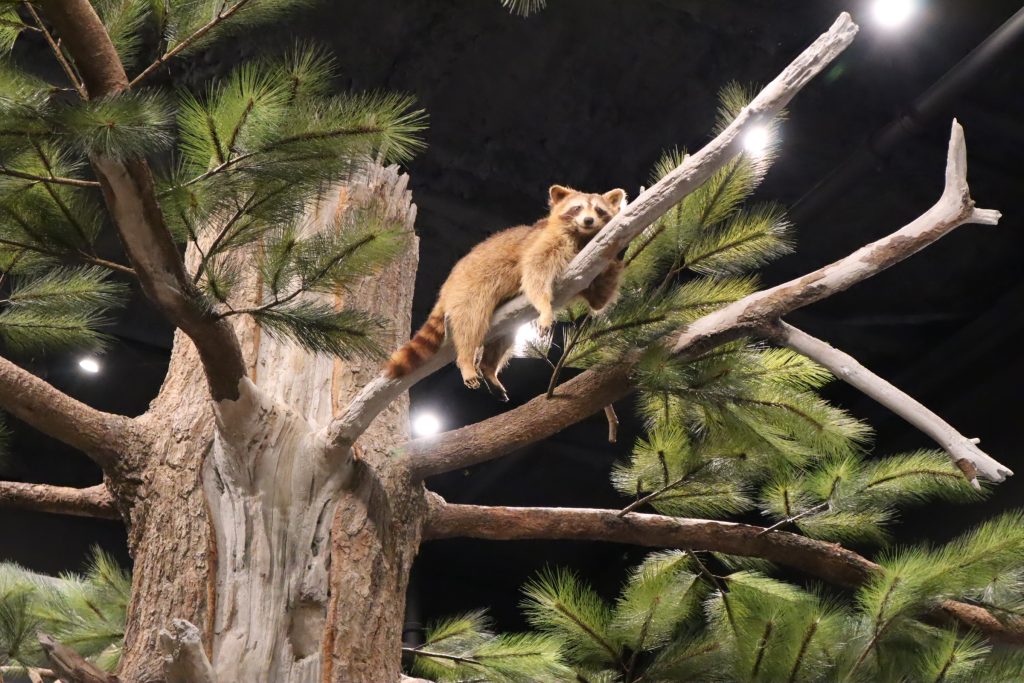
Northern Raccoon
Procyon lotor
Additional Information
The Northern Raccoon is a resourceful mammal native to North America. With their distinctive black “mask” markings around their eyes, they resemble bandits. These adaptable creatures thrive in forests, wetlands, and even urban areas. They are skilled climbers, excellent swimmers, and are primarily active at night.
- Diet– Omnivorous with a flexible diet consisting of fruits, berries, crayfish, insects, rodents, frogs, fish, etc.
- Habitat– Prefer wooded areas near water such as marshes and swamps
- Behavior– Social animals that communicate using various sounds and are primarily active at night.
- Lifespan– The average lifespan is 2 to 3 years in the wild.
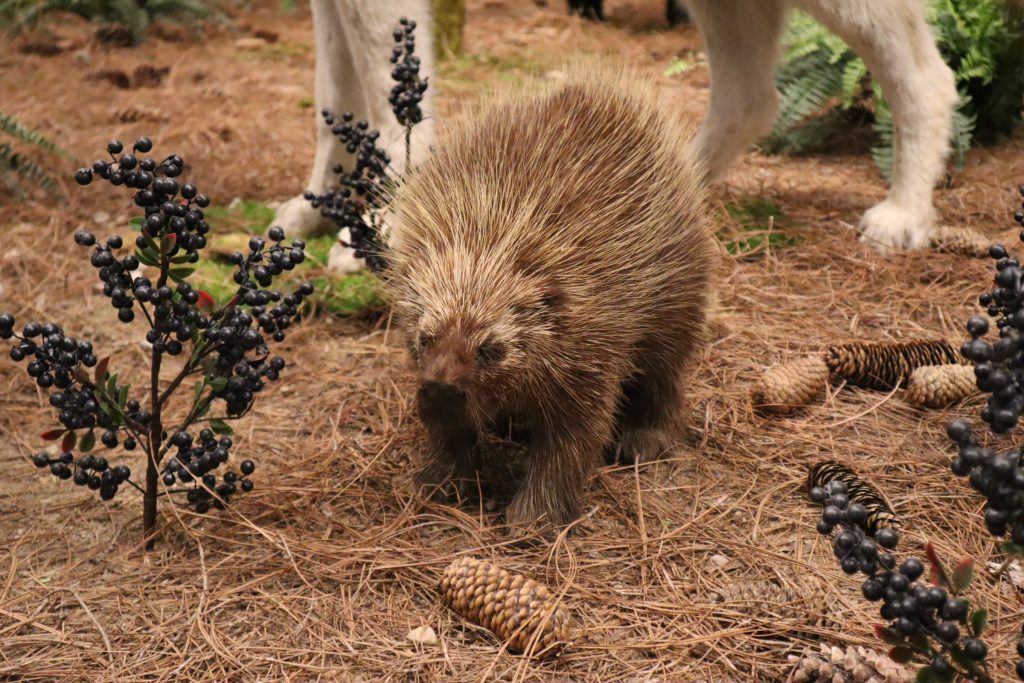
Northern American Porcupine
Erethizon dorsatum
Additional Information
The North American Porcupine is a fascinating rodent native to North America. These quill-covered creatures have stocky builds, short legs, and bushy tails. Their most distinctive feature is their coat of nearly 30,000 sharp quills. Contrary to popular belief, they cannot shoot their quills, but the quills are easily dislodged when touched. They are skilled climbers and swimmers.
- Diet– Herbivore with varied diet based on the season. Most of the year they feed on green vegetation and survive on tree bark during the winter.
- Habitat– Adaptable to diverse landscapes and found in forests, grasslands, desert shrub areas, and tundra. Live in dens made from hollow trees and rocky areas.
- Behavior– Nocturnal, solitary animals that come together during breeding season.
- Lifespan– The average lifespan is 10 to 18 years in the wild.
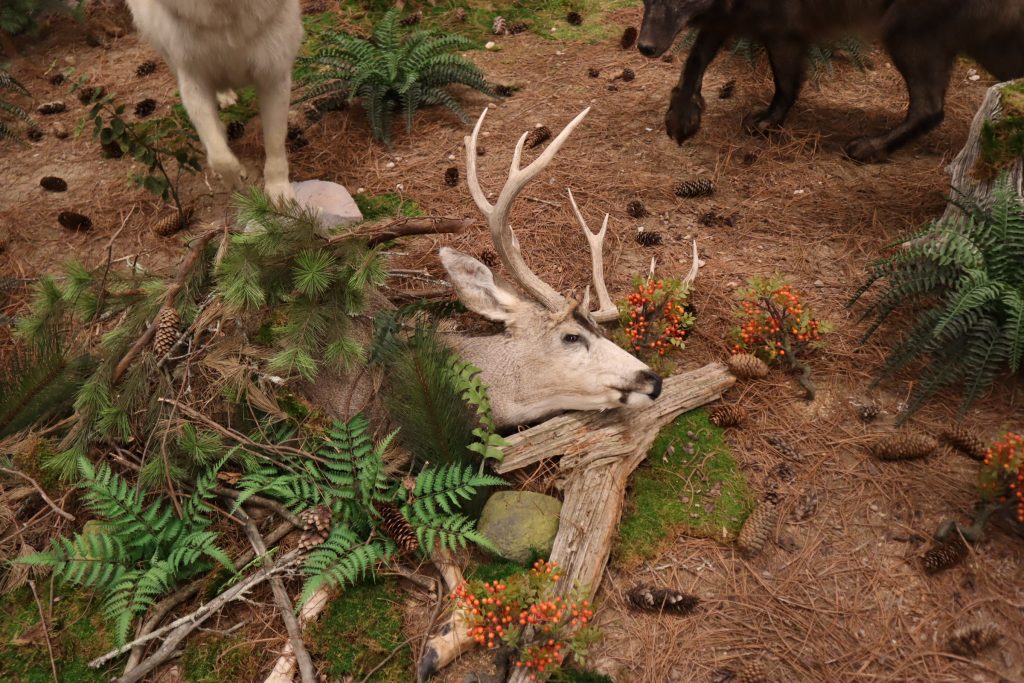
White-tailed Deer
Odocoileus virginianus
Additional Information
The White-tailed Deer is a common and iconic species found around North America. These graceful creatures are known for their distinctive white tail, which they raise as an alert signal. Adult males can weigh between 150 to 300lbs whereas the females weigh between 90 to 200lbs.
- Diet– Herbivores with special stomachs that allow them to digest difficult foods through regurgitation and re-chewing.
- Habitat– Adaptable to temperate deciduous forests and grasslands
- Behavior– Social animals active during dawn and dusk with various forms of communication including sound, odor, and markings.
- Lifespan– The average lifespan is up to 4.5 years in the wild.
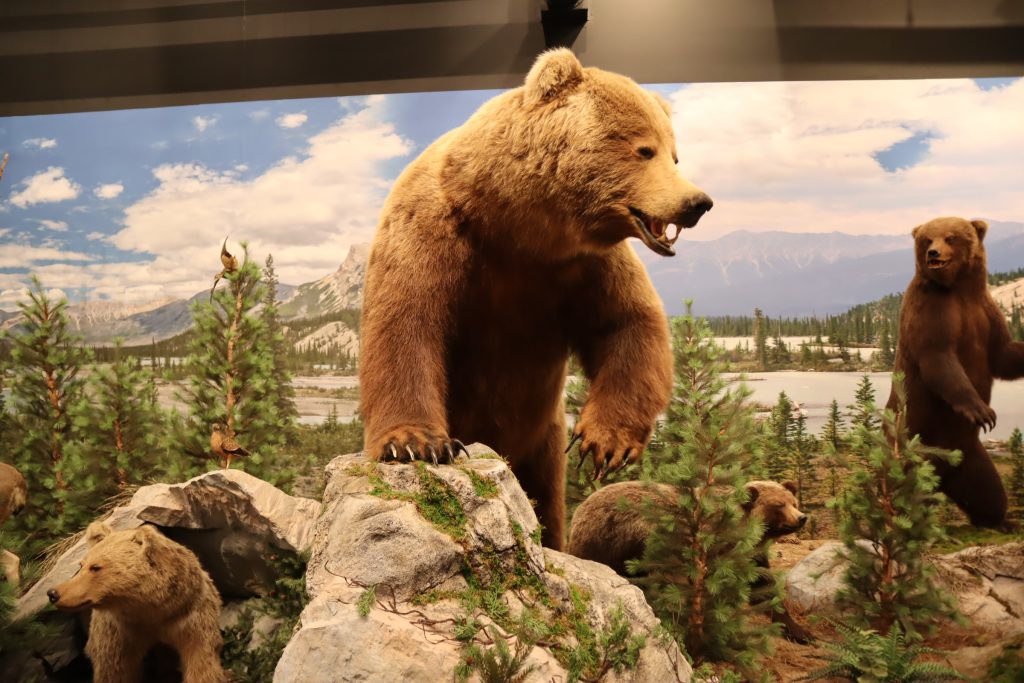
Brown Bear
Ursus arctos
Additional Information
The Brown Bear inhabits forests and mountains across northern North America, Europe, and Asia. They hold the title for the most widely distributed bear in the world. The magnificent creatures will hibernate anywhere between 4 to 7 months during the winter. Cubs stay with their mothers for up to 3 years before venturing out on their own. Interestingly, Grizzlies are a sub species of Brown Bears distinguished by geographical region which influences diet, size, and behavior!
- Diet– Omnivores with an 80-99% diet being plant based. Opportunistic eaters and will consume what is readily available.
- Habitat– Live in diverse habitats to include prairies, alpine meadows, woodlands, and forests. Prefer areas near rivers and streams.
- Behavior– Active during early morning and evenings. Generally solitary inhabiting a wide range of environments preferring semi-open regions.
- Lifespan– The average lifespan is 20 to 30 years in the wild.
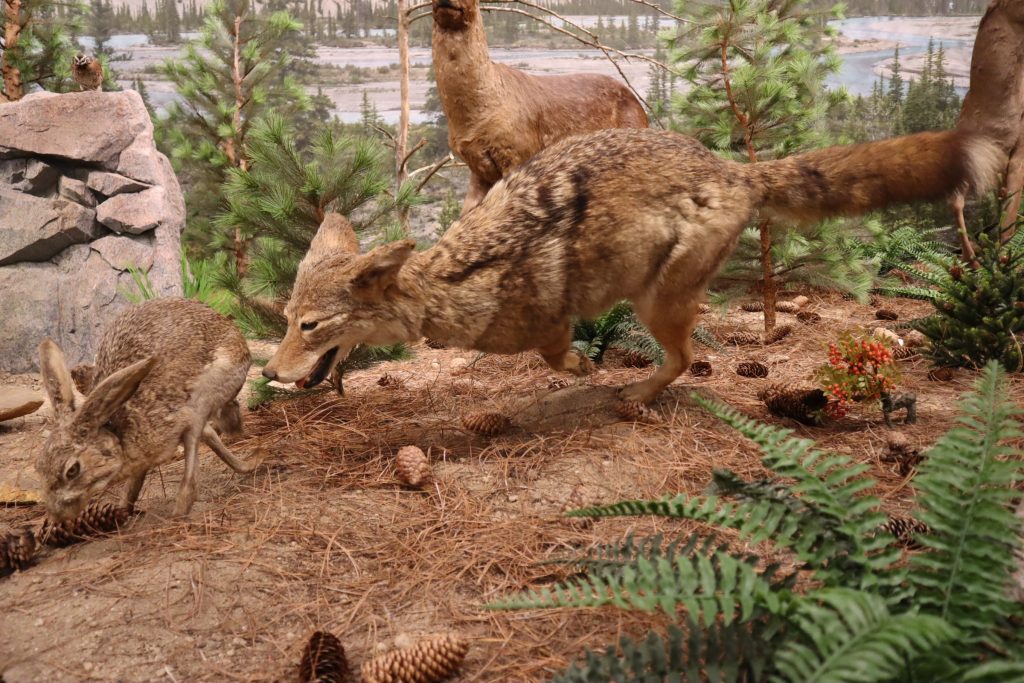
Coyote
Canis latrans
Additional Information
The Coyote is a highly adaptable canid, native to North America, and known for their resourcefulness and versatility. They are opportunistic hunters with a dietary flexibility that enables them to live in a wide range of habitats. Coyotes are vocal animals that use howls, yips, and barks to communicate and mark territory. They are incredibly agile and can run at speeds of up to 40mph.
- Diet– Omnivorous diet consisting of small mammals like rabbits and rodents, birds, insects, fruits, and even human waste and pet food.
- Habitat– Wide range including deserts, forests, grasslands, and urban environments.
- Behavior– Solitary and social, capable of living alone, in pairs, or in small family groups. Most active during dawn and dusk.
- Lifespan– The average lifespan is 10 to 14 years in the wild.
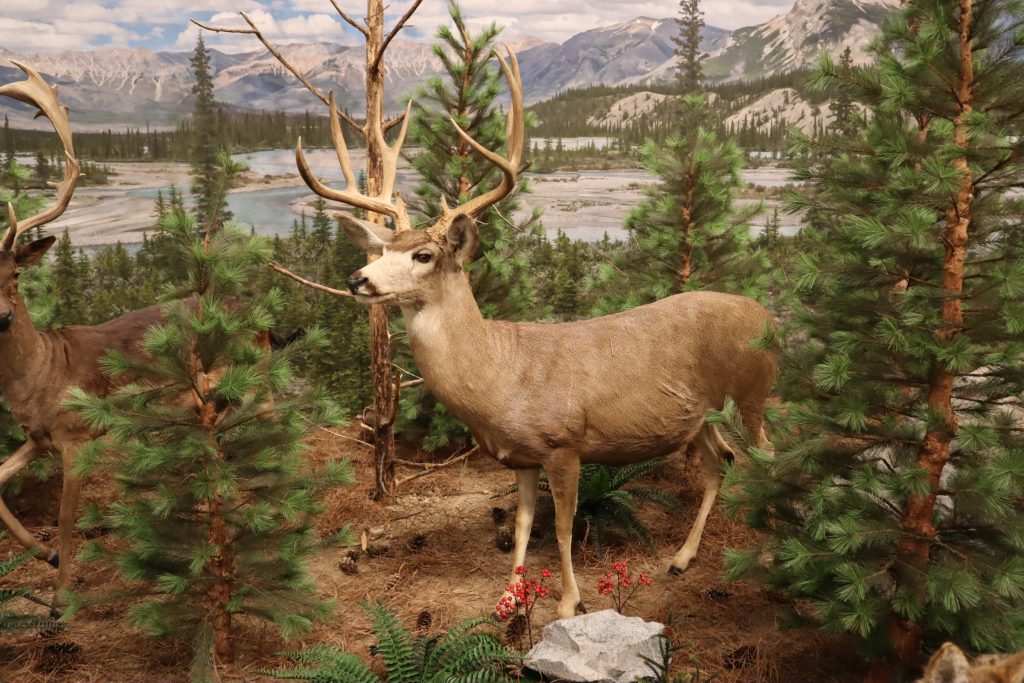
Mule Deer
Odocoileus hemionus
Additional Information
The Mule Deer, known for its large ears that resemble those of a mule, is a highly adaptable and iconic species native to western North America. They are also known for their incredible migratory journey. Mule deer undertake seasonal migrations that can span over 150 miles between their summer and winter ranges. This migration is considered one of the longest recorded for any land mammal in the lower 48 states.
- Diet– Herbivorous diet consisting of mainly shrubs, leaves, grasses, and forbs
- Habitat– Range of environments, from arid deserts and shrublands to mountainous forestated areas and open meadows.
- Behavior– Crepuscular animals that form small family groups where the females are highly protective of their fawns.
- Lifespan– The average lifespan is 9 to 11 years in the wild.
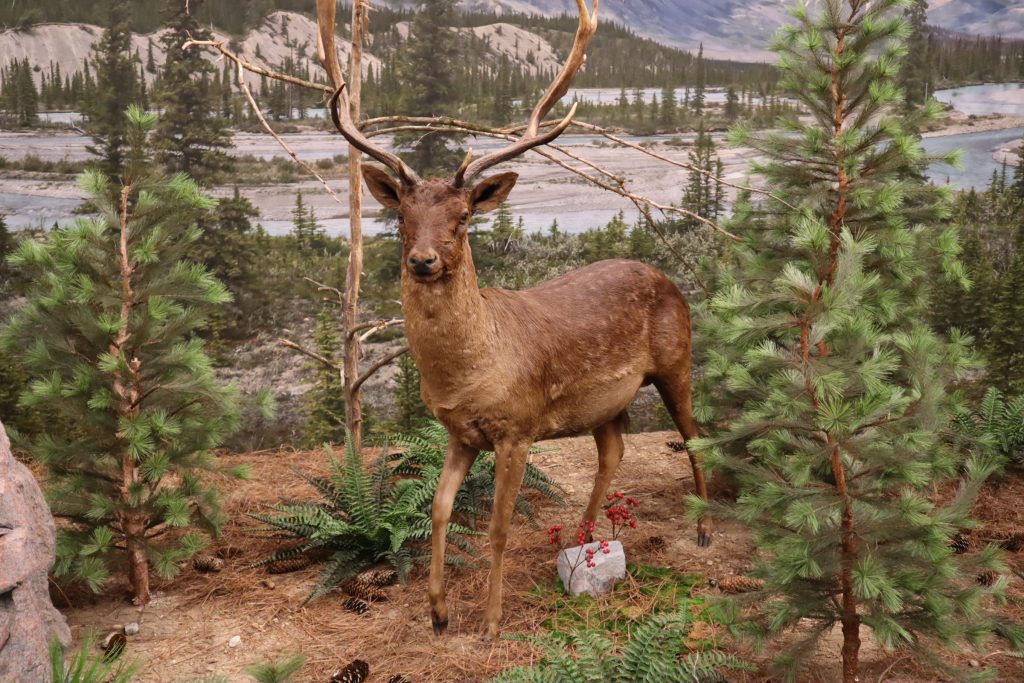
Common Fallow Deer
Dama dama
Additional Information
The Fallow Deer is a captivating species with a range of distinct features. These deer are easily recognizable by their spotted coats, long tails, and broad, palmate antlers found on the males. Native to the Mediterranean regions of Europe and the Middle East, fallow deer have been widely introduced to other parts of the world, including the UK, Australia, and the Americas. They have incredible antler regeneration, capable of regrowing antlers to full size in just a few months.
- Diet– Herbivorous diet consisting of grasses, leaves, shoots, acorns, nuts, and berries.
- Habitat– Diverse habitats including woodlands, grasslands, parklands, and agricultural areas.
- Behavior– Social animals found in herds of various sizes depending on the season, with large groups in the winter and smaller mixed groups during summer.
- Lifespan– The average lifespan is 12 to 16 years in the wild.
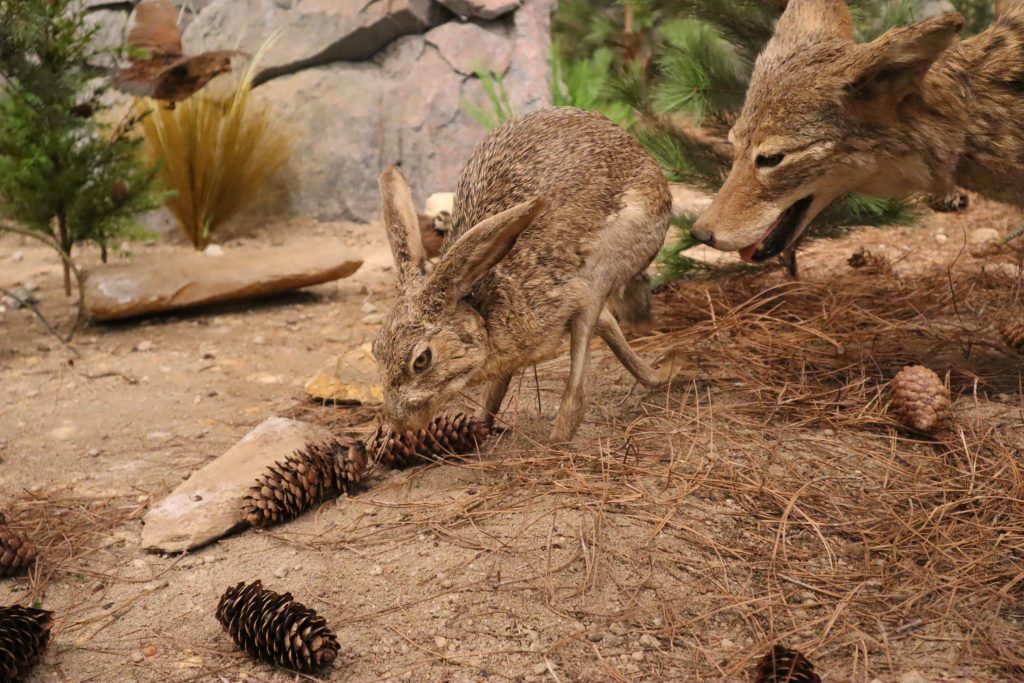
Antelope Jackrabbit
Lepus alleni
Additional Information
The Antelope Jackrabbit is a small mammal native to the deserts of the southwestern U.S. and Mexico and known for its large ears and swift movements. They can reach impressive speeds of up to 45 mph to evade threats and have excellent camouflage. Their large ears are an adaptation that allows these creatures to dissipate heat, especially when the temperatures rise.
- Diet– Herbivores with a diet consisting of grasses, cacti, and other desert vegetation.
- Habitat– Prefer open desert landscapes.
- Behavior– Antelope Jackrabbits are solitary and Crepuscular, meaning they’re most active during dawn and dusk.
- Lifespan– The average lifespan is 4 to 5 years in the wild.
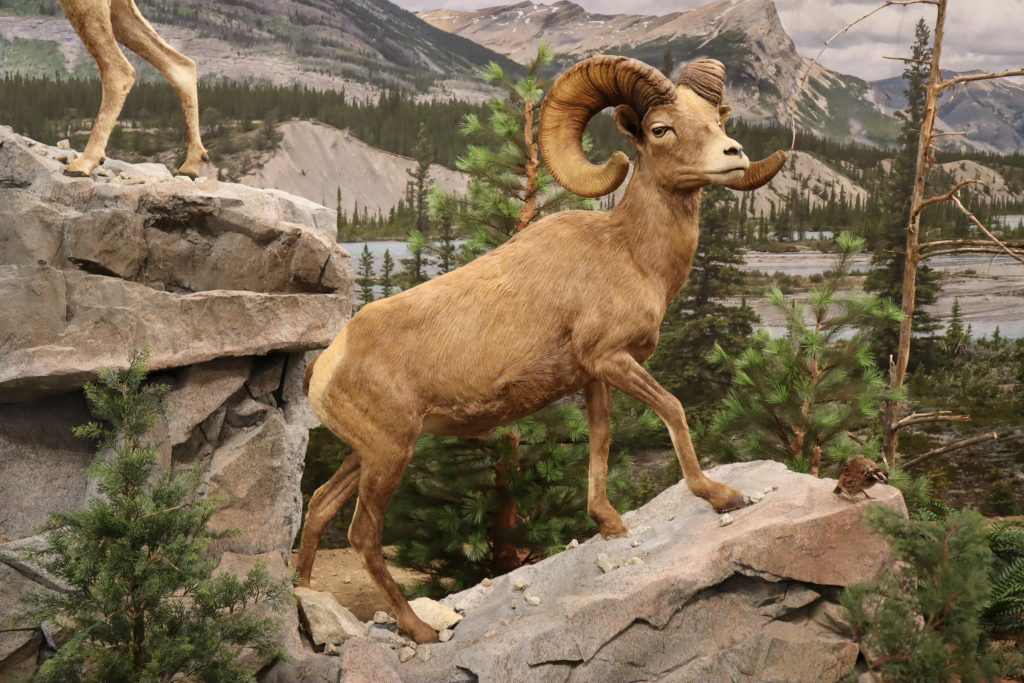
Bighorn Sheep
Ovis canadensis
Additional Information
The Bighorn Sheep are rugged and resilient creatures fund in the mountainous regions of North America, particularly in the Rocky Mountains and the deserts of the Southwest. They boast massive, spiraled horns, which can weigh up to 30 lbs. These horns are used in head-butting contests to establish dominance and win the right to mate during breeding season. During the winters they descend to lower elevations where food is more accessible, and in the summer, they return to higher altitudes to escape the heat.
- Diet– Herbivores that graze on grasses, shrubs, and herbs.
- Habitat– Steep, rocky mountains as well as deserts and canyonlands.
- Behavior– Impressive social structures, often forming herds based on gender and age. Rams (males) form bachelor groups, while ewes (females) and their lambs form nursery herds.
- Lifespan– The average lifespan is 10 to 15 years in the wild.
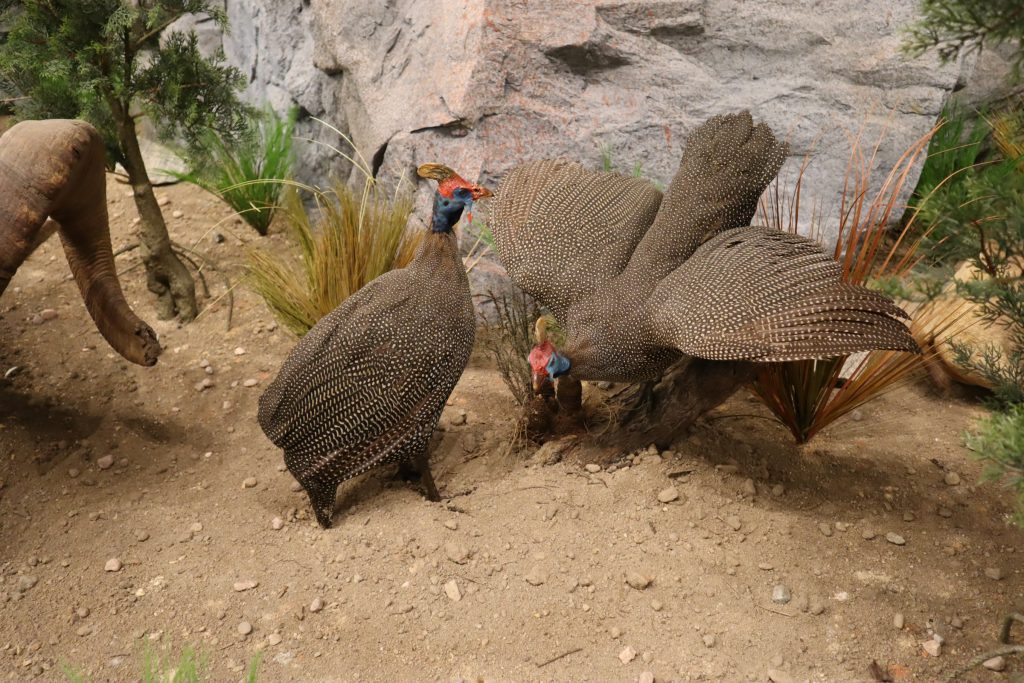
Helmeted Guineafowl
Numida meleagris
Additional Information
The Helmeted Guineafowl, a distinctive bird native to sub-Saharan Africa, is easily recognized by its unique helmet-like casque on its head and spotted plumage. They are fantastic pest controllers! The helmeted guineafowl has an insatiable appetite for ticks and other insects, making them natural allies in reducing pest populations. In some areas, they are even kept to help control tick-borne diseases.
- Diet– Omnivorous diet consisting of seeds, insects, and small vertebrates.
- Habitat– Open woodlands, savannas, and scrublands.
- Behavior– Social creatures, usually found in small to large flocks.
- Lifespan– The average lifespan is up to 12 years in the wild.
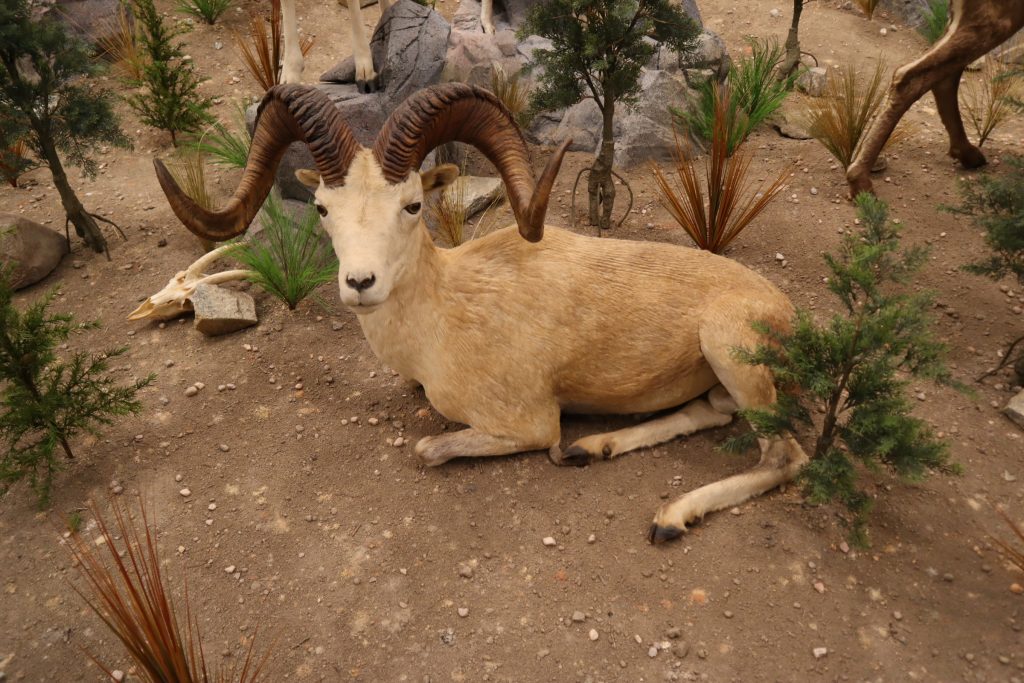
Thinhorn Sheep
Ovis dalli
Additional Information
The Thinhorn Sheep, also known as Dall’s sheep, are remarkable creatures adapted to the rugged mountainous terrains of northwestern North America, including Alaska, the Yukon, and northern British Columbia. They display impressive agility and surefootedness, allowing them to navigate challenging terrain. Thinhorn Sheep are diurnal and spend their days foraging and resting in the safety of rocky outcrops to avoid predators.
- Diet– Herbivorous diet consisting of grasses, sedges, and forbs, with a particular fondness for alpine vegetation. Supplemented by minerals from natural mineral licks.
- Habitat– Steep, rocky slopes and alpine meadows.
- Behavior– Social animals found in herds that provide protection and structure.
- Lifespan– The average lifespan is 12 to 16 years in the wild.
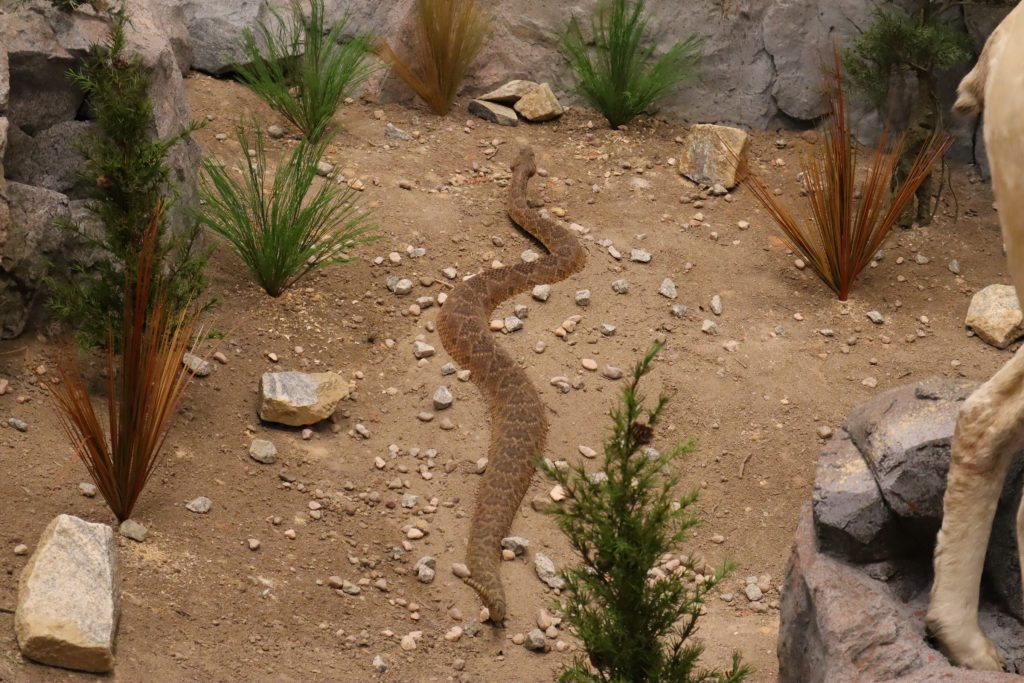
Rattlesnake
Crotalus cerastes
Additional Information
The Rattlesnake is a venomous serpent found primarily in the Americas, renowned for its distinctive rattle at the end of its tail, which it uses as a warning signal to potential threats. They generally avoid humans but will strike when in danger. Rattlesnakes have the special ability to control the amount of venom they inject when they bite. They do this to conserve venom for hunting rather than defense.
- Diet– Carnivorous diet consisting of small mammals, birds, and reptiles.
- Habitat– Variety of environments such as deserts, grasslands, forests, and swamps.
- Behavior– Generally solitary and ectothermic, relying on external heat sources to regulate body temperatures.
- Lifespan– The average lifespan is 10 to 20 years in the wild.
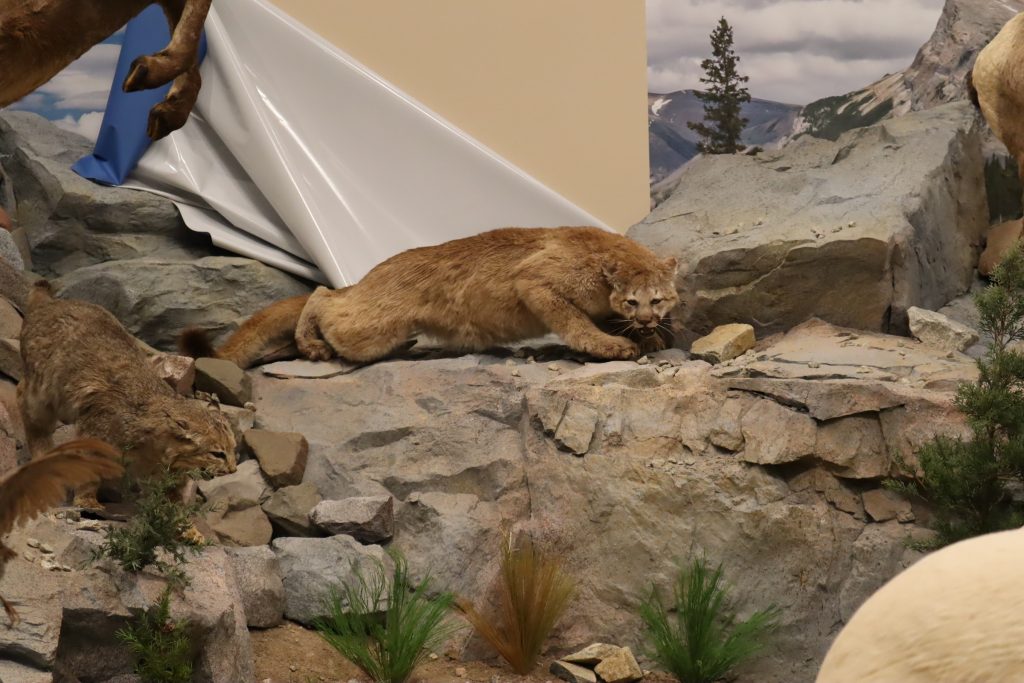
Puma
Puma concolor
Additional Information
The Puma also known as the cougar, mountain lion, or panther, is a versatile and powerful predator native to the Americas. They have incredible strength, agility, and stealth, allowing them to effectively ambush their prey. They can leap up to 18 feet vertically and 40 feet horizontally in a single bound!
- Diet– Carnivorous diet consisting of deer and smaller mammals such as birds, and even insect when necessary.
- Habitat– Wide range of environments including dense forests, mountainous regions, deserts, and swamps.
- Behavior– Solitary and elusive animals most active during dawn and dusk.
- Lifespan– The average lifespan is 8 to 13 years in the wild.
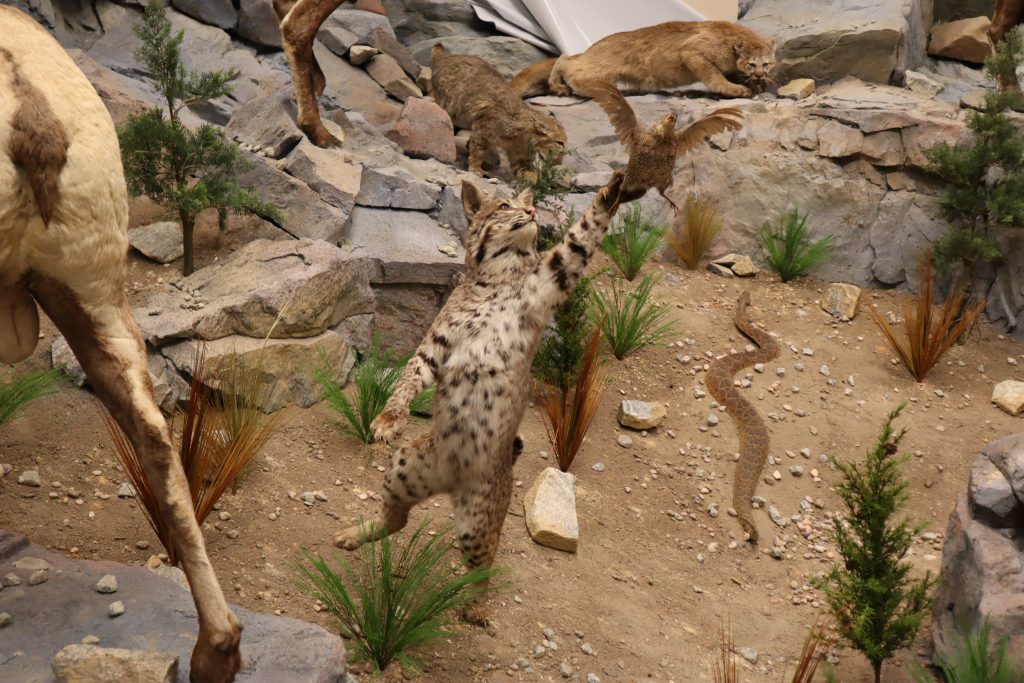
Bobcat
Lynx rufus
Additional Information
The Bobcat is a medium-sized wildcat native to North America, known for its distinctive tufted ears and short, bobbed tail. They have excellent vision and hearing, which makes them formidable hunters when paired with sharp, retractable claws and powerful limbs for pouncing on prey. Bobcats are highly adaptable and thrive in a wide range of environments.
- Diet– Carnivorous diet consisting of small mammals such as rabbits, birds, and reptiles.
- Habitat– Variety of environments including forests, swamps, deserts, and suburban areas.
- Behavior– Nocturnal with a solitary and territorial lifestyle.
- Lifespan– The average lifespan is 7 to 10 years in the wild.
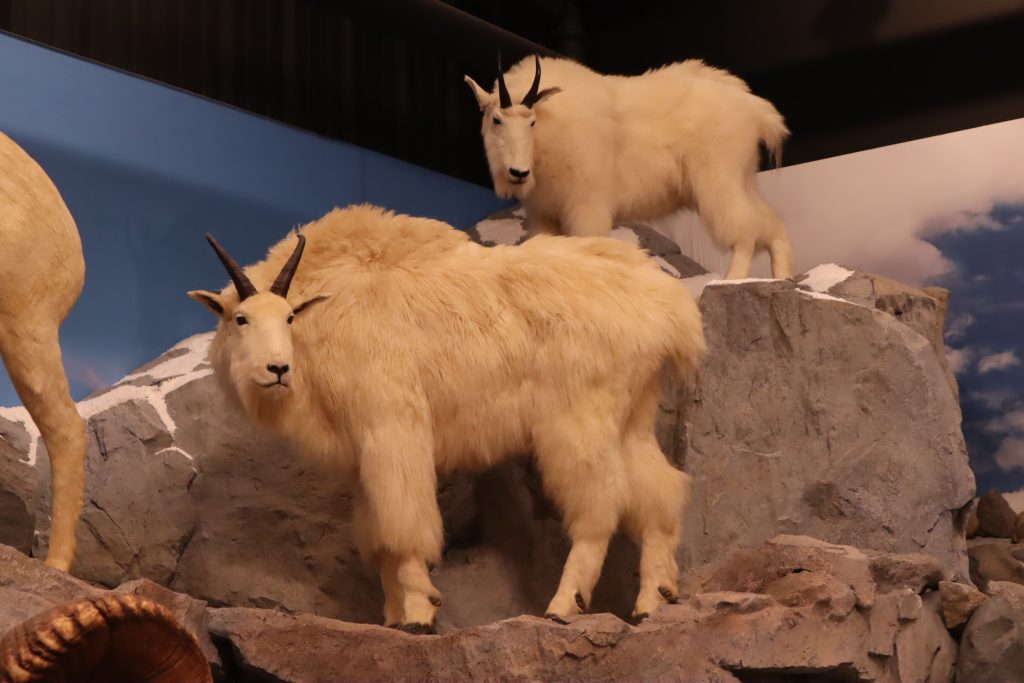
Mountain Goat
Oreamnos americanus
Additional Information
The Mountain Goat is a remarkable animal, well-adapted to the rugged terrains of North America’s mountainous regions, particularly the Rockies and Cascades. These creatures are incredibly agile, capable of scaling near-vertical rock faces of over 60 degrees with ease. Their hooves have a rough pad that gives them excellent traction for navigating these challenging terrains. This ability not only allows them to easily access food sources but also serves as a critical defense mechanism since few predators can follow them into these high, rocky perches.
- Diet– Herbivorous diet consisting of grasses, herbs, mosses, and lichens that are at high altitudes.
- Habitat– Specially adapted for rocky terrains in high altitude environments.
- Behavior– Social animals living in groups that vary in size depending on the season.
- Lifespan– The average lifespan is 9 to 12 years in the wild.
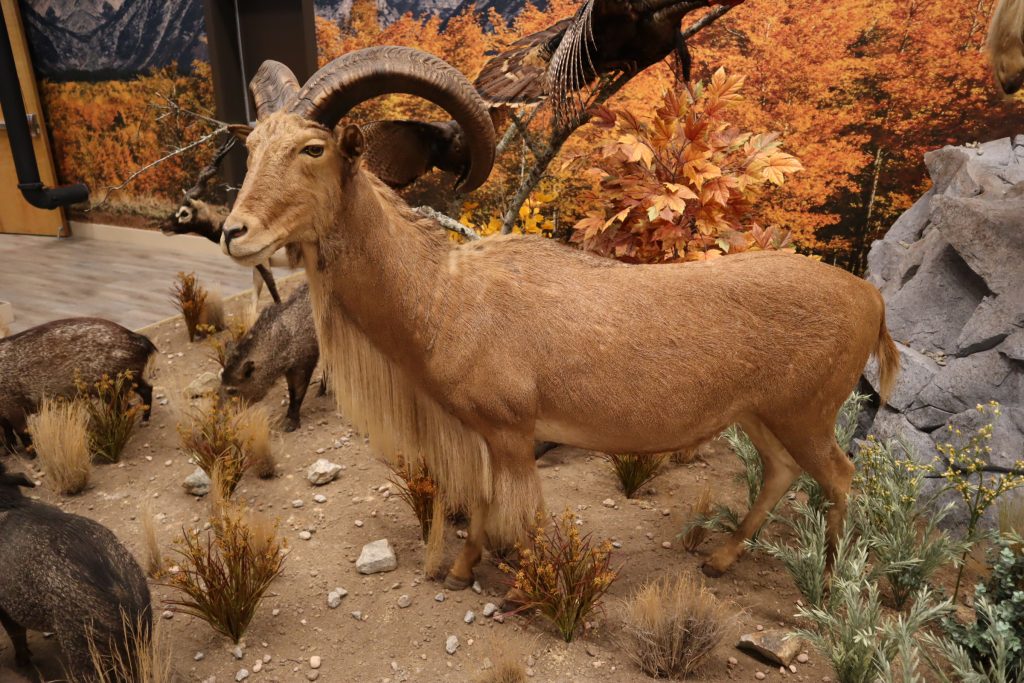
Aoudad
Ammotragus lervia
Additional Information
The Aoudad, also known as the Barbary sheep, are hardy, adaptable creatures native to the rocky mountains of North Africa, though they have been introduced to other regions like the southwestern United States. They have strong, curved horns for defense and dominance displays. Their agile climbing skills allow them to navigate steep, rocky landscapes with ease.
- Diet– Herbivores that graze on grasses, shrubs, and other vegetation.
- Habitat– Arid, rocky habitats, particularly rugged terrains that include steep, rocky slopes and cliffs.
- Behavior– Highly social animals, typically forming small herds led by a dominant male.
- Lifespan– The average lifespan is 10 to 15 years in the wild.
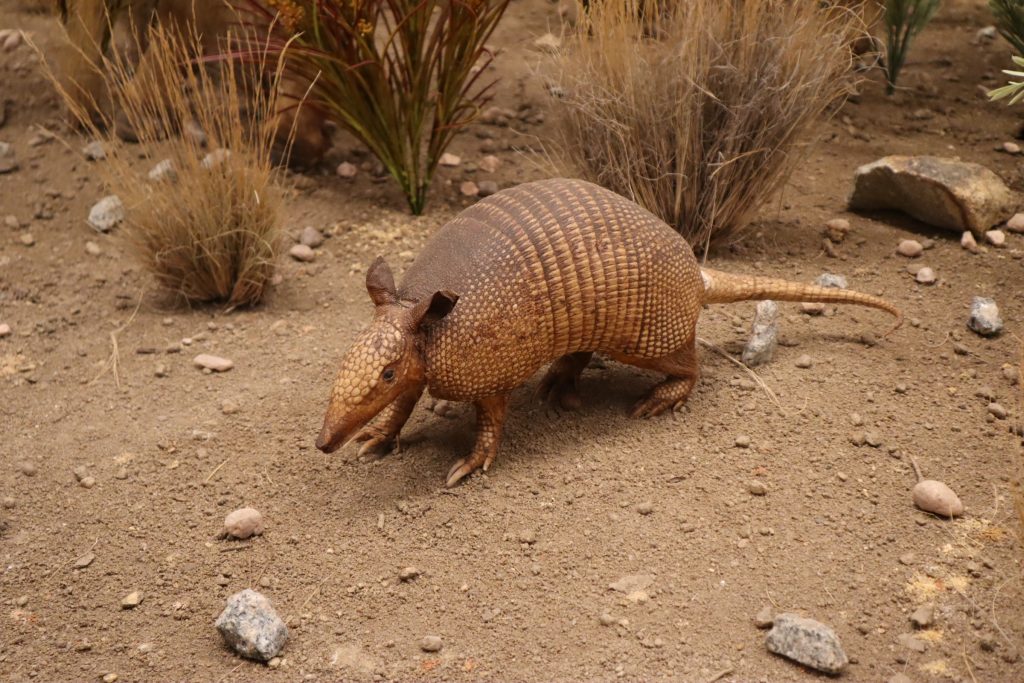
Nine-banded Armadillo
Dasypus novemcinctus
Additional Information
The Nine-banded Armadillo is a fascinating mammal found primarily in the southern United States, Central America, and northern South America. They are well known for their ability to dig, using their powerful claws to create burrows for shelter and hunt for prey. When threatened, the nine-banded armadillo can curl only slightly and uses its hard shell for protection. They also have the unique ability to hold their breath for up to 6 minutes! This allows them to walk underwater across riverbeds or avoid predators. It’s like having a built-in scuba tank for survival.
- Diet– Herbivorous diet consisting mainly of insects, and small invertebrates, such as plants, and fruits.
- Habitat– Variety of environments including forests, grasslands, ans semi-deserts.
- Behavior– Nocturnal and solitary.
- Lifespan– The average lifespan is 7 to 20 years in the wild.
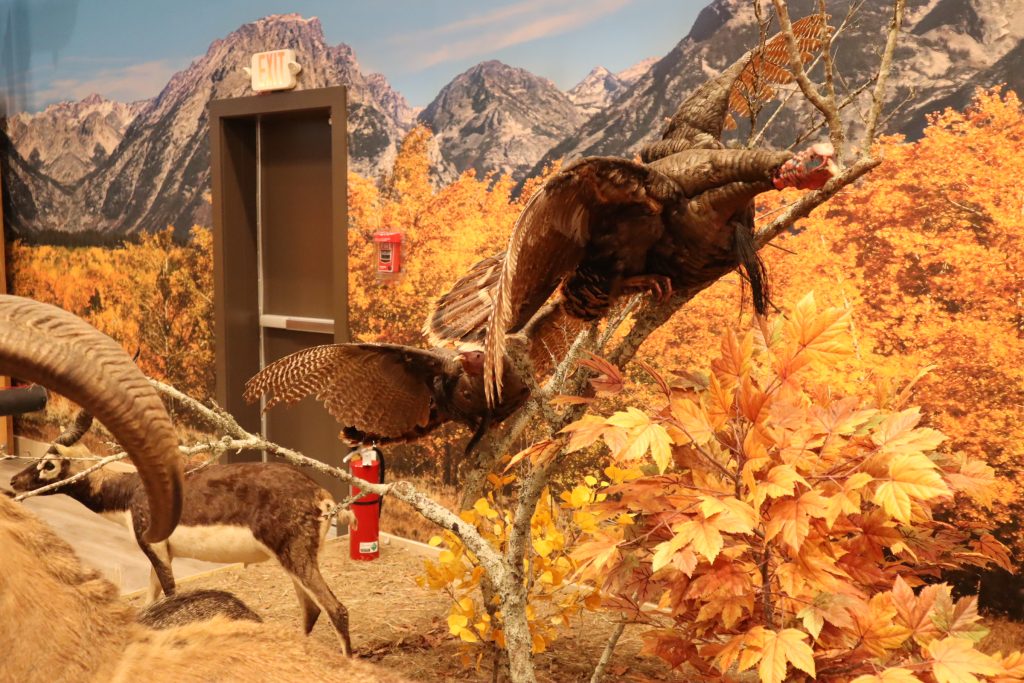
Wild Turkey
Meleagris gallopavo
Additional Information
The Wild Turkey is a remarkable bird native to North America, known for its striking plumage and impressive size. They can change the color of their head based on their emotions by altering blood flow. When a turkey is excited or agitated, the skin on its head can shift from a calm pale pink or bluish-gray to vivid red, white, or blue. These changes are most notable during courtship or confrontations.
- Diet– Herbivorous diet including acorns, nuts, seeds, berries, and insects.
- Habitat– Range of environments from forests, woodlands, grasslands, and swamps.
- Behavior– Complex social behaviors including elaborate courtship displays by males. They form large flocks with a hierarchy.
- Lifespan– The average lifespan is 3 to 5 years in the wild.
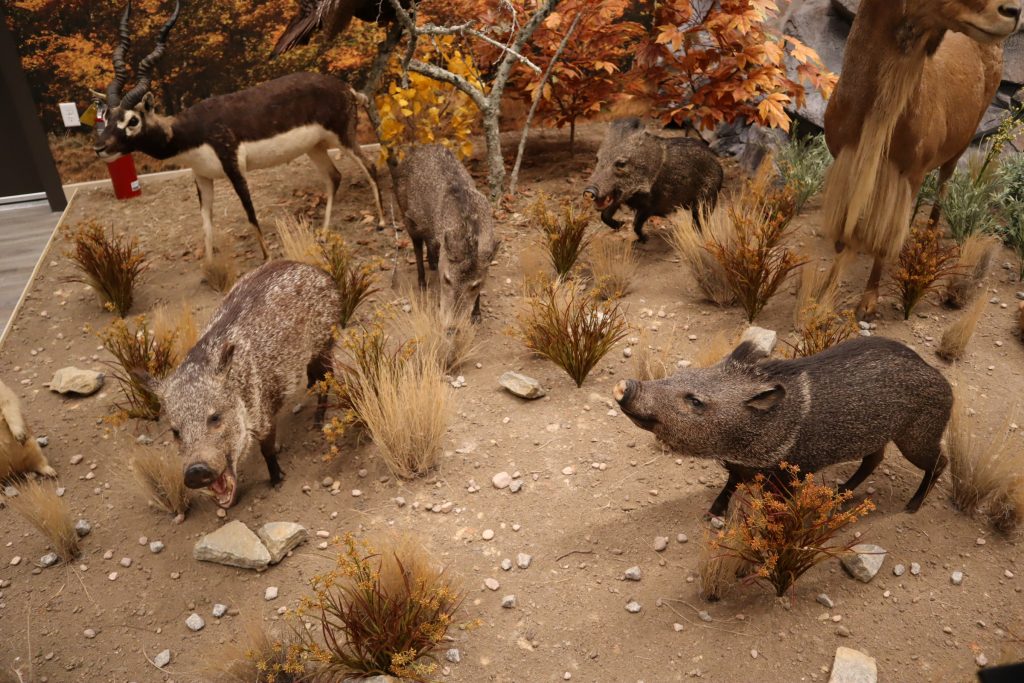
Collared Peccary
Pecari tajacu
Additional Information
The Collared Peccary, also known as the javelina, is a fascinating species native to North, Central, and South America. These robust, pig-like creatures are very adaptable, with diverse diets and varied habitats. They have a unique scent gland located on their back, which is used for marking territory and identifying members of their group. This scent gland gives them a distinct musky odor, which has led to their nickname ‘musk hogs.’
- Diet– Herbivorous diet consisting of mesquite beans, palm nuts, cacti, fruits, tubers, and a broad range of vegetation.
- Habitat– Diverse habitats including tropical and subtropical forests to deserts and grasslands.
- Behavior– Highly social animals often forming large groups up to 50 individuals led by an alpha male.
- Lifespan– The average lifespan is up to 7 years in the wild.
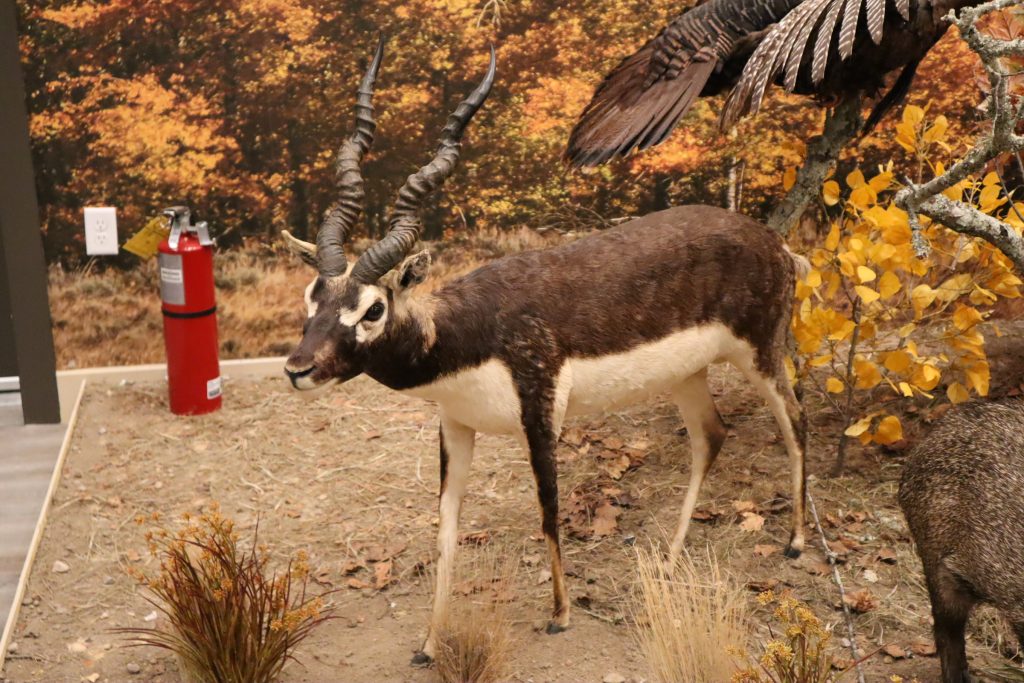
Blackbuck
Antilope cervicapra
Additional Information
The Blackbuck is an elegant antelope native to the Indian subcontinent, and known for its striking appearance and agility. They can reach speeds of up to 50 mph and are capable of making high, bounding leaps to evade predators. Females give birth to a single fawn which is able to stand and run within a few hours after birth.
- Diet– Herbivorous diet consisting mainly of grasses and sometimes herbs and fruits.
- Habitat– Prefer open grasslands and slightly wooded areas.
- Behavior– Primarily diurnal and social; living in mixed herds that can range from small to large congregations, often led by a dominant male.
- Lifespan– The average lifespan is 10 to 15 years in the wild.
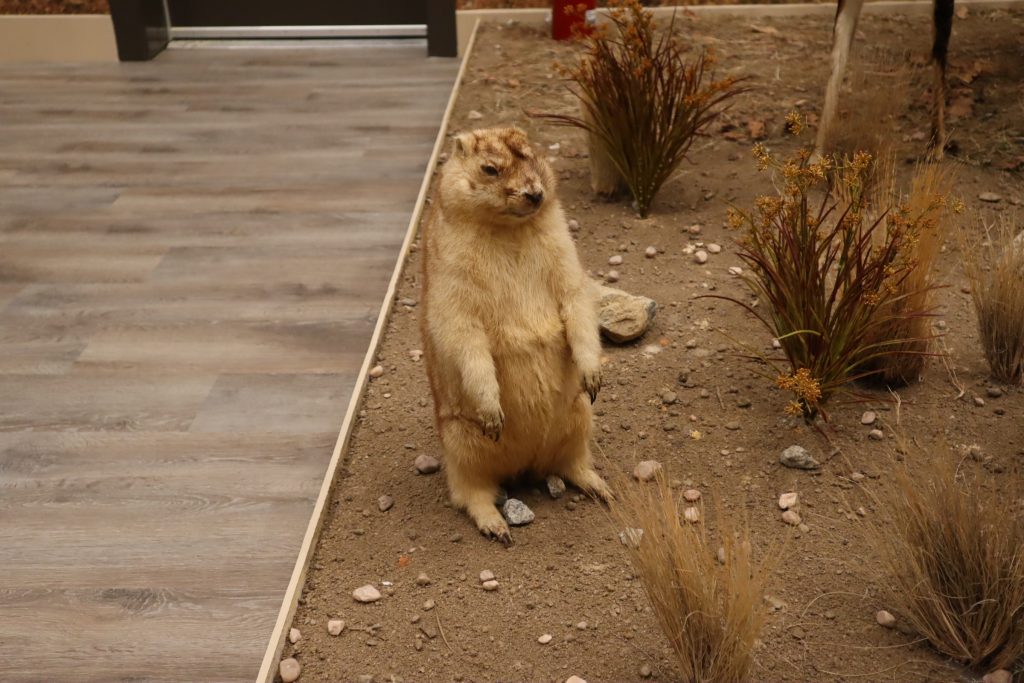
Prairie Dog
Cynomys
Additional Information
The Prairie Dog is a small, burrowing rodent native to the grasslands of North America. They are known for their extensive underground burrows that can span acres. These burrows have specialized areas for nurseries, sleeping quarters, and even designated latrine spaces. Prairie dogs also have a complex communication system with a variety of vocalizations that can coordinate activities and alert to danger with astonishing detail. They can communicate the type, size, and even the speed of an approaching predator.
- Diet– Herbivorous diet consisting of grasses, roots, seeds, and occasionally insects.
- Habitat– Grasslands and prairies.
- Behavior– High social behavior living in large colonies known as ‘towns’ and are most active during the day.
- Lifespan– The average lifespan is 3 to 5 years in the wild.
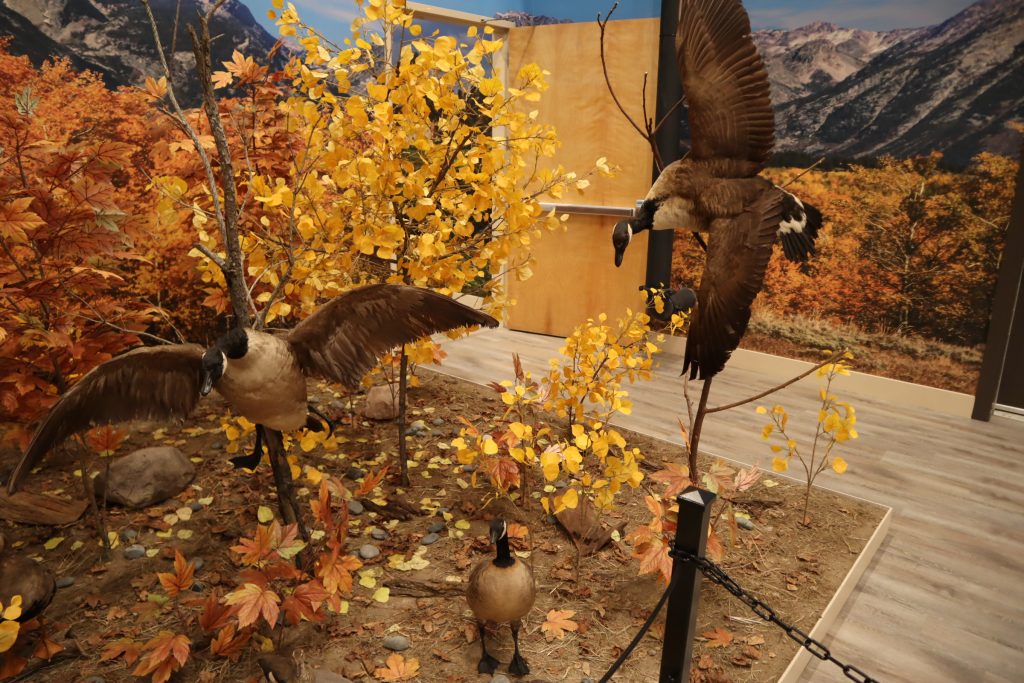
Canada Goose
Branta canadensis
Additional Information
The Canada Goose, with its distinctive black head, white cheek patches, and long neck, is a familiar sight across North America. They migrate south in the fall to escape harsh winters and return north in the spring to breed. The Canada Goose can be seen flying in a V-shaped formation to conserve energy with frequent stopover spots to rest and eat.
- Diet– Grasses, grains, aquatic plants and opportunistically insects, small fish, and even human food scraps.
- Habitat– Variety of environments where water and grassy fields are abundant to include wetlands, lakes, ponds, rivers, and urban areas.
- Behavior– Strong family bonds with common migratory patterns. Fiercely territorial when breeding.
- Lifespan– The average lifespan is 10 to 24 years in the wild.
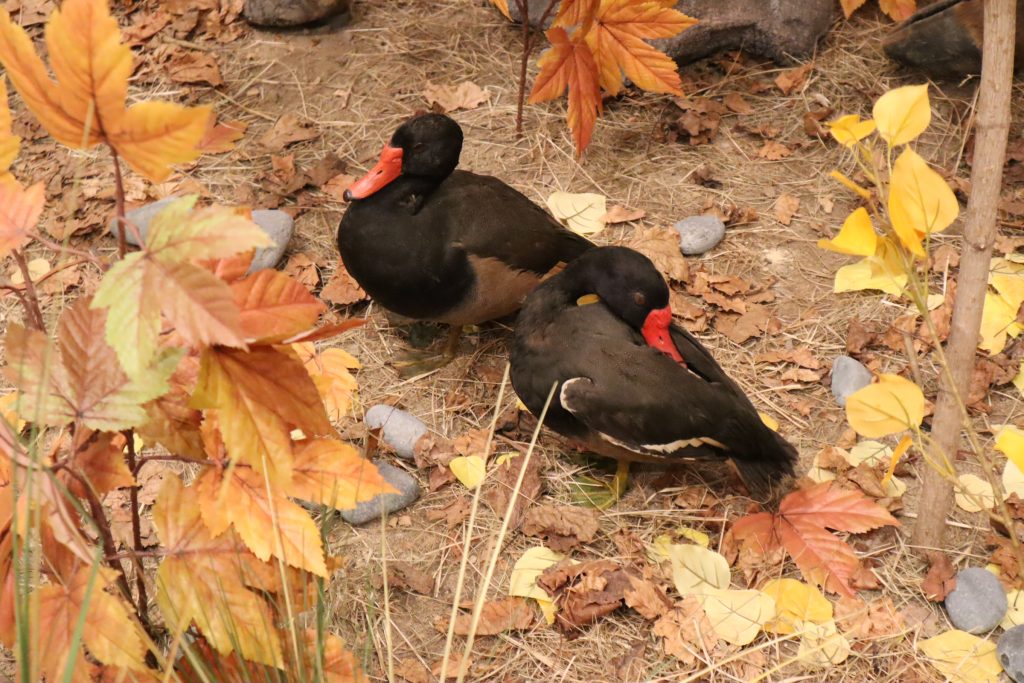
Rosy-billed Pochard
Netta peposaca
Additional Information
The Rosy-billed Pochard is a striking and robust duck species native to South America, particularly found in Argentina, Chile, Paraguay, Uruguay, and Brazil. Despite their seemingly tame and gentle appearance, males can be quite territorial and aggressive during the mating season. They use their rosy-red bills in displays of dominance and courtship, making for a spectacle among these otherwise tranquil waterfowl.
- Diet– Herbivorous diet consisting of seeds, grasses, roots, sedges, and aquatic plants.
- Habitat– Fresh water lakes, marshes, and lagoons.
- Behavior– Highly social birds, often seen in large flocks especially outside of breeding season. During breeding season, they are very territorial and found in pairs or small groups.
- Lifespan– The average lifespan is up to 20 years in the wild.
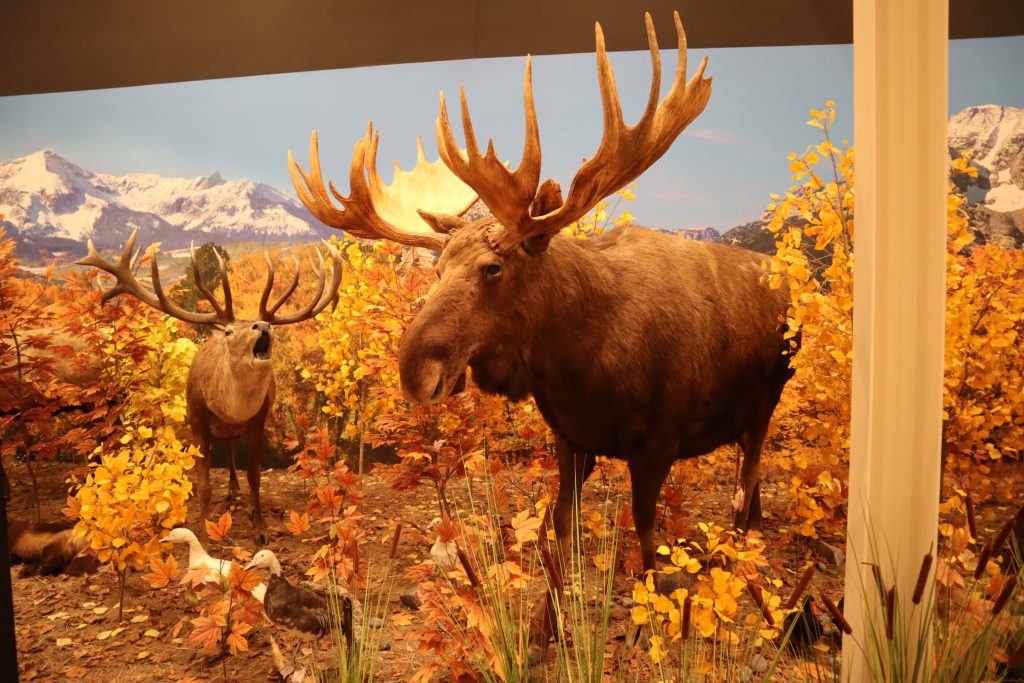
Moose
Alces alces
Additional Information
The Moose is the largest member of the deer family and is distinguished by its broad, palmate antlers and long, bulbous nose. They are excellent swimmers and can swim for several miles and often dive underwater to feed on aquatic vegetation. Despite their size they can move quickly and quietly through dense forests.
- Diet– Herbivore with a diet primarily of leaves, bark, twigs, and aquatic vegetation.
- Habitat– Boreal and mixed deciduous forests across the northern hemisphere to include regions like Alaska and Canda.
- Behavior– Primarily solitary except when breeding.
- Lifespan– The average lifespan is 15 to 25 years in the wild.
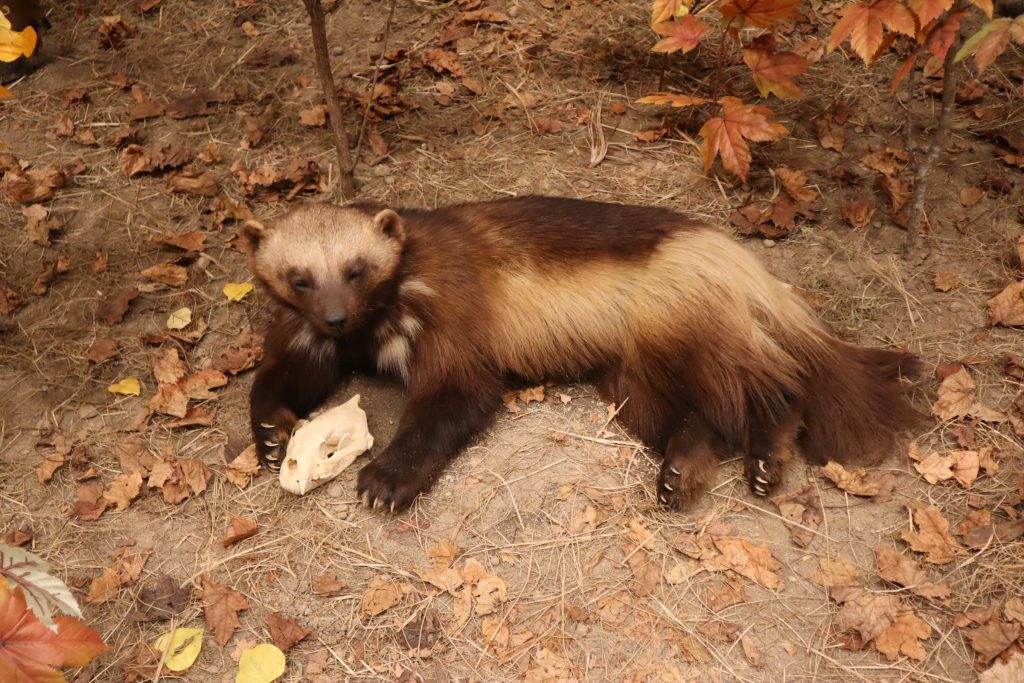
Wolverine
Gulo gulo
Additional Information
The Wolverine is a fierce and solitary carnivore known for its strength, resilience, and adaptability in some of the most inhospitable environments of the Northern Hemisphere. They are excellent hunters, capable of taking down prey much larger than themselves. They have powerful jaws and teeth that enable them to crush bones and chew through frozen meat and tough tendons. This allows them to consume almost every part of their prey, ensuring they get the maximum nutritional benefit and minimize waste.
- Diet– Diverse and opportunistic primarily consisting of small to medium sized mammals such as hares, rodents, and ground squirrels.
- Habitat– Boreal forests, tundra, and mountainous regions.
- Behavior– Solitary with vast territories marked by scent glands
- Lifespan– The average lifespan is 7 to 12 years in the wild.
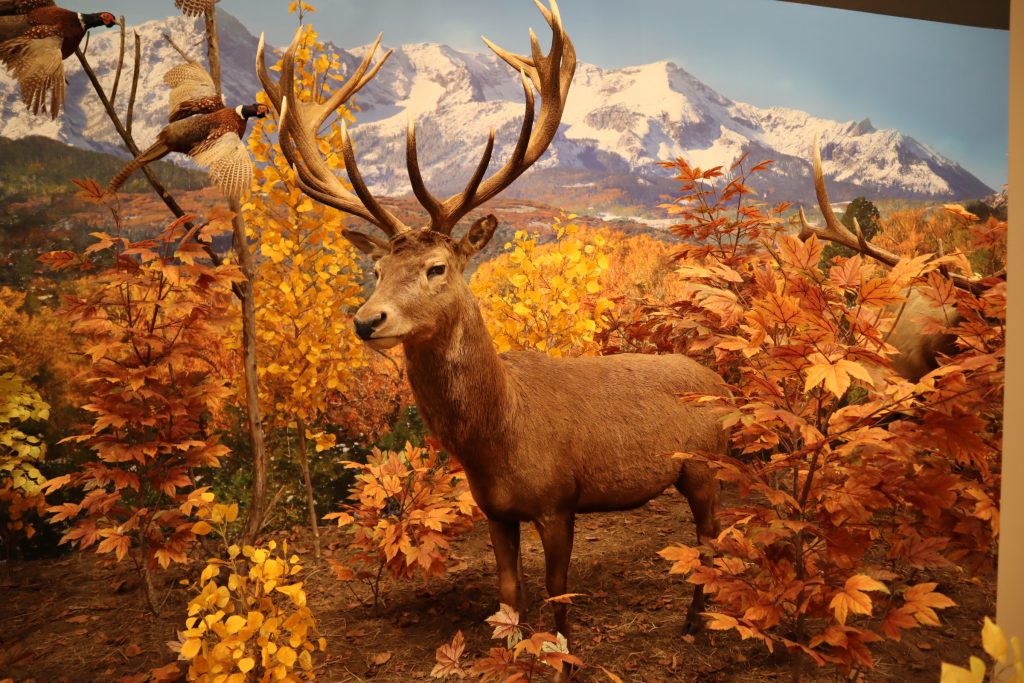
Red Deer
Cervus elaphus
Additional Information
The Red Deer are notable for their majestic appearance and adaptability. They are native to diverse regions across Europe, Asia, and parts of North Africa. During the rutting season, males display impressive antlers that can grow up to 45 inches in length and are used in dramatic displays of dominance. The Red Deer have held a place of reverence and symbolism in many cultures, depicted in ancient cave art and mythology. They are often associated with qualities like strength, endurance, and agility.
- Diet– Herbivore with a diet primarily of grasses, leaves, shoots, and bark.
- Habitat– Thrive in various habitats including woodlands, grasslands, and mountainous terrains.
- Behavior– Social animals forming large herds especially during the winter for protection and support.
- Lifespan– The average lifespan is 10 to 13 years in the wild.
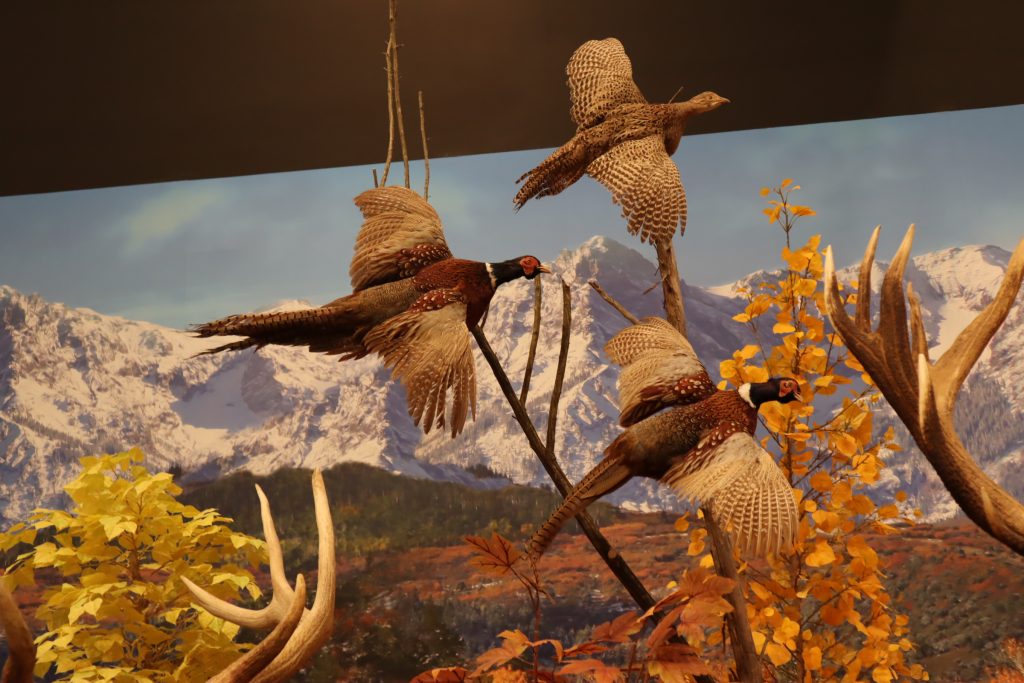
Common Pheasant
Phasianus colchicus
Additional Information
The Common Pheasant, also known as the ring-necked pheasant, is a striking bird known for its plumage and long tail feathers. Native to Asia, they have been introduced to many parts of the world, including North America and Europe. Pheasants are generally ground-dwelling birds, spending most of their time foraging on the ground. They can fly in short, low bursts, usually aimed at quickly reaching cover rather than traveling long distances.
- Diet– Omnivorous diet consisting of seeds, grains, insects, and small vertebrates.
- Habitat– Thrive in diverse habitats such as farmlands, grasslands, and forests.
- Behavior– Exhibit a social hierarchy with dominant males often forming a loose flock.
- Lifespan– The average lifespan is 1 to 3 years in the wild.
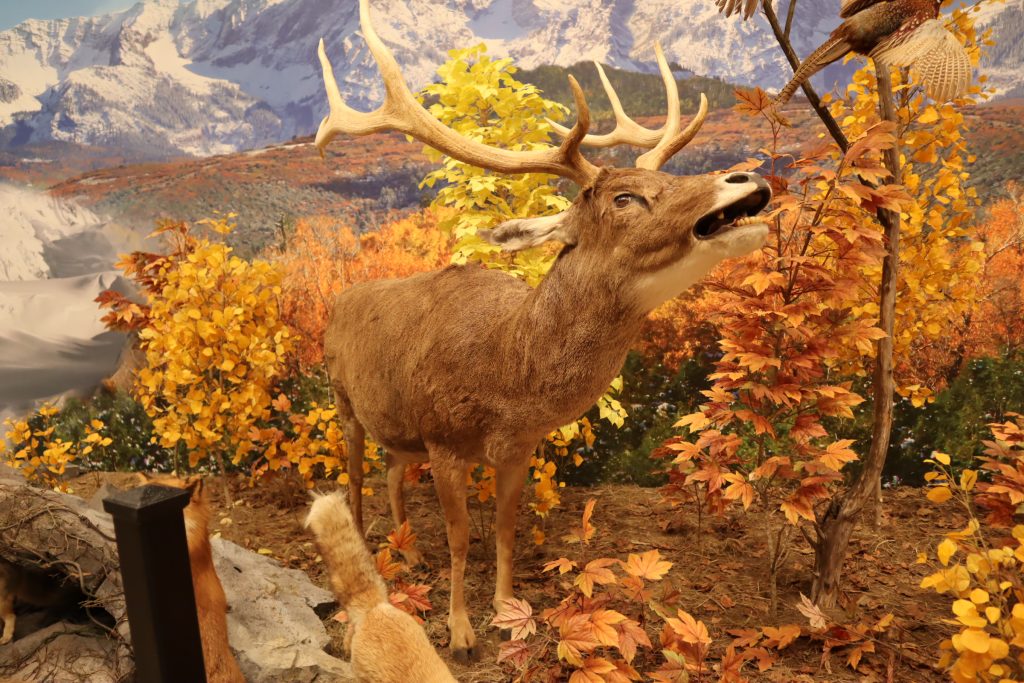
White-lipped Deer
Cervus albirostris
Additional Information
The White-lipped Deer, also known as Thorold’s Deer, is a large and impressive species native to the Tibetan Plateau. They are uniquely adapted to high altitudes due to their higher density of red blood cells compared to other deer species at lower altitudes. These deer also boast impressive multi-tined antlers that can span up to 4 feet in width!
- Diet– Herbivorous diet consisting of grasses, sedges, herbs, and some spices.
- Habitat– High-altitude mountainous grasslands, shrublands, and forested areas.
- Behavior– Crepuscular herd animals.
- Lifespan– The average lifespan is 16 to 18 years in the wild.
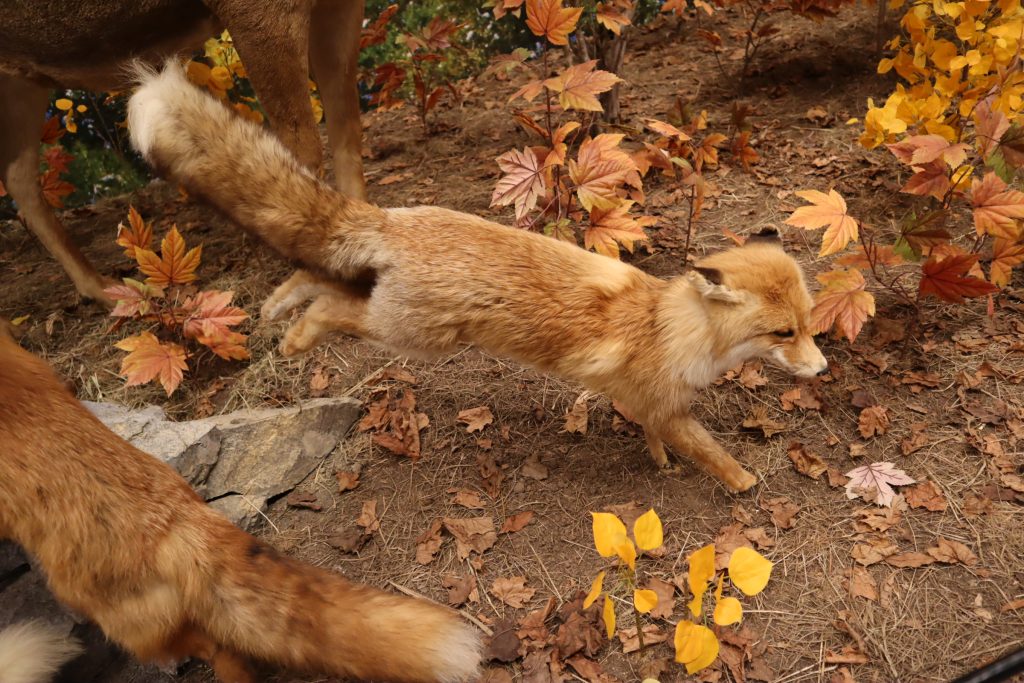
Red Fox
Vulpes vulpes
Additional Information
The Red Fox is one of the most adaptable and widespread omnivores. They are easily identifiable by their striking reddish-brown coat and bushy tail. There are melanistic forms of the red fox with varying pelt colors, such as silver, black, or blue. They exhibit a wide range of vocalizations that can be heard over long distances to communicate and establish territory.
- Diet– Omnivorous diet including small mammals like rabbits and rodents to insects, fruits, and scavenged human food.
- Habitat– Found in diverse habitats from forests to grasslands to urban areas and deserts.
- Behavior– Primarily nocturnal and live in family groups consisting of a mated pair and their young.
- Lifespan– The average lifespan is 3 to 6 years in the wild.
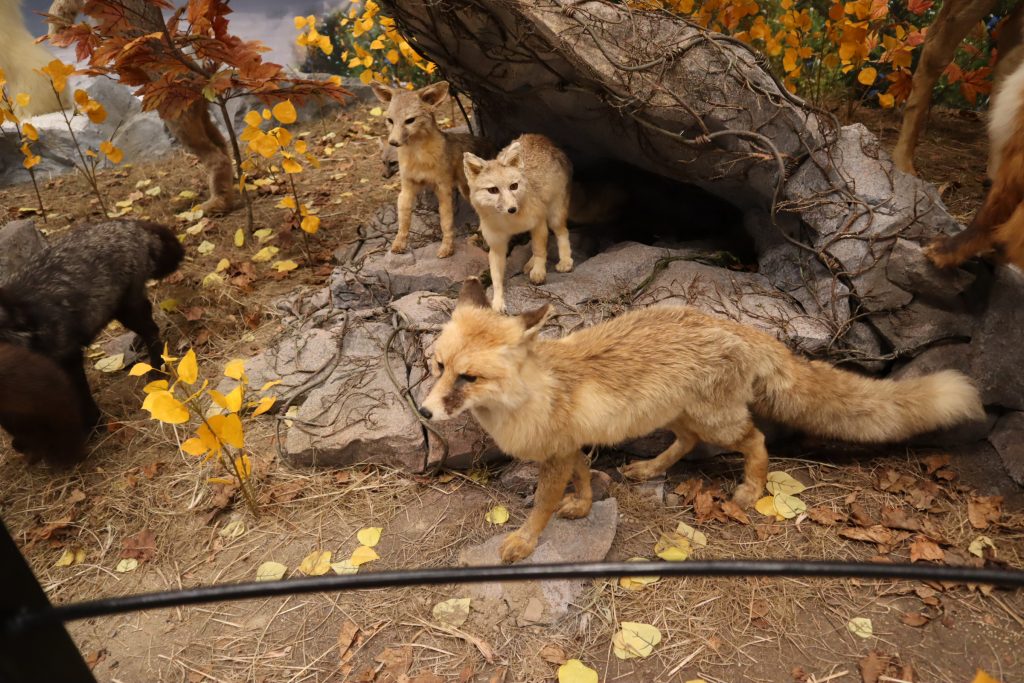
Kit Fox
Vulpes macrotis
Additional Information
The Kit Fox, a small and agile member of the canid family, inhabits the arid regions of North America, particularly in the southwestern United States and Mexico. They can excavate their own dens but will also modify and use the burrows of badgers, ground squirrels, prairie dogs, and kangaroo rats. Dens are distributed throughout their home ranges, and an individual fox typically uses over 11 dens in a given year.
- Diet– Omnivorous diet including small mammals like rodents and rabits, insects, birds, and occasionally fruits and vegetation.
- Habitat– Savanna, shrubland, and grasslands.
- Behavior– Nocturnal, solitary or living in pairs.
- Lifespan– The average lifespan is 5 t 7 years in the wild.
American Mink
Neogale vison
Additional Information
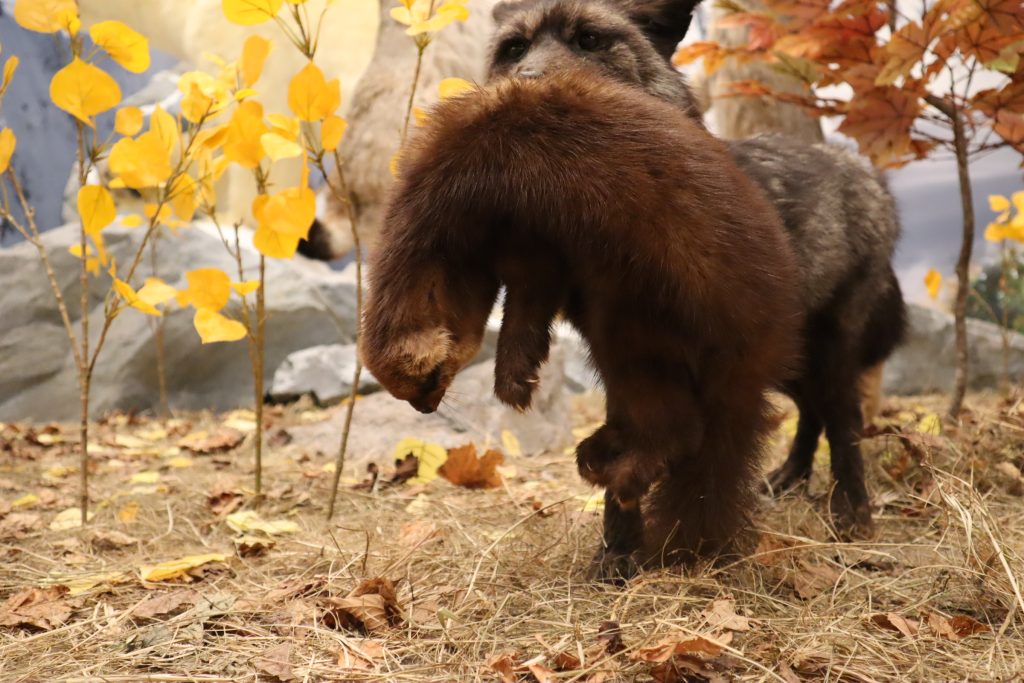
The American Mink is a small semi-aquatic mammal known for its sleek, luxurious fur and agile nature. They are adept climbers, and while typically found near water, can roam up to several miles away from their main habitat in search of food. Minks are territorial and quite aggressive; they mark their territory with strong-smelling secretions. They face threats from larger predators such as foxes and birds of prey.
- Diet– Primarily carnivorous, feasting on a diet that includes fish, frogs, small mammals, and birds.
- Habitat– Variety of habitats, from forested areas near water bodies like rivers and lakes to marshlands.
- Behavior– Typically solitary and are nocturnal and excellent swimmers.
- Lifespan– The average lifespan is 3 to 4 years in the wild.
Arctic Fox
Vulpes lagopus
Additional Information
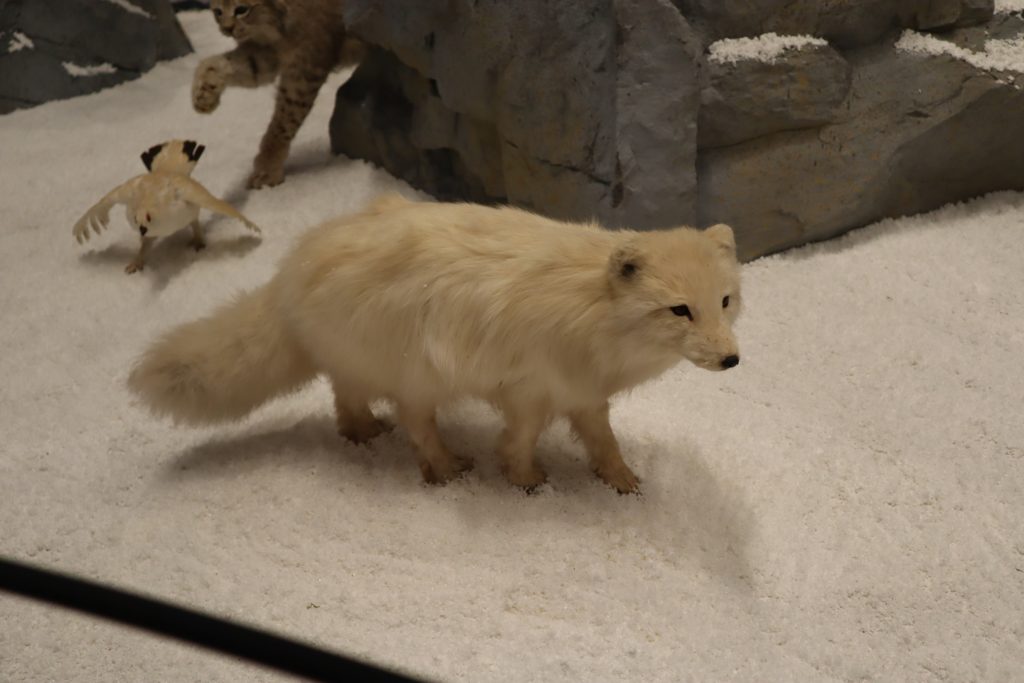
The Arctic Fox also known as the white fox, snow fox, or polar fox, thrives in the harsh Arctic Tundra, withstanding temperatures as low as -58 Fahrenheit thanks to its thick, insulating fur. This fur changes with the seasons—white in winter for camouflage in snow, and brown or gray in summer to blend with the Tundra’s landscape.
- Diet– Omnivorous with a diverse and opportunistic diet; they prey on small animals like lemmings and voles, but will eat fish, birds, eggs, and berries.
- Habitat– Remarkably adaptive to their frigid environment, they form dens in low mounds or rocky outcrops.
- Behavior– Arctic Foxes are nomadic and resourceful, known for following polar bears to scavenge leftover prey. They are playful and curious which helps them bond and develop hunting skills.
- Lifespan– The average lifespan is 3 to 6 years in the wild.
Canada Lynx
Lynx canadensis
Additional Information
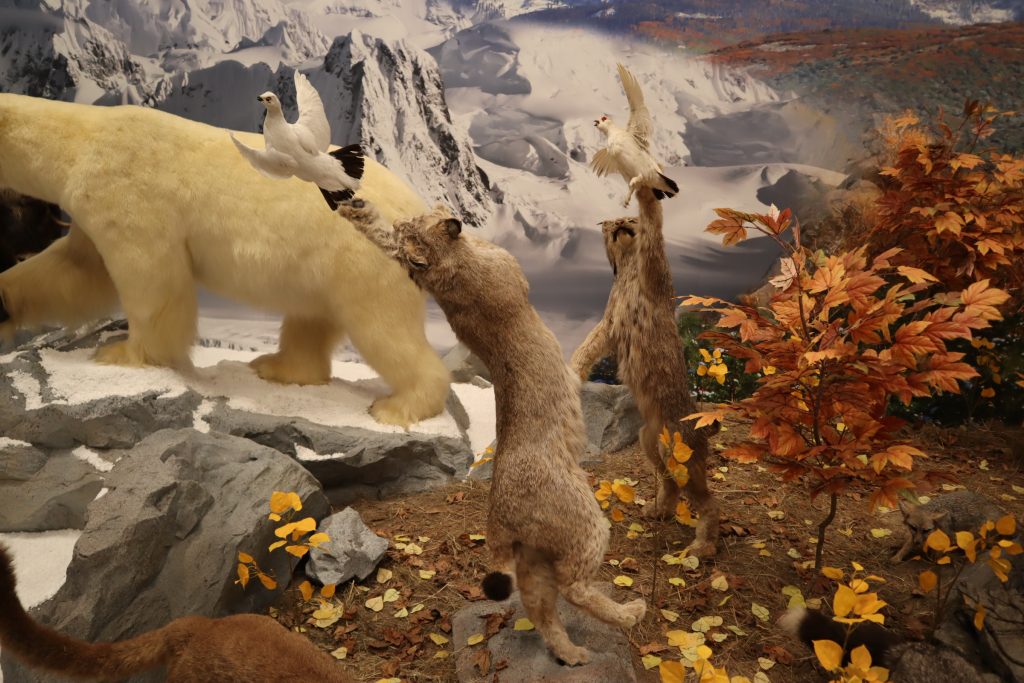
The Canada Lynx, a medium-sized wildcat, is native to North America’s boreal forests, particularly thriving in the dense, snowy regions of Canada and Alaska. They are well-adapted to their cold, snowy habitat with thick fur, large paws that act like snowshoes, and tufted ears that enhance their hearing. Their large, furry paws act like natural snowshoes, allowing them to silently traverse deep snow without sinking. This adaptation not only helps them hunt more effectively but also makes them incredibly agile in their snowy habitats.
- Diet– Carnivorous diet consisting of hares, rodents, and birds.
- Habitat– Boreal forests, shrublands, and grasslands.
- Behavior– Nocturnal, solitary animals except during mating season and when mothers are raising their young.
- Lifespan– The average lifespan is 10 to 15 years in the wild.
Puma
Puma concolor
Additional Information
The Puma also known as the cougar, mountain lion, or panther, is a versatile and powerful predator native to the Americas. They have incredible strength, agility, and stealth, allowing them to effectively ambush their prey. They can leap up to 18 feet vertically and 40 feet horizontally in a single bound!
- Diet– Carnivorous diet consisting of deer and smaller mammals such as birds, and even insect when necessary.
- Habitat– Wide range of environments including dense forests, mountainous regions, deserts, and swamps.
- Behavior– Solitary and elusive animals most active during dawn and dusk.
- Lifespan– The average lifespan is 8 to 13 years in the wild.
Polar Bear
Ursus maritimus
Additional Information
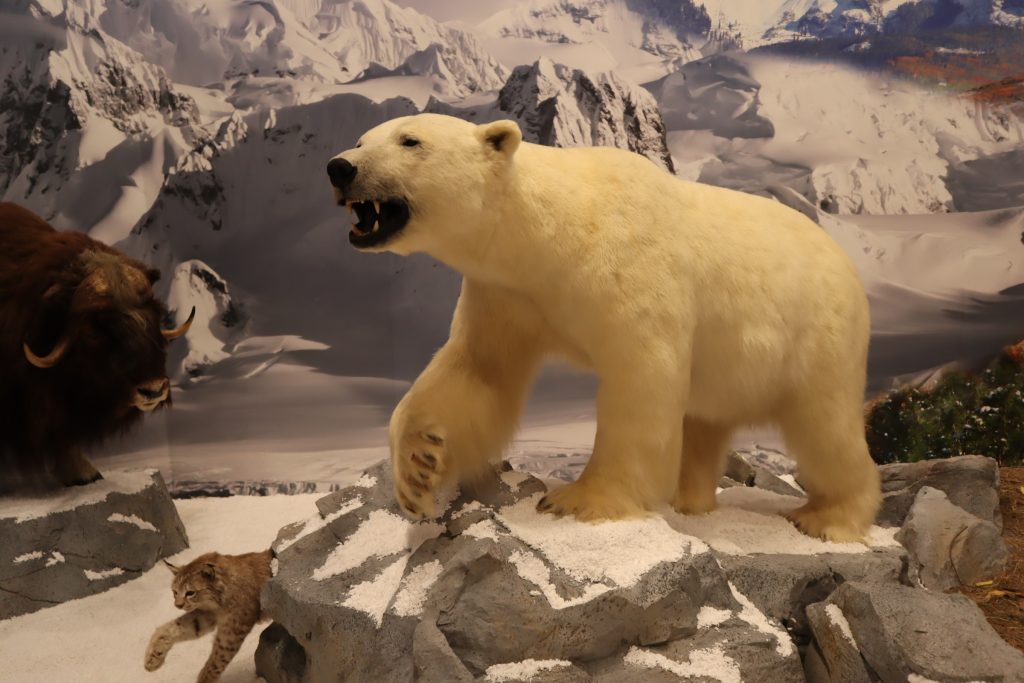
The Polar Bear is a magnificent and powerful predator uniquely adapted to the harsh conditions of the circumpolar Arctic. These bears are excellent swimmers and can swim for days without rest. They have thick fur and a layer of blubber that provide insulation against the extreme cold. They rely heavily on sea ice for hunting and are adept at navigating their icy environment with powerful limbs and large paws. Interestingly, they do not have white fur; rather, their fur is transparent and hollow, reflecting visible light and giving the appearance of white. Underneath their transparent fur, polar bears have black skin that helps them absorb and retain heat from the sun.
- Diet– Carnivorous diet consisting of mainly ringed and bearded seals.
- Habitat– Arctic Tundra
- Behavior– Mostly solitary except for mating season and when mothers raise cubs.
- Lifespan– The average lifespan is 15 to 18 years in the wild.
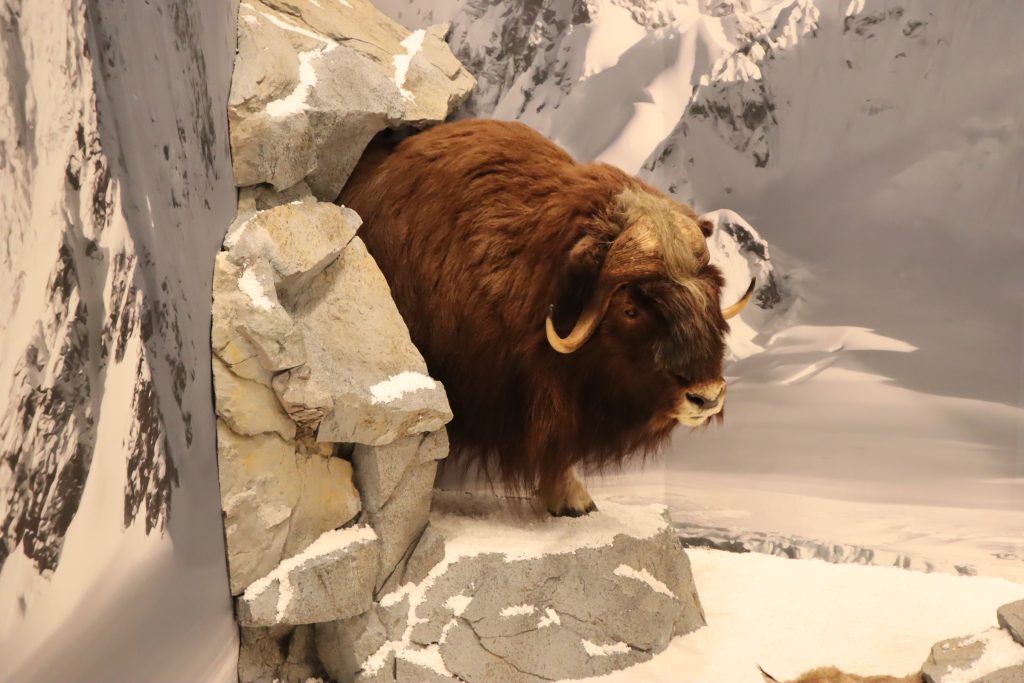
Muskox
Ovibos moschatus
Additional Information
The Muskox is a remarkable and resilient animal native to the Arctic tundra regions of North America and Greenland. They have long, shaggy coats and a dense underlayer of wool called qiviut, which helps insulate them during extreme cold and strong winds. Their wool is one of the warmest in the world—eight times warmer than sheep’s wool! It is incredibly soft and lightweight, and it doesn’t shrink in water.
- Diet– Herbivorous diet consisting of grasses, Arctic willows, mosses, lichens, and other tundra vegetation.
- Habitat– Arctic tundra
- Behavior– Strong social structures, forming herds that can range from a few individuals to a several dozen.
- Lifespan– The average lifespan is 12 to 20 years in the wild.